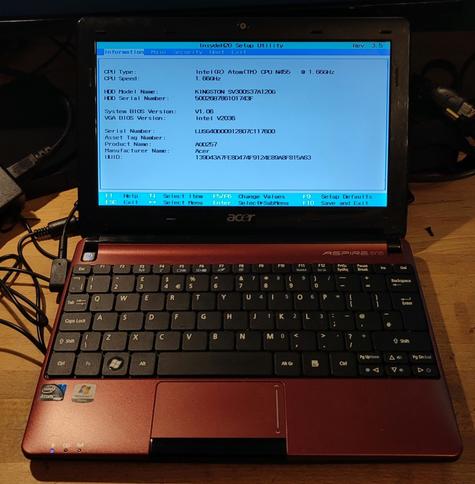
This potato of a laptop fell into my hands recently - an Acer Aspire One D257, running an Atom N455 @ 1.66 GHz with 1GB DDR3 RAM.

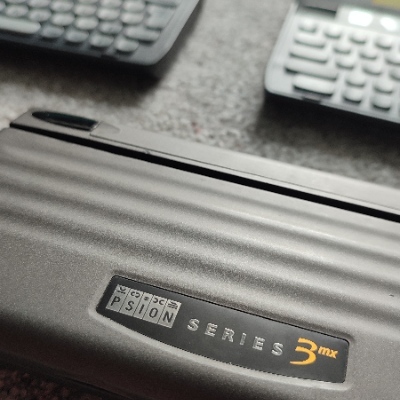
I've just popped an SSD in it. I'm thinking about using it only as a MAME machine to run the #Psion SIBO emulation, just for demos.

So... Maybe Debian? Possibly even running 32 bit (it is a 64 bit CPU, but that lack of RAM worries me). A lightweight DE or WM.

I could run Arch, but I really want this to Just Work™.

Any suggestions?
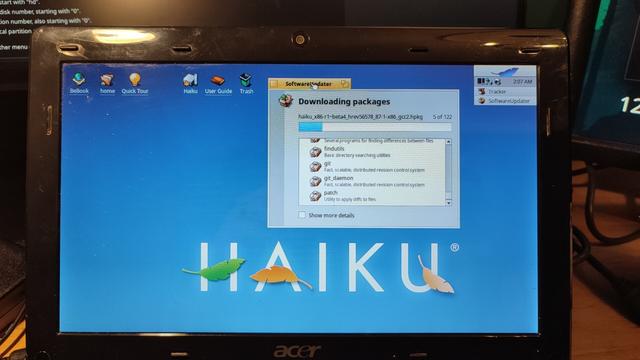
*chuckles with nerdy glee*

@kroc - worked first time, including WiFi!

@ActionRetro - because I know you love a bit of #HaikuOS

#Haiku

Home

Software ports for the Haiku operating system. Contribute to haikuports/haikuports development by creating an account on GitHub.

GitHub
@thelastpsion Hm, Haiku. Python3, and it looks like it now has GTK3.
I don't suppose you could see if Pygenda runs...? In theory: pip3 install [--user] pygenda, then run it with python3 -m pygenda. I'm guessing there will be some dependency that's missing, but I'm curious.
@semiprime I can certainly give it a go. Can't see why it wouldn't run.

@semiprime No luck. After setting the PKG_CONFIG_PATH properly, we have a failure when building pycairo. Something with GCC.

This could be because I'm building it on x86 and I think it defaults to gcc2. I'm about to give up with that and switch to x86_64, so I'll see how it fares with that.

@thelastpsion I've seen the failure with pycairo on pmOS too. Easiest way around it in that case was to install pycairo as an apk (so the binary bit was pre-built and GCC wasn't required). Maybe there's a similar package available on Haiku? (I know nothing about Haiku package management.)

@semiprime Yeah, I thought that too. Installed pycairo via pkgman but pip doesn't seem to care.

Haiku defaults to Python 3.9. 3.12 is available, but there aren't many pre-built packages for it.

@semiprime In short, there are a few corners of this OS that feel a wee bit broken...
@thelastpsion To be fair, Python package management can be a bit hairy: different formats, different binary packages depending on the OS/libc version, non-Python dependencies, install scripts calling CMake. And that's before it starts interacting with the native package manager and they start installing mutually incompatible modules.
I begin to see the attraction of Flatpak.