 saveanon12
Starlink lost another 43 satellites last night. Over 300 satellites have burned up since July 16th. NOAA has 3 job openings for space forecaster.
 originalucifer
how many does he have to lose before the whole thing isnt worth it?
 FaceDeer
More than this, because this loss rate is designed for. The constellation is at a very low altitude and is intended to be constantly replaced like this.
How does the company stay afloat when they’re constantly replacing satellites? The money, the logistics, and most of all, the materials. What a waste.
Because they launch them in large batches using a reusable rocket, so it doesn't actually cost much. They did work out the economics of Starlink before they started building the system.
When they worked out those details they also thought they would have 20,000,000 subscribers before now and not just 2,000,000
They are nevertheless already profitable, and they haven't even begun using Starship to launch satellites yet.
All that sweet gov’t funding doesn’t hurt the bottom line.
There are government users among their customers, yes. Customers are customers. Is this supposed to be a negative?
A requirement for posting here is being obsessed with raging over Elon Musk. I think everyone got kinda bored of raging over Trump every 5 minutes so they found a new bandwagon
Not a musk simp, but Musk corps are actually fullfilling contracts and dont have much cost overruns ( unlike other inefficient corps like Blue Origin, Lockhead Martin, and car manufacturers like Chevy and Ford that feed on gov grants and tax incentives )
Don’t forget boeing. Who is failing at simple ISS docking missions and killing people by dodging modern safety standards with the 737 Max.
Yea, Starliner is miserable. Also Northrop Gruman which is a taxpayer-money sinkhole. Meanwhile their argument would be: hurr durr we are creating jubs! 1000 jobs costing the rest of 300 million people a fortune
i thought why didn’t they just use Falcon Heavy (64 of payload to LEO) but it seems to be too risky and costly (99million$ per launch?, cost in house probably (factual number) 60 million? ). On the other hand, a Falcon 9 (22 tons to LEO, would cost 35 million $ in house (factual) ), but launching and spreading the payload among 3 separate F9’s is less risky and costly than launching aboard the FH, i wonder how much Starship would save on launches
They're also limited by the volume of space within the fairing, which is the same for a Falcon 9 and a Falcon 9 Heavy. They already fill the fairing with Starlinks for the regular Falcon 9, so they'd need to design a new fairing to make use of the extra weight capacity of the Heavy.
The long-term plan for Starship is for a launch to cost on the order of $1 million, as opposed to the current $67 million for a Falcon 9. Starship's payload to LEO will be about 150 tons, compared to Falcon 9's 23 tons. So it's going to be a lot cheaper. Though they'll be launching the somewhat larger Starlink V2 satellites, so the numbers aren't straightforwardly scaled.
interesting! so 150/22=6.8 ; 67/1=67 ; 67*6.8=455.6 . i know this is stupid math but Starship is apparently expected to reduce the cost of launch to LEO by a factor of 455! thats really high for expectations to be set. Yea, heavier Starlinks would reduce this factor maybe to 400 or something, but nonetheless, the weight changes shouldn’t affect the launch costs much at this point
Yeah, it's going to be quite dramatic. Even if the $1 million goal isn't reached, just getting within an order of magnitude of it is still a 40 times saving over Falcon 9 - which is already the dominant launcher for being so cheap and high-volume. It's been kind of fun watching Starship's development and thinking about how for once we're able to see the "oncoming storm" that's going to drastically disrupt the launch market in the years to come. Once Starship's up and running basically everything flying today will be hopelessly obsolete.
Assuming no unexpected insurmountable obstacles come along. But I just can't think of anything plausible at this point - the only things that I can think of would just involve relatively minor hindrances. If the "chopstick" landing doesn't work out, the design could fall back to landing legs. If the upper stage's heat shield doesn't work then maybe something heavier will be needed, or in the extreme perhaps the upper stage can be expendable until something better gets sorted out. Difficulties with on-orbit refuelling only interfere with beyond-LEO operations, not with shipping satellites to LEO. These can add a few millions of dollars or shave a few tens of tons off of the launch capacity, which still doesn't make the end result less than revolutionary.
If the “chopstick” landing doesn’t work out, the design could fall back to landing legs
does that imply that the latter method costs more fuel ? if by chopstick u mean the way Starship lands in the animation video, grabbed by the crane, to be mated with the already fueled first stage ? cause that lookd like straight sci-fi :D man landing legs are already awesome
Once Starship’s up and running basically everything flying today will be hopelessly obsolete
exactly, no more price gauging,penny-pinching (like Ryannair that uses reverse thrusters at landing to save brakepads lol), weight limiting (airlines would board an obese person while prohibiting another from boarding with weight limit exceeding bagage) and maltreatring airlines like Delta. Tbh Elon needs to have a dedicated airline service, powered by Starlink wifi, at least he’s worthy of gov subsidies and he’s among the few who in fact did save the taxpayer a lot of money
this thread got too specific, haha! it reminisces me of the days when i used to read spacenews.com all the time, but i had to limit my internet’s usage and cut on SLS delay news. If the launch cost gets low enough spaceX could spin a telescope manufacturing subsidiary and launch telescopes beyond earth atmosphere and charge per hour subscriptions where u could point out the telescope where u want, that way it could finally silence the telescope amateur community that keeps complaining about how bad Starlink is at ruining their space observation, but again, just daydreaming.
Because they launch these alongside paying customer payloads.
Starlink is FAR from the only thing they launch. A customer pays for a payload, and any volume or mass left over in the launch is filled with small starkink sats.
They have basically $0 on launch costs because of this. They just toss them in when they have someone else paying for the rocket.
 Neil
NeilDo you have a source for your claims, or did this just sound good in your head so you’re presenting it as fact?
Here’s a source that debunks that claim. This has a picture of the cargo bay for a starlink flight - she full, and full only of their satellites. spaceflightnow.com/…/next-spacex-launch-to-deploy…
Expected as much. I doubt they will ever respond to me. Liars never do.
[Not OP]
I have not followed space launches in a few years, but in the past they did carry multiple payloads, in what they call “rideshare” launches. Some times, even with confidential cargo where the release of the main mission payload would be 40 minutes later offstream. But I have no clue of the frequency of those.
The wikipedia page indicates some of those launches en.wikipedia.org/…/List_of_Starlink_and_Starshiel…
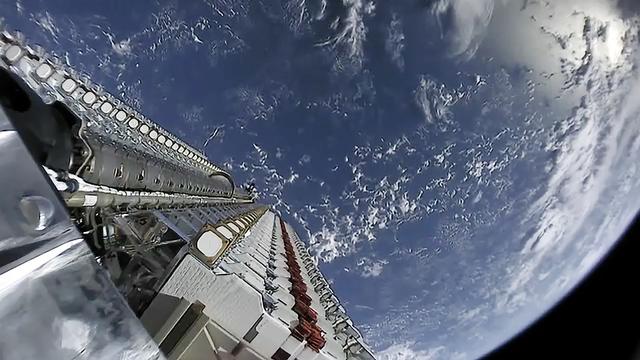
do you sources to back that up?
Well it won’t work out very well when they already have less than 15% of the subscribers they thought they would have by now.
And yet they are already profitable.
Are they? I haven’t seen any reports of profitability for Starlink.

I highly doubt that. They just got to 2 million customers like 5 months ago. If you’d average the costs in pricing differences between residential and business, etc. you would figure it averages out to $200 a month per account. Even if you pretend that they have had 2,000,000 customers for that last three years straight that would only amount to $1.2B and I’d guarantee they have well over that in costs thus far. Skipping all the R&D the 5,000 satellites up there right now cost $500,000 to $600,000 per satellite to get to orbit (so total cost, fuel, making satellite, etc.). Even at just $500k each that’s still $2.5B.
So yeah. There’s not really a snowballs chance in hell it’s in the black right now.
That doesn’t say it’s made money. It says it is now bringing in more than it’s losing. It’s still currently upside down. Also, no way would I believe that website when it says starlink will make a profit by the end of this year. It’s a fluff piece to prime things for the upcoming IPO.
"Bringing in more than it's losing" means it's profitable.
But if you're simply going to refuse to believe anything that says something contrary to what you believe there's not much point in further discussion.
 theodewere
of at least equal concern is whether the business is profitable, and it is probably shedding billions.. he had forecasted revenues of around $12 billion by now, but they just reported $1.6 billion (which is up from $0.23 or so, which is horrific given the projections).. this is because that $12 billion revenue projection was also projecting costs of $7 billion.. their costs are not likely lower than projections, just because.. and their user growth is anemic.. that bump in revenue might have been a windfall from sales in Ukraine or to the US government..
the business is a financial hole, whether the spectacular depreciation of assets is planned or not
I can’t see how they’d even be at $1.6B. By their advertised pricing they should be averaging $200 per account per month. And they just recently got to two million customers. Even if they had two million customers for the entirety of the past three years (which not even close) that would still only be $1.2B in revenue.