#ThursdayIsKiteDay
1/8
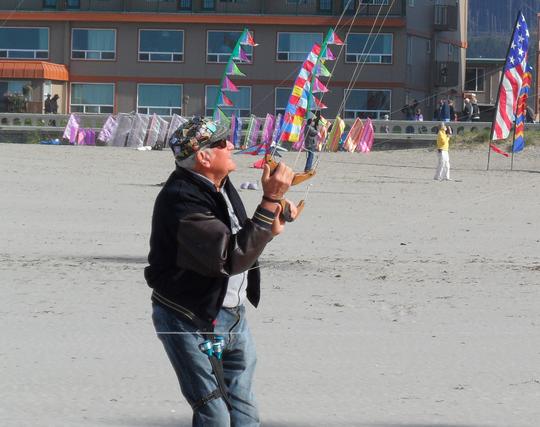
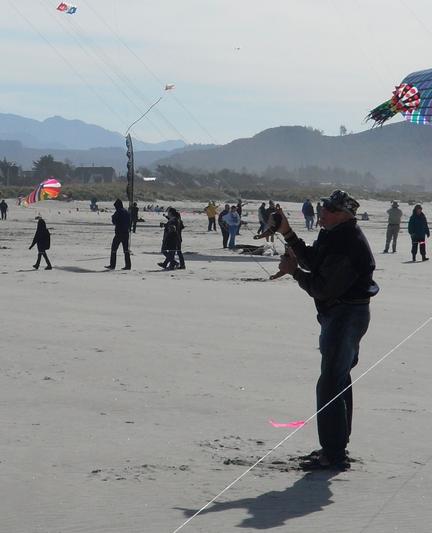
I mentioned Ray Bethel in passing a few weeks ago, but as I was going through some kite pictures I found a few more, so this week's column is a memorial to Ray who passed away in 2018 at 90 years old.

Ray was a special kite flier. I didn't know him personally, but he was at many kite festival I went to around 2010 and later, at which point he was already in his 80s. He took up kite flying in his 50s, without any previous experience or interest and by the 1990s he was...

2/8
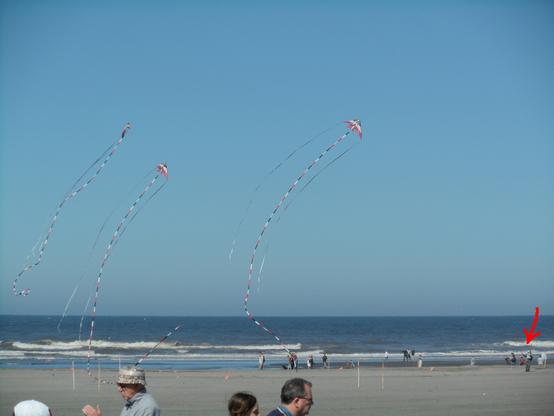
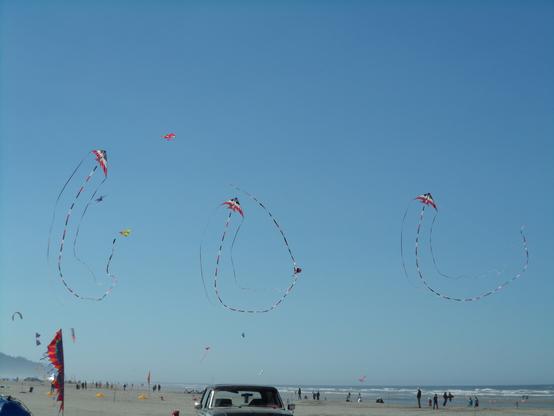
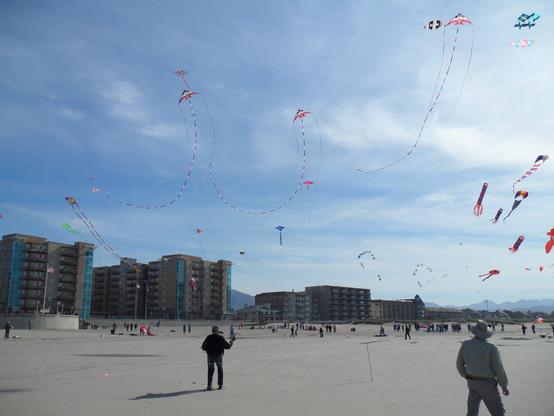
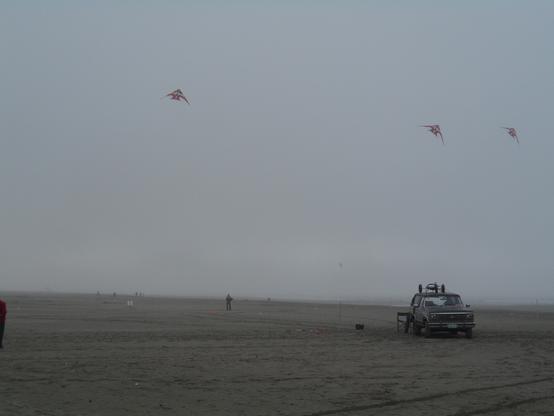
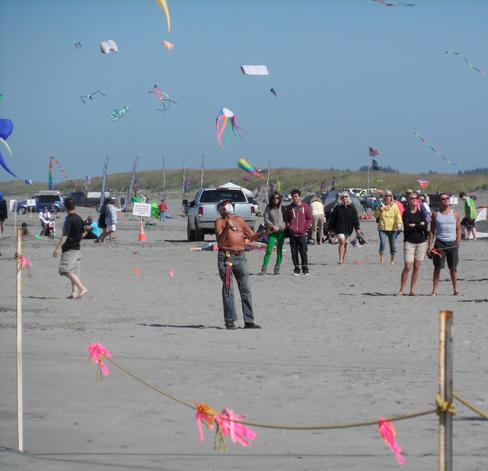
…touring kite festivals. He was well known for two things, he was the old guy usually flying shirtless, and he flew 3, 2 line stunt kites at once. He did this at a time when he was basically the first person doing it. He practiced at his local park, Vanier Park, in Vancouver, Canada, where they have since placed a memorial park bench in the same place where locals used to watch him fly. His abilities got him invites to kite festivals all around the world. I have pictures of him from...

3/8
…three kiting events, but I remember him from two more.

Flying a single dual line stunt kite is not hard, and I recommend that everyone try it. Pull on the left strap to turn left, pull on the right side to turn right. Once you've stopped nailing it into the ground and done the walk of shame a few times (no more than an hour) you'll start counting loops so you remember to turn the other direction to unwrap your lines (they slide past each other easily for the first 8 wraps or so). It...

4/8
...becomes second nature, and from there you can go on to learn slack line tricks if you so desire (no pressure, kite ballet to music is a perfectly acceptable plateau). It is easy to do loud, fast turns, harder to do slow spirals and perfect circles, but it doesn't take much practice to see if you enjoy it.

Adding the second kite is the big step. I've experimented with it a few times. Now you are flying with a bar from each hand, in a horizontal or vertical position (it doesn't matter...

5/8
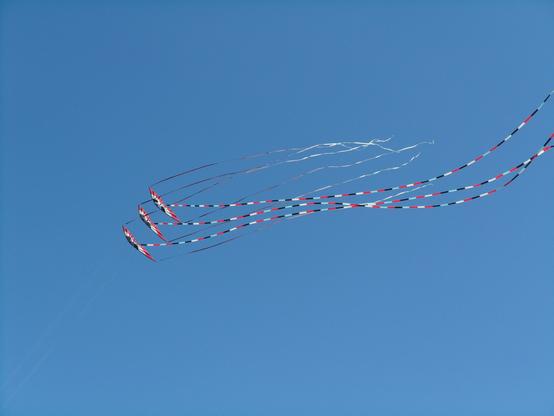
...which, but vertical seems to be the more advanced). Each bar has both lines on it, so there is an absolute limit to how much push/pull you can give each side of the kite. Tight turns to recover an impending crash are basically not possible. Gradual turns are the norm, putting huge tails on the kites to slow them down helps tremendously. Also, two line kite flying is like steering a car, there are small inputs you are adding constantly to keep the kite on track. Sending different...

6/8
...inputs to each hand is next level.

Compared to flying two simultaneously, adding the 3rd is easier. It is attached to belt loops and steered with the hips. Maintaining the center kite, mostly stable with only the occasional loop, is easiest; while flying all three in a loop together, and then reversing it to unwrap the combined lines, is the hardest maneuver you could do, although it looks simple. Ray not only practiced intensely, but he holds the world's record for flying 3 dual line...

7/8
...kites simultaneously, at 12 hours & 12 minutes.

What I liked about Ray is that he flew in nearly any weather, whether people were watching or not, usually for 3 hours or more at a time, and he obviously put the time in for his own personal joy. He knew that people enjoyed watching him, but he was struck deaf from the age of 60 and couldn't hear their applause or shouted compliments.

He inspired at least 3 more people to try this during his lifetime, and there are about 7 people...

8/8
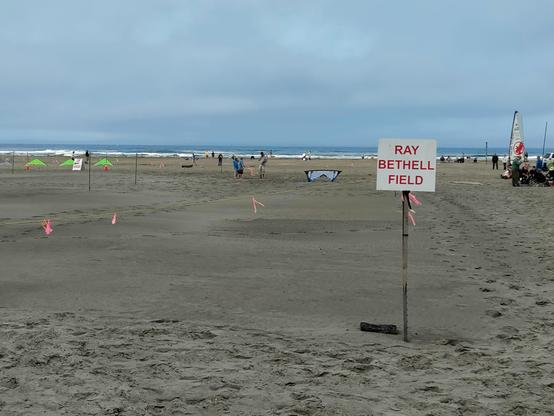
...touring festivals now who can do it well. The Ray Bethel kite flying demo area is still marked off on the beach every year at the Long Beach International Kite Festival in his honor.

#HappyKiteDay #Kites

@Urban_Hermit Thank you for the reminder; I had a two-line stunt kite as a kid & it was a lot of fun, completely forgot about that 😊 🪁