Gotta love that this is the second paragraph in the Wikipedia entry for Backdoor:
"In the United States, the 1994 Communications Assistance for Law Enforcement Act forces internet providers to provide backdoors for government authorities. In 2024, the U.S. government realized that China had been tapping communications in the U.S. using that infrastructure for months, or perhaps longer; China recorded presidential candidate campaign office phone calls —including employees of the then-vice president of the nation– and of the candidates themselves."
More on this story:
https://reason.com/2024/10/11/chinese-hackers-used-u-s-government-mandated-wiretap-systems/« "The problem with backdoors is known—any alternate channel devoted to access by one party will undoubtedly be discovered, accessed, and abused by another," David Ruiz of the internet security firm Malwarebytes Labs wrote in 2019. He noted that cybersecurity researchers had been making that argument for years. They've been repeating themselves for years because their warnings appear to fall on deaf ears. »
 gordsec
 Per Axbom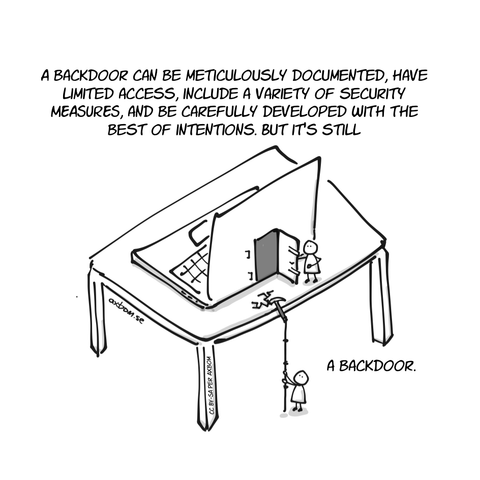

 lnxgeek
 Geoff Winkless
 Alexander Dyas
 EndlessMason