With the new #COVID vaccine approved, a reminder that we’re all indebted to the ancient & wondrous horseshoe crab.

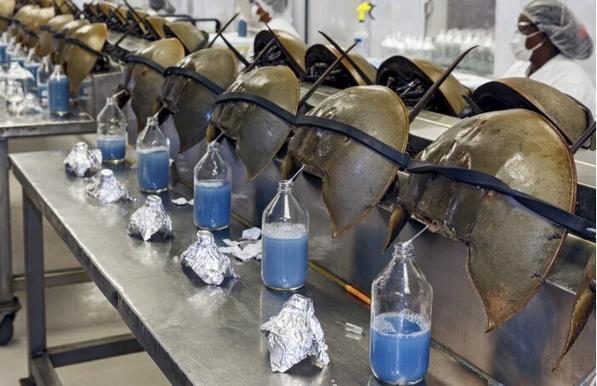
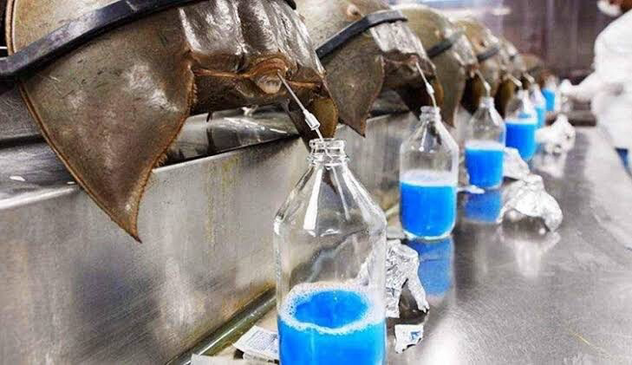
Their blue blood contains Limulus Amebocyte Lysate (LAL) which clumps at contact with bacterial toxins. They are caught for their blood to test sterility of medical equipment & injections.

Unfortunately the harvest is unsustainable & populations are in decline. An effective synthetic substitute has been around for 2 decades & we just need the biomedical industry to switch.

@Sheril I was 14 when I learnt that the Colorado River no longer reaches the ocean. That was 30 years ago. We’ll change when we’re dying from the cancer we are, and not a second prior.
@Sheril Yes! I remember first learning of this from an episode of the BBC podcast “30 Animals that made us smarter” (https://www.bbc.co.uk/programmes/p09ytk87) A fabulous podcast and definitely worth the listen. I sincerely hope a synthetic version is made viable. Must admit, I find the photo somewhat traumatising 😞
BBC World Service - 30 Animals That Made Us Smarter, Horseshoe crabs and vaccines

A new synthetic test to create safe vaccines – based on the secrets of the horseshoe crab

BBC
@Sheril alt text suggestions that could give the horror in this picture more justice than “horseshoe crabs harvested…”: A row of horseshoe crabs strapped to metal industrial equipment being drained of their bright blue blood into clear glass bottles for the biomedical industry.
@ecologist @Sheril is… is the backpart of them missing too or are they” just” mushed in what looks like a really uncomfortable position. 😬
@Sheril I still feel bad for them though, if only there was a way to humanely extract blood from them
@gavinisdie @Sheril
An oxymoron if ever there was one. It's impossible to humanely extract anything from another species.
A substitute has been available for many years.
@Sheril Unbelievable. Humans are taking, taking and taking and gives nothing back. An example how it not should be. #pvdd
@Sheril I have not seen one on my beach for several years

@Sheril
If I recall, horseshoe crabs are an ancient lineage that may be related to (though not descending from) Trilobites.

They've been on this planet a hell of a long time, survived many mass extinctions, and now are in danger because one species that should know better continues to exploit them.

@SocialJusticeHeals @Sheril Trilobites may be more closely related to Chelicerata (the group including horseshoe crabs, sea spiders, and arachnids) than to Mandibulata (the group including crustaceans and insects). But I don't know where the systematics is at now.

Some systematists have found via molecular analysis that some groups of arachnids are more closely related to horseshoe crabs than to other arachnids—that is, horseshoe crabs should be nested within arachnids, and the traditional definition of arachnids is obsolete.

However, other work has upheld the traditional interpretation that all arachnids are more closely related to each other than to horseshoe crabs. It's been kind of ping-ponging back and forth for several years.

@Sheril It's unsustainable because their population is in decline, not because the practice significantly contributes to that decline, correct? My understanding is that typically the animals recover from the bloodletting and are released afterwards.

@Sheril

for those interested, here's where I first heard about this: https://maximumfun.org/episodes/sawbones/how-horseshoe-crabs-probably-saved-your-life/

How Horseshoe Crabs (Probably) Saved Your Life | Maximum Fun

Horses? Majestic. Frogs? Maybe royalty. But have you taken a moment to reflect on the humble, half-billion-year old horseshoe crab?

Maximum Fun

@2ck @Sheril

from this article
https://www.theatlantic.com/technology/archive/2014/02/the-blood-harvest/284078/

"The industry says that not that many of the animals die. Between 10 and 30 percent of the bled animals, according to varying estimates, actually die.."

But what is fucked up is that according to the article, they're only not harvested (i.e. killed) outright because the population is so valuable alive as a chemical source.

The Blood Harvest

Each year, half a million horseshoe crabs are captured and bled alive to create an unparalleled biomedical technology.

The Atlantic
@2ck @Sheril
Many perish after this appalling procedure, others are seriously harmed.
There is no excuse.

@Sheril I remember reading Richard Fortey's books back in HS and college, where he wrote about how Horseshoe Crabs are the closest living relatives to his beloved trilobites. He even ordered one in a restaurant, but was disappointed by the taste. And I have vivid memories of them from summer vacations along the Delaware coast as a child.

It's hard to imagine a world where they perished in the end-Permian extinction alongside their cousins. It would be like a world without penicillin or oil.

@annaghughes One for when you reach the other end of things!
Gesundheit: Blaublütige Lebensretter

Viele Menschen verdanken ihr Leben dem Pfeilschwanzkrebs – einer Kreatur, die älter ist als die Dinosaurier und in unseren Meeren als „lebendes Fossil“...

National Geographic
@Sheril horrible. Humanity is terrible to every other living thing.
I mean, earthworms have been stepped on and used since we had agriculture. And then there’s Vermicomposting. Is it that they don’t look ‘cute’ that we don’t care about ‘Earthworm Rights’?

@Sheril

Capitalism is all about profit over all else.

If the biomedical industry is not forced to switch, it won't.

@Sheril there are quite a few ‘humans are the worst species’ posts/vibes in the comments here. This take is wrong and unhelpful. It deflects accountability, and erases lots of people to whom it does not apply. We cannot lump all humans in with the gross and destructive stuff that is very much a product of our own culture and our own economic system. Instead of the whole species, call out one of the intertwined systems of supremacist thinking that enable this kind of exploitation.
@Sheril we are sooo getting alien probed after first contact...
@Sheril image looking like Mad Max in real life
@Sheril are there petitions or other calls to action for folks who see this and are moved by the issue?

@Sheril
> An effective synthetic substitute has been around for 2 decades & we just need the biomedical industry to switch.

AYFKM???!

@Sheril Thanks for the interesting info
@Sheril That's in the US. AIUI, in Europe, we already use the synthetic replacement.
@Sheril I have never heard this before and it actually breaks my heart.
@Sheril Folks, the thing is still experimental, like macOS sonoma