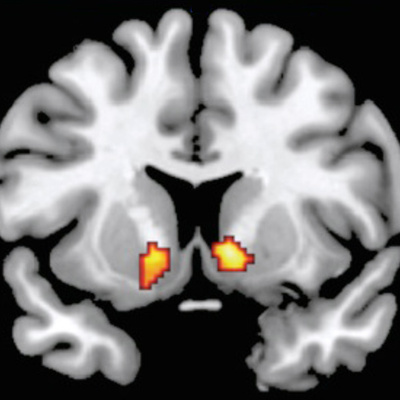
6 thought provoking questions posed to @awaisaftab (psychiatrist) and myself (brain researcher) and we hit on so much:

The challenge of escaping reductionism. Theories of consciousness. Are mental disorders brain disorders? Why should anyone care about philosophy? Is epistemic iteration is failing? And what bits of brain research are awaiting their Copernican moment?

With nods to @summerfieldlab, @knutson_brain, @tyrell_turing, @Neurograce, @eikofried and so many more.

Read it all here (and let's discuss)!

https://awaisaftab.substack.com/p/advancing-neuroscientific-understanding

Advancing Neuroscientific Understanding of Brain-Behavior Relationship

A Conversation with Nicole C. Rust, PhD, a Professor and brain researcher at the University of Pennsylvania.

Psychiatry at the Margins

@NicoleCRust @awaisaftab @summerfieldlab @knutson_brain @Neurograce @eikofried

Fascinating discussion! Thanks for sharing this.

But, I can't help myself, I have to engage in my usual refrain here (sorry, lol), since it comes up in the second paragraph:

Brains are *literally* computers and information processing devices, it's not a metaphor!!! šŸ™‚

@knutson_brain @neuralreckoning @tyrell_turing @awaisaftab @summerfieldlab @Neurograce @eikofried

I appreciate the collegial pushback @tyrell_turing and your excellent piece on the topic (here
https://www.frontiersin.org/articles/10.3389/fcomp.2022.810358/full). To summarize your point: whether the computer is a metaphor for the brain or not depends on how you define "computer".

Definition 1 (it's not a metaphor):

"based on the usage of the word ā€œcomputerā€ in computer science, a computer is merely some physical machinery that can in theory compute any computable function. According to this definition the brain is literally a computer; there is no metaphor."

Definition 2 (it is a metaphor):

computers and computation as being necessarily sequential, or discrete, or restricted to passive processing of a stream of inputs using a step-by-step program ... we can say not only that brains are not computers, we can also say that computers are poor metaphors for brains, since the manner in which they operate is radically different from how brains operate.
(Van Gelder, 1998; Cisek, 1999; Brette, 2018, 2019; Cobb, 2020).

I was indeed using the second definition of computer that your article employs; the one that I see as most pervasive in brain research today (including my own work). So, as you say, it IS a metaphor šŸ˜‰ā€‹. But your point is appreciated and I will do better to clarify going forward.

Why did I use definition 2? As we both know, definition 2 has been tremendously successful in driving brain research toward some incredible discoveries (in eg vision and memory) and interactions between that arm of brain research and AI/ML have bene tremendously impactful.

I am thus concerned that those incredible successes will lead researchers to presume that this is a good approach to understanding everything the brain does. However, I strongly believe that deviations in thinking about the brain away from definition 2 are crucial for impactful progress in thinking about some of the brain functions related to dysfunction, such as affect/emotion.

For instance:

When thinking about emotions (like mood and anxiety), emphasizing the brain as an information processor that computes fails to capture the notion that we don't just compute/predict what's bad and good in the world, we are drawn toward good and repelled from bad with these very strong experiences we call feelings like craving, disgust, joy and fear (and those don't seem to be just tacked on at the end after goodness/badness computation; it's all wrapped up together).

Likewise, thinking about the brain as the type of thing that processes input to generate behaviors fails to capture that the input we receive depends on what we do and thus input and output operate in a continuous feedback loop (ala control systems/active sensing; approach good/hide from bad).

When some researchers deviate from definition 2, it leads them down intriguing paths. To quote Paul Cisek:" You realize that neither the term ā€˜decision-making’ nor the term ā€˜attention’ actually corresponds to a thing in the brain. Instead, there are certain very pragmatic circuits in the brain, and they do certain things like ā€˜approach’ or ā€˜avoid.’ … Some of those things are going to look a bit like attention."

These are the paths I very much believe we need to traverse for this arm of brain research to be impactful for brain disorders.
The Brain-Computer Metaphor Debate Is Useless: A Matter of Semantics

It is commonly assumed that usage of the word ā€œcomputerā€ in the brain sciences reflects a metaphor. However, there is no single definition of the word ā€œcomputerā€ in use. In fact, based on the usage of the word ā€œcomputerā€ in computer science, a computer is merely some physical machinery that can in theory compute any computable function. According to this definition the brain is literally a computer; there is no metaphor. But, this deviates from how the word ā€œcomputerā€ is used in other academic disciplines. According to the definition used outside of computer science, ā€œcomputersā€ are human-made devices that engage in sequential processing of inputs to produce outputs. According to this definition, brains are not computers, and arguably, computers serve as a weak metaphor for brains. Thus, we argue that the recurring brain-computer metaphor debate is actually just a semantic disagreement, because brains are either literally computers or clearly not very much like computers at all, depending on one's definitions. We propose that the best path forward is simply to put the debate to rest, and instead, have researchers be clear about which definition they are using in their work. In some circumstances, one can use the definition from computer science and simply ask, what type of computer is the brain? In other circumstances, it is important to use the other definition, and to clarify the ways in which our brains are radically different from the laptops, smartphones, and servers ...

Frontiers

@NicoleCRust @knutson_brain @neuralreckoning @tyrell_turing @awaisaftab @summerfieldlab @Neurograce @eikofried

This is an excellent discussion. One thing is see is a confusion between computing and information processing. info processing happens at all levels of biology, "computers" only certain levels. I can't do it justice in brief here, so i'll just reference:

Intelligence as Information Processing: Brains, Swarms, and Computers

https://www.frontiersin.org/articles/10.3389/fevo.2021.755981/full

Intelligence as Information Processing: Brains, Swarms, and Computers

There is no agreed definition of intelligence, so it is problematic to simply ask whether brains, swarms, computers, or other systems are intelligent or not. To compare the potential intelligence exhibited by different cognitive systems, I use the common approach used by artificial intelligence and artificial life: Instead of studying the substrate of systems, let us focus on their organization. This organization can be measured with information. Thus, I apply an informationist epistemology to describe cognitive systems, including brains and computers. This allows me to frame the usefulness and limitations of the brain-computer analogy in different contexts. I also use this perspective to discuss the evolution and ecology of intelligence.

Frontiers
@knutson_brain @pinecone @NicoleCRust @neuralreckoning @tyrell_turing @summerfieldlab @Neurograce @eikofried I’d love to read a good analysis of the concept of ā€œinformationā€ as it pertains to neuroscience!

@awaisaftab @knutson_brain @pinecone @NicoleCRust @neuralreckoning @summerfieldlab @Neurograce @eikofried

I personally am happy to apply the concept of information from information theory directly in neuroscience!

In which case, it simply means anything that reduces uncertainty about some value.