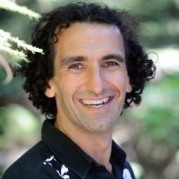
First substantive post, so I'll get right to the point. I think solving climate change is about courage. We're at the top of a ski hill, deciding what slope to take. We have all the tools and expertise to navigate the steepest slope. We need the guts to use them.

I talk about "The Scientific Case for Courage" in this video from last year.

https://www.youtube.com/watch?v=0wPFydmFp7k

The scientific case for courage

YouTube
@simondonner I agree we need some gutsy decisions but I don't think it's that easy. I understand that these gutsy decisions are cheaper than fighting the eventual damages of climate change. But for a lot of people these decisions come at a cost (financial, lifestyle, etc) that some can't afford and some don't want to afford. It's a huge challenge for all democracies.

@fst @simondonner
I don’t understand this statement, unless you buy into the corporate propaganda that climate change is the problem of individuals. It’s not. The problem isn’t that you can’t afford an electric car, it’s that there are no cheap used electric cars to buy and that public transportation sucks. It’s not that you don’t buy solar panels, it’s that solar farms aren’t being made fast enough.

It’s true we should eat less meat, eventually.

@fst Agree 100%. That's the essence of the analogy in thar talk and my TEDx talk. Taking steep terrain comes with risks, i.e. to avoid higher levels of warming we need the type of transformational changes that can be dangerous if executed poorly, given the potential injustices accompanied with some solutions and implementation of those solutions.

@simondonner

It has nothing to do with courage in some kind of generalized societal sense: it has to do with class conflict and whether we can overcome the current leaders of our societies.

@RichPuchalsky don't disagree. I was in this case directly speaking to the Canadian government and people trying to influence federal policy. They were in the room, so the "we" definitely has government at its core.

@simondonner I don’t disagree in very general terms. The trouble is, who is this “we” of whom you speak?

Because, fundamentally, the blockages are about power, who wields it and how they maintain it (increasingly repressively) over the majority, who would love to see the kind of meaningful change that gave their kids a viable future

@Simon318ppm Definitely, I recommend watching the talk for my context. I was speaking to a room of ministers and people trying to influence federal policy in Canada. So the focus was policy decisions, and governments are at the core of the "we".

@simondonner

Thank you Simon. I agree with you, and feel you have nailed it.

The barrier to action is not ignorance. The gap is in commitment, in creativity and, most of all, in courage. Our inter-connection and inter-dependence can no longer be denied.

The kind of courage found in To Kill A Mockingbird, where Atticus tells his son Jem why he wanted him to go read to Mrs Dubose.

The kind of courage borne of sure knowledge of our interdependence.

See:

https://vocal.media/earth/is-humanity-doomed

Is humanity doomed?

Are we on an inevitable collision course with extinction?

Earth
@simondonner Unfortunately, there is no "solution" to climate change. It is bad now and it won't get any better on human time-scales. Best we can hope for is to slow the deterioration to give us time to adapt. However, all the "tools" you speak of are intent on saving civilisation, rather than keeping the planet habitable. Civilisation is unsustainable.