 Ed Maste
DigitalOcean: You haven't used our services in a while... "no matter what roadblock lies in your way, we’re here to help."
Me: My roadblock is that you stopped offering #FreeBSD images.
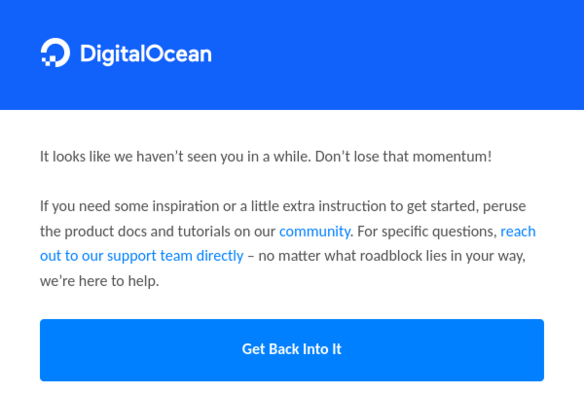
DigitalOcean: You haven't used our services in a while... "no matter what roadblock lies in your way, we’re here to help."
Me: My roadblock is that you stopped offering #FreeBSD images.
DigitalOcean: You can bring your own image!
Me: BYO images require ext3/ext4, which are not native FreeBSD filesystems.

@vwbusguy @autolycus @Conan_Kudo #FreeBSD includes a BSD licensed ext2/3/4 implementation and there's no fundamental reason an ext3/4 rootfs is impossible.
@vwbusguy @neel @emaste @autolycus @Conan_Kudo You don't need to hack #FreeBSD, it has implemented Linux calls too, on BSD license. 😀 It is called Linuxator. So, ext drivers should work with FreeBSD, same as it is done with Wi-Fi and DRM drivers. All of them are "rip-offs" from Linux.
License also isn't a problem. Even FreeBSD kernel still has some code with GPL.
@thindil @emaste Please understand that a #syscall is something completely different than some other, in-kernel, call. A syscall is the special way userspace can call something in the kernel, which needs a context switch. Some architectures have special CPU instructions for syscalls available, on other architectures, software-interrupts (that the kernel can handle) are used, etc.
Nothing of that is done for in-kernel calls, they're "just" function calls.
#FreeBSD #Linuxulator provides a set of #Linux-compatible syscalls. The #LinuxKPI project on the other hand aims to provide in-kernel Linux compatibility for use by certain drivers. They're completely unrelated.
BTW, you're missing a syllable, it's spelled LinuxULator 😉
@thindil Haha, that was just a gentle hint 😉. But I think it's really important to understand the difference between #Linuxulator and #LinuxKPI, although you're certainly right, *both* were further improved/extended in #FreeBSD 14.
BTW, I'm pretty sure there is *no* GPL-licensed code in the kernel. There is some GPL-licensed code in base, yes, but you can build base without it; the goal is always to provide a full BSD-licensed OS.
In fact, if I'm not mistaken, remains of GPL-licensed files in LinuxKPI are the main reason we still have drm-kmod drivers as a port (and not integrated with the base kernel), where this port includes these small parts of LinuxKPI. The drm drivers themselves are not GPL-licensed.
@zirias Any correction is always good. At least for me, I can learn something new. 😀
While in kernel there shouldn't be that code, I think I saw something to rewrite on the base system list. I didn't check recently.
DRM as port, I think there can be another reason. Its development isn't synchronized with the kernel development cycle. Having it as a separated port allows upgrading it without upgrading the whole system. Plus, there are other modules served as ports, without license problems.
@thindil 1. yes, as I said, #FreeBSD base had (and probably still has? I don't always follow it that close...) GPL-licensed parts. But they can never be absolutely required, you can build a working base without them, so anyone *can* have a "BSD-style" licensed OS from FreeBSD and do with it whatever a BSD license permits.
2. This reasoning about DRM in a port is often cited, but not really proven in practice. These drivers *need* #LinuxKPI, which *should* be part of the kernel (and largely is, the separate module only has GPL-licensed parts and it's ongoing work to replace them). So, you have a dependency on the LinuxKPI in the FreeBSD kernel anyways, you can't just use DRM drivers from some newer #Linux version. Therefore, the drm-kmod port is already a metaport, selecting the specific port based on the FreeBSD version you're running.
@zirias 1. I agree on this point. 😉
2. By "not-synchronized" I mean it is developed by different group of people, for different target (Linux). It is not just a different release cycle. Also, DRM isn't necessary in most cases. For example, Nvidia uses it only for Wayland, not for X. I don't know about AMD/Intel GPUs. I believe, there are several reasons of that situation. Reason: "if it works, don't touch" perhaps too. 😂
@thindil Well, one of the devs who is most active in that area told mit it's his goal to get drm-kmod back into base kernel, because it would remove quite some maintenance pain. And the ongoing efforts to replace GPL-licensed stuff (what's left right now is really minimal) are probably done for exactly that goal. That of course doesn't guarantee it will happen any time soon.
But remember where we came from: #FreeBSD 11 *did* have drm-kmod in the base kernel. It was very aged. It couldn't be updated because we didn't have the necessary #LinuxKPI bits and pieces. So, the "solution" then was creating that port, which could include lots of GPL-licensed code without creating a licensing problem for base.
@thindil BTW, that all said, I *do* agree that it's questionable whether GPU drivers that will only be needed for Desktop/GUI usage *should* be in base at all! After all, although #FreeBSD explicitly supports #Desktop usage, nothing else necessary for it is part of base.
But then, that's a different discussion. If it would be easier to maintain drm-kmod as a part of base, this will probably happen eventually...
@zirias Indeed, we will see. 🙂 Currently, the most important is, that it works. Sure, it requires more work during installation, but later it isn't so bad.
I prefer having a small base system. But that is just a matter of taste. 😉
@vwbusguy @thindil @neel @autolycus @Conan_Kudo
see sys/gnu: in there is gcov and a bwn (Broadcom WiFi) phy
@emaste @thindil @neel @autolycus @Conan_Kudo FWIW, Those are in process of being rewritten to BSD licensed code: https://wiki.freebsd.org/GPLinBase
You can personally, legally probably make it happen, but there is an ideological difference beyond the legal difference. I look at this GPL inclusion like Fedora packaging proprietary Intel firmware. It's a exception rather than the rule for the sake of practicality, but not at all an ideological opening of floodgates.
@neel seems like it probably would, but still needs a lot of work to add support to our image build tooling and then test the result.
We build images via makefs, a userland filesystem creation tool, and it supports cd9660, UFS, and ZFS. We'd either need to add ext2/3/4 support to it, or (more likely) change the build to use the equivalent tool from the Linux world, or build another way altogether.
 Neal Gompa (ニール・ゴンパ)
 Autolycus 🏴☠️
 Scott Williams 🐧
 Neel Chauhan
 Bartek Jasicki
 Felix Palmen 📯
 probono