 sv1sjp
Young climate activist tells Greenpeace to drop ‘old-fashioned’ anti-nuclear stance

Good!
Anti-nuclear is like anti-GMO and anti-vax: pure ignorance, and fear of that which they don’t understand.
Nuclear power is the ONLY form of clean energy that can be scaled up in time to save us from the worst of climate change.
We’ve had the cure for climate change all along, but fear that we’d do another Chernobyl has scared us away from it.
 originalucifer
imagine how much farther ahead we would be in safety and efficiency if it was made priority 50 years ago.
we still have whole swathes of people who think that because its not perfect now, it cant be perfected ever.
So uh, turns out the energy companies are not exactly the most moral and rule abiding entities, and they love to pay off politicians and cut corners. How does one prevent that, as in the case of fission it has rather dire consequences?
 Carighan Maconar
Since you can apply that logic to everything, how can you ever build anything?
Because the energy industry is historically the one lobbying governments for less regulation. Also, has there ever been a nuclear project in the history of mankind that didnt result in depleted Uranium leeching into local watertables and/or radioactive fallout? Your comment is basically tacit acceptance that people are going to act unethically, which, in regards to nuclear power, is bound to have human consequences.
Has there been one that did? I’m just asking questions!
 Semi-Hemi-Demigod
An electrician installing faulty wiring doesn't render your home uninhabitable for a few thousand years.
So there's one difference.
That’s why there are lots of regulations regarding things impacting life safety. With a nuclear power plant, you mitigate the disaster potential by having so many more people involved in the design and inspection processes.
The risk of an electrician installing faulty wiring in your home could be mitigated by having a third party inspector review the work. Now do that 1000x over and your risk of “politicians are paid off” is negligible.
Okay, so we've got a safe nuclear power plant that's a decade behind schedule and 100% over budget.
By your logic I suggest you avoid any building constructed in the US as nothing would ever be safe enough.
It's plenty safe now, but my electricity rates have doubled because the plant was so over budget and they need to make their money back.
You are saying, regulations will fix this? Politicians create the regulations, the fines, and enforcement.
Political parties are running on platforms of deregulation right now.
Regulations are actually generally created by regulatory bodies, which are usually non-political. For instance, the underwriter laboratory is the major appliance, building and electrical approval body in the United States.
In most countries, building codes and safety codes are created by industry specialists, people who have been in the industry as professionals for many decades and have practiced and been licensed in the field that they are riding the regulations for.
There’s a big difference between politicians who are passing these laws, and regulatory codes. Generally, as a politicians will simply adopt the codes as recommended by the professional licensing and certification bodies.
I suppose it will be the end of modern civilization if politicians decide to politicize electrical or building codes. Then we’ll be fucked for sure. We’ve seen that happen before with the Indiana pi bill.
en.m.wikipedia.org/wiki/Indiana_Pi_Bill
“The Indiana Pi Bill is the popular name for bill #246 of the 1897 sitting of the Indiana General Assembly, one of the most notorious attempts to establish mathematical truth by legislative fiat.”

That’s why there are lots of regulations for things impacting life safety
Regulations that a lot of pro-nuclear people try to get relaxed because they “artificially inflate the price to more than solar so that we’ll use solar”. I’m not saying all pro-nuclear folks are tin-foilers, but the only argument that puts nuclear cheaper than solar+battery anymore is an argument that uses deregulated facilities.
If solar+wind+battery is cheaper per MWH, faster to build, with less front-loaded costs, then it’s a no-brainer. It only stops being a no-brainer when you stop regulating the nuclear plant. Therein lies the paradox of the argument.
a wind mill going down and a nuclear plant blowing up have very different ramifications
Exactly, just like a windmill running and a nuclear power plant running have very different effects on the power grid. Hence why comparing them directly is often such a nonsense act.
The risks are lower in literally everything else…?
 Dojan
DojanI mean it’s not the companies operating the facilities we put our trust in, but the outside regulators whose job it is to ensure these facilities are safe and meet a certain standard. As well as the engineers and scientists that design these systems.
Nuclear power isn’t 100% safe or risk-free, but it’s hella effective and leaps and bounds better than fossil fuels. We can embrace nuclearm renewables and fossil free methods, or just continue burning the world.
Don’t push nuclear power like it’s the only option though.
Where I live we entirely provide energy from hydro power plants and nuclear energy is banned. We use no fossil fuels. We have a 35 year plan for future growth and it doesn’t include any fossil fuels. Nuclear power is just one of the options and it has many hurdles to implement, maintain and decommission.
 Astrealix
Honestly, if you can, hydro is brilliant. Not many places can though — both because of geography and politics. Nuclear is better than a lot of the alternatives and shouldn’t be discounted.
Wind, solar, etc.
Which each have their drawbacks. Just as an example, though not representative of the majority, what do you do about months of no sun in the Arctic Circle for solar power? There is no single solution to this problem. Nuclear is better than fossil fuels by far, and we should not just throw it away out of fear.
Arctic Circle already uses wind?
Not fear, reality: en.wikipedia.org/…/Nuclear_and_radiation_accident…
And yet nuclear has killed less than even wind. Obviously death is not the only factor, which is why it should be a combination of both.
Again, it’s just an example. There are loads of situations where solar and wind just don’t work — and they are both inconsistent, without battery technology nearly good enough to work on the order of days for an entire national grid, which could be potentially needed in the event of a storm.
Nuclear waste is a problem, but one which is much more easily contained and much less dangerous than the CO2 that’s constantly being spewed into our air.
And what do YOU know about radioactive waste disposal?
Launch it into the sun or Florida
Launching radioactive waste into space is a terrible idea, because rockets on occasion crash. Once that happens it becomes a nuclear disaster.
Instead we can safely store it in depleted mines.
Mines fill up with water if they’re not constantly pumped out. Even the salt mines which seemed like a solution were found to have this issue
Big hole in the side of mountain in a desert, stick the waste in, full it with rubble and concrete, job done. If some primatives in a hundred thousand years stumble across it and dig it out, fuck em, who cares.
Dig a hole, anywhere, now leave. What will the hole eventually fill up with?
The pyramids have chambers that were unopened for over four thousand years, bone dry inside. Pick an area with very little rainfall, surround it with rock and the problem will stop existing on human timescales.

Dig a hole, anywhere, there’s a chance it’ll fill with water. Especially with climate change. We’re seeing moisture getting dropped in areas at greater frequencies that didn’t happen decades ago. There’s no guarantee you can dig a hole anywhere on earth that wouldn’t become apart of our aquifers as the water travels back to the ocean.
There is no guarantee of anything.
But if you’re storing it hundreds of miles from the ocean, the risk is minimal.
It isn’t really minimal since the water cycle on earth is all connected.
Water in the ocean evaporates. It’s carries inland by Hadley cells that deposit the moisture inland. It gets dumped on the highest points which all run back the ocean and creating all our aquifers along the way.
But you’re suggesting we bury toxic material that remains toxic for hundreds or thousands of years somewhere remote that would just be high up in that water cycle. In places where private companies would be out of the eyes of watchdog groups
that would just be high up in that water cycle. In places where private companies would be out of the eyes of watchdog groups
That is not what I am suggesting.
Sealing a deep narrow borehole isn’t a difficult problem. The Earth has contained oil and gas underground for millions of years.
Its contained it using geological features but once exposed how is it possible to recreate that. Its also not like this material is goo
The hole would be 0.5m wide and >1000m deep, backfilled with bentonite clay and concrete. At the bottom, the path curves back upward, so waste is not stored at the bottom.
Even if geology doesn’t collapse the hole, it’s hard to imagine material climbing up through 1000m of clogged pipe.
I know it’s a damn lot easier than carbon recapture, if we’re talking waste products. It’s not ideal, but there is no such thing as perfect, and we shouldn’t let that be the enemy of good. Nuclear fission power is part of a large group of methods to help us switch off fossil fuels.
“Easier”? Are you aware of the fact that radioactive waste tombs are meant to stand for millions of years? It requres a lot of territory, construction and servance charges, and lots of prays for nothing destructive happens with it in its “infinite” lifetime.
Have you tried capturing gas? As difficult as radioactive waste tombs are, they’re easier than containing a specific type of air lol.
Read about breathing if you want to know how to capture gas. Also, about photosynthesis.
If you want to buy the land to plant a second Amazon, be my guest. And breathing does the exact opposite of what we want.
I’d rather fill land with trees than with radioactive wastes.
You need a lot, lot more trees. Like several orders of magnitude. And growing trees takes longer than even building a nuclear power plant.
To be specific, growing the types of trees we would want for such a thing in such an amount that it would deal with the problems we have, assuming we stop growth of CO2 and assuming we stop burning the Amazon, would take around a hundred years.
nationalgeographic.com/…/how-to-erase-100-years-c…
“It could take more than a hundred years to add enough mature forest to get sufficient levels of carbon reduction. Meanwhile 40 billion tons of carbon dioxide (CO2) from burning fossil fuels are being added to the atmosphere every year, said Glen Peters, research director at Norway’s Center for International Climate Research.”
And need an area the size of the United States. I wasn’t joking about a second Amazon.

I’d rather this as well, but we don’t have that many choices. The slower we act and the more we let perfect be the enemy of good, the more people die.
We can bury it in the ground and it will literally turn into lead. How are you doing with carbon emissions? Got a fix?
I think it’s photosynthesis. ‘Bury in the ground’ is an extreme simplification btw.
Also, I am finished with this topic scince long anough. It feels extremely politically biased. If you’d like to reply, I’d hear it gladly. But I m not going to be involved into a discussion.
My country, Sweden, also gets a decent chunk of power from hydro. Back in 2021, about 43% was hydroelectric, and 31% was nuclear.
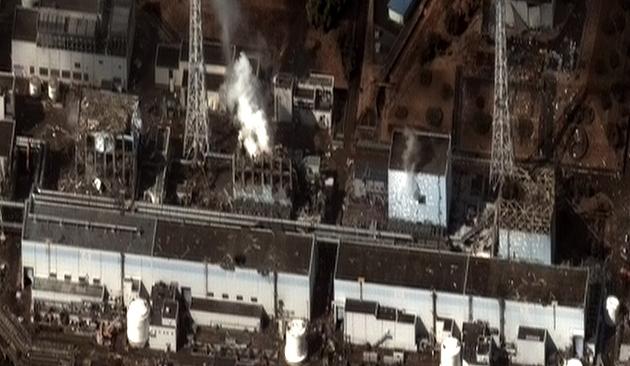
Why do you think they’re pushing it for a reason? Renewables are very much a great option without the nuclear power. I hate that they’re here, but the nuclear activists are definitely here. 3 words, Fukushima, Fukushima, Fukushima.
The push for nuclear power across social media is 100% an industry sanctioned psyop.
It’s so stupid too, Fukushima just released their contaminated water from over 10 years ago into the ocean last week. Do they not read the news? At least wait until disaster news from actual nuclear power plant disasters aren’t fresh in everyone’s minds.
 Buelldozer
The push for nuclear power across social media is 100% an industry sanctioned psyop.
Oh please, I’ve been advocating for nuclear power since before most people even owned a dial up modem. You younger ones see everything through a haze of recency bias.
How many 9.1 magnitude earthquakes do you think there are? And the reports following the disaster showed that there were definitely ways to prevent it from happening, like, for example, not building it so close to the sea.
And do you think other countries would make smarter and wiser decisions? Dude.
I mean, if we want to go down that path, there’s no reason to think that governments won’t just stick to fossil fuels and fuck us all.
Even so, it took a literal once-in-a-century earthquake in the right place to send a tsunami to the perfectly misplaced reactor to actually make just one person die. One. And two died from the aforementioned massive tsunami caused by an earthquake that occurs around once a century.
I watched that in real time, more than one person died and it ruined a whole region that they’re just now sort of recovering from. It was devastating to them. You’re not even making any sense.
The deaths came from the, again, once-in-a-century earthquake. Evacuations, yes. Deaths, no.
“Nobody died as a direct result of the Fukushima nuclear disaster. However, in 2018 one worker in charge of measuring radiation at the plant died of lung cancer caused by radiation exposure.” — Encyclopedia Britannica. (www.britannica.com/event/Fukushima-accident)

Fukushima accident | Summary, Date, Effects, & Facts | Britannica
Fukushima accident, disaster that occurred in 2011 at the Fukushima Daiichi (‘Number One’) nuclear power plant on the Pacific coast of northern Japan, which was caused by a severe earthquake and powerful series of tsunami waves and was the second worst nuclear power accident in history.
Wow, that article is not helping your case, lol.