Geneticist Liane Russell was born #OTD in 1923.

She pioneered the study of mutagenesis and teratogenesis due to radiation, and identified the role of the Y chromosome in sex determination. Her work led to diagnostic x-ray safety standards for women of childbearing age.

Science, the joy of wild places, and civic engagement as a response to fascism – this is one of my favorite threads.
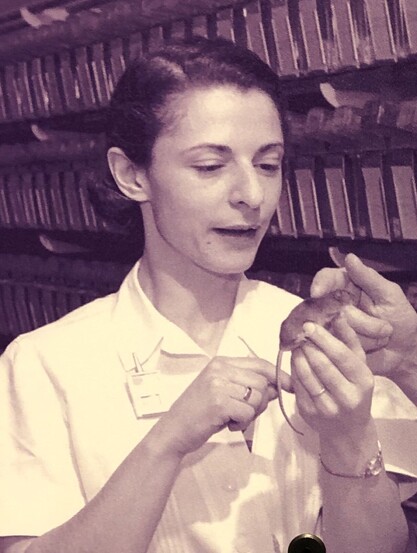
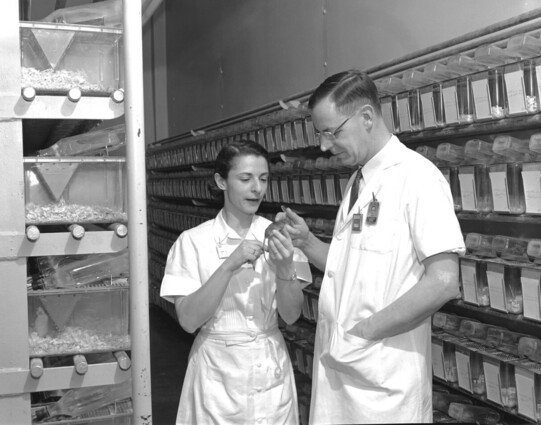
(This one is dear to my heart. She was a friend of my grandparents, and she was dedicated to the conservation of many wild, beautiful places near my childhood home in Tennessee.)

Lee was born Liane Brauch in Vienna, Austria. She was 14 when the Nazis invaded. Her family gave up their home, business, and all their belongings and fled to London. After surviving the Blitz they moved to New York.

She originally intended to go to med school, but after a summer job at The Jackson Laboratory she decided to focus on research. Lee got her PhD in zoology from U Chicago in 1949.

Liane Russell and her husband Bill came to Oak Ridge after WWII to start a mammalian genetics laboratory.

They were important figures in ORNL’s transition to a facility that studied the impact — biological, ecological, and environmental — of its wartime work.

The US had bombed Hiroshima and Nagasaki only a few years earlier, but the less acute effects of radiation exposure still weren't understood very well.

So Lee and Bill set up the "Mouse House" –– an enormous colony of mice that would serve as proxies for humans in studies of radiation exposure.

Together they studied the effect of radiation on the development of mice embryos, and concluded that human embryos were likely to be especially vulnerable to teratogenesis during the first seven weeks of gestation.

Image: Oak Ridge National Laboratory

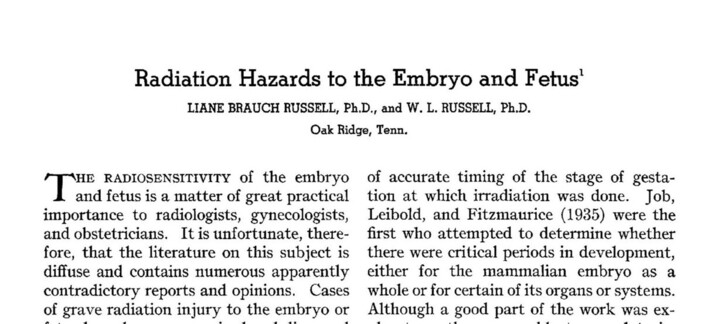
The Russells published the result in the journal “Radiology” in 1952.

Since most women aren’t aware they are pregnant in those first weeks, the Russells suggested that radiologists restrict diagnostic x-rays in women of childbearing age to the 2 weeks following menstruation, as a precaution.

Ref: https://pubs.rsna.org/doi/pdf/10.1148/58.3.369

In the late 50s, Liane Russell and her collaborators showed that the Y chromosome was male-determining in mice, a result that was soon extended to humans.

The same line of investigation eventually led Russell to hypothesize that only one X chromosome is active in females.

Russell’s research career spread across eight decades, from her first position in 1943, past her “retirement” in 2002, and into the early 2010s. She was the first woman to receive the Roentgen Medal (1973) and was awarded the Department of Energy’s Enrico Fermi Award (1993).

There is an excellent oral history interview with Russell at Voices of the Manhattan Project. She talks about the “Mouse House” at ORNL, her genetics research, and her passion for conservation work.

https://www.manhattanprojectvoices.org/oral-histories/liane-russells-interview

Liane Russell's Interview - Nuclear Museum

Nathaniel Weisenberg: My name is Nate Weisenberg. I am here with the Atomic Heritage Foundation. It is April 25, 2018, here in Oak Ridge, Tennessee. I have with me Lee Russell. Liane Russell: Right. Weisenberg: My first question is if you could please say your name and spell it for…

Nuclear Museum

Liane and Bill Russell were committed to "taking care of wild places."

In 1966 they founded Tennessee Citizens for Wilderness Planning, to protect mountain and river sites in East Tennessee. Their advocacy led to the Obed river being declared a National Wild & Scenic River in 1976.

https://www.nps.gov/obed/index.htm

Obed Wild & Scenic River (U.S. National Park Service)

The Obed Wild and Scenic River looks much the same today as it did when the first white settlers strolled its banks in the late 1700s. While meagerly populated due to poor farming soil, the river was a hospitable fishing and hunting area for trappers and pioneers. Today, the Obed stretches along the Cumberland Plateau and offers visitors a variety of outdoor recreational opportunities.

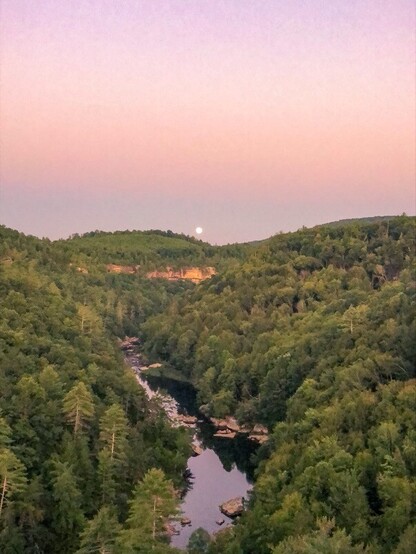
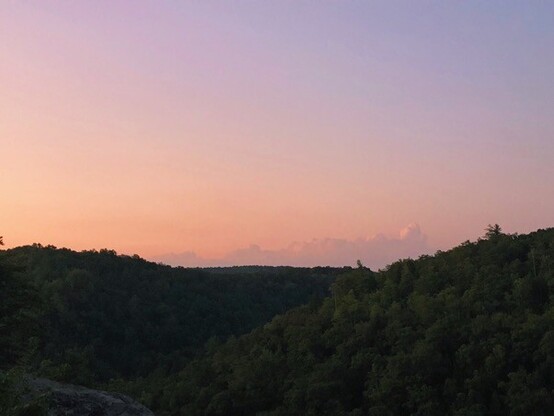
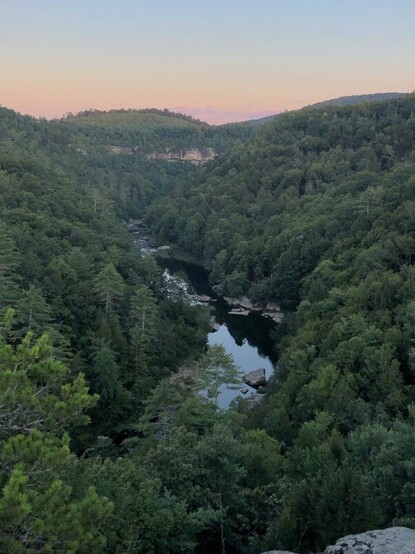
I adore Obed, which is also an International Dark Sky Park. I took my then-7yo there in 2019 as part of a “Three National Parks in Three Days” adventure in East Tennessee. We saw a breathtaking moonrise over the river.

TCWP's early track record was remarkable.

They prevented dams on the Big South Fork and Obed rivers; defeated a proposed trans-mountain road through the Smokies; lobbied for state laws establishing scenic rivers, nature areas, and trails; and helped pass state and federal strip mining laws.

Here is a history of TCWP written by Liane Russell that outlines their goals, past accomplishments, and plans for the future:
https://tcwp.org/history-2/

There is also a Story Corps interview of Lee Russell, where she talks about her life, research, and conservation work. I love these.

https://archive.storycorps.org/interviews/mbx007396/

Liane Russell and Cindy Kendrick

Liane “Lee” Russell (87) talks to her friend Cindy Kendrick (53) about her life and scientific accomplishments.

StoryCorps Archive

Liane Russell passed away in 2019, at the age of 95, from pneumonia – a complication of treatments for lung cancer. She was involved in conservation work right up until she entered the hospital.

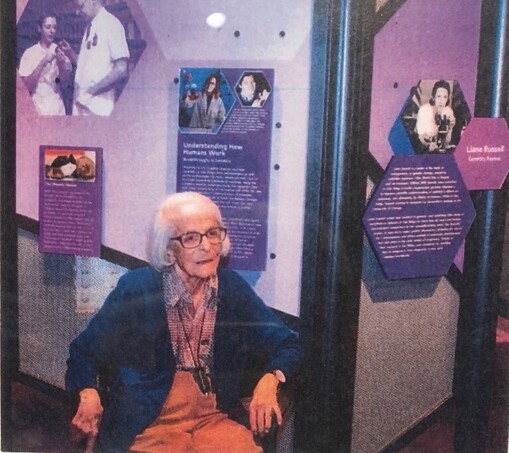
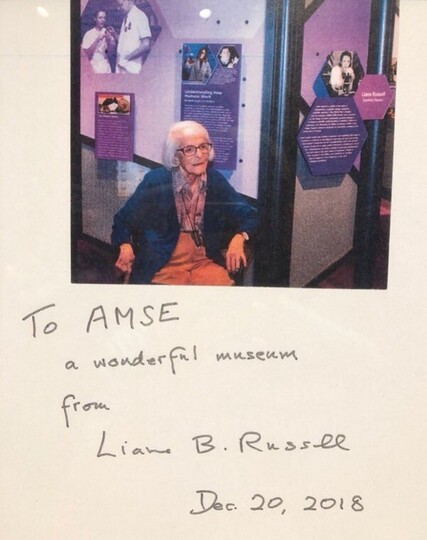
The American Museum of Science & Energy in Oak Ridge has a small display about Liane Russell and her work at ORNL. She posed next to it for a photo in December of 2018. That photo and a note of appreciation she sent to the museum are now part of the display.

I encourage you to take a minute and read this obituary written by her family. Lee Russell's experience fleeing her home to escape Nazis, then witnessing the rise of fascism across Europe, inspired her commitment civic engagement.

https://www.mottmckameyfh.com/obituaries/Liane-Russell

Liane Russell Obituary 2019 - Mott-McKamey Funeral Home

View Liane Russell's obituary, send flowers andfind service dates, and sign the guestbook.

Mott-McKamey Funeral Home
@mcnees
thanks for this "tootorial", much appreciated 👏
@mcnees Wonderful thread, especially the link to her StoryCorps interview. Thank you!