Simply transliterating the #Syriac spelling (which is itself a transliteration of a #Malayalam place name), we would get something like "Kutkarkari". So, my first step was to start googling all variations of that spelling that I could (changing the vowels, changing /t/ to /th/ but also trying /t/->/d/ or /dh/ because I've seen that in Malayalam/Syriac transliteration too, etc.).
Ultimately, I had to give up this google search because none of my spelling variations were turning up any likely places. So, I emailed Istvan Perzcel, an expert in Syriac Indian Christianity, and he kindly responded and said that this likely corresponds to the village of Kottarakkara in Kerala.
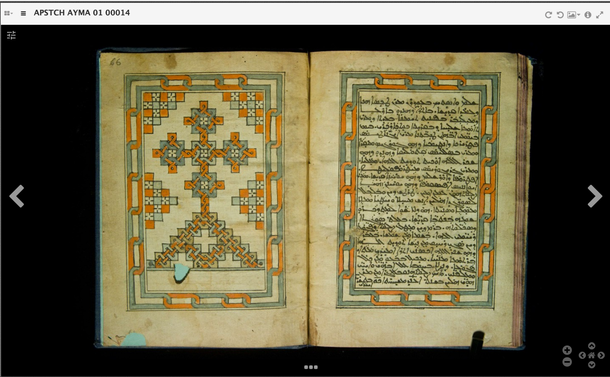
The next interesting bit of information we learn from this manuscript is about the #scribe. It was copied by ܫܟܪ ܐܠܠܗ ܒܪ ܬܐܘܡܐ, whom I've posted about on here before because he created some really cool artistic borders and decorations. But this particular manuscript adds an interesting detail. As part of his name, he calls himself ܐܟܣܢܝܐ "foreigner" (specifically ܐܟܣܢܝ ܐܬܪܐ ܐܡܝܕܝܡܬܐ - "foreigner of the Amid/Amida region").
I knew from other versions of his name that this scribe was an Amidaya--from Amid--but I had assumed he remained there and that several of his manuscripts had simply been sent to India. But because this colophon is so clear about where the manuscript was completed--and because he explicitly says he is a foreigner--I now know that this scribe, Shukrallah bar Thoma, traveled from Amid to India, where he copied several manuscripts for the Syriac Orthodox Indian churches there.