 Matthew Sparby
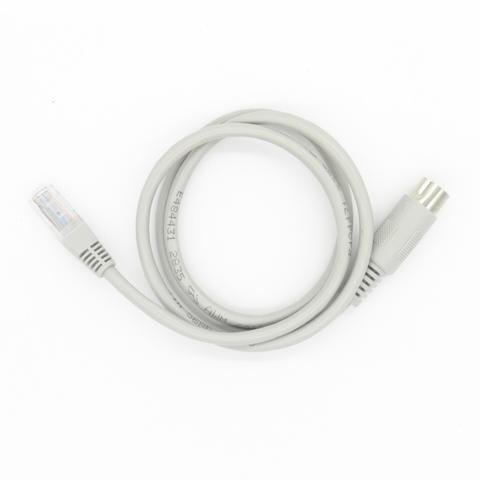
For nearly 5 years, I've been trying to figure out what this adapter is supposed to connect to. It's still a mystery. Someday, the right person is going to see this post and they'll finally solve this puzzle.


For nearly 5 years, I've been trying to figure out what this adapter is supposed to connect to. It's still a mystery. Someday, the right person is going to see this post and they'll finally solve this puzzle.
@Cloudscout looks like this guy on ebay. link might be dead but useful content in the url
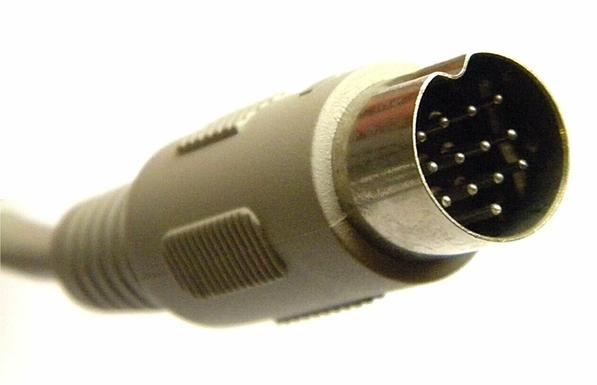
@Cloudscout tigertronics radio. You can buy another one on amazon if you lose this one !
https://www.amazon.com/Tigertronics-Cable-ICOM-13-PIN-PORT/dp/B00AR0BGBU
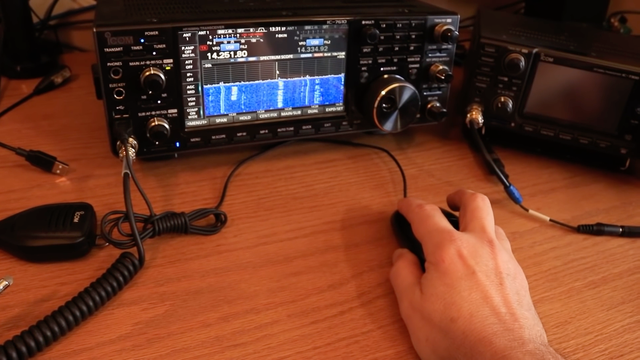
A ham radio that uses a mouse?
I think this a red herring. At least the 13-pin connector is a match though.

A ham radio that uses a USB mouse isn't the winner (image from the video). 🫤
The ICOM IC-7610 manual also reveals this radio is from 2017, a far cry from the 90s this cable was made around.
https://icomuk.co.uk/files/icom/PDF/productManual/IC-7610_ENG_Basic_1.pdf
So what is at the end of the cable you found on Amazon? A mini din data port, not mouse connections.
https://www.passion-radio.com/interface-cable/slusb-13i-1487.html
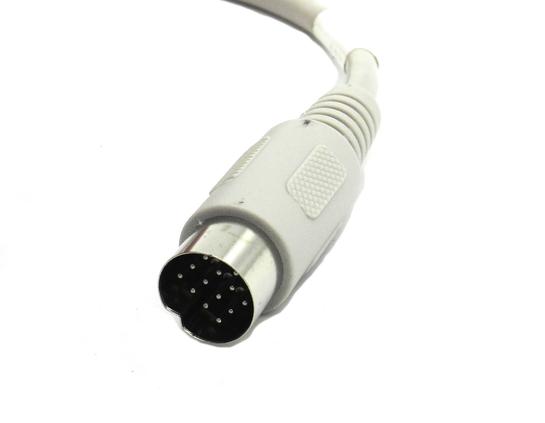
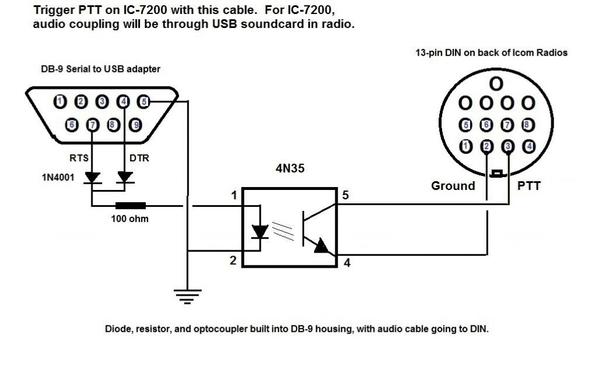
This wouldn't be the first time someone has guessed a ham radio before and it still may ultimately be the correct guess as ICOM apparently has been using this 13-pin DIN for years.
@Cloudscout never did map out the cable wiring though.
https://nitter.poast.org/Cloudscout/status/1091570232320319488#m
The model referenced in the image (ICOM IC-7200) is from 2008 per the manual, so not the correct period and odd to be supporting a bus mouse that late.
https://icomuk.co.uk/files/icom/PDF/productManual/IC-7200%20instruction%20manual.pdf
In researching this, I found myself referencing this bus mouse page on the Deskthority wiki more often than I expected.
https://deskthority.net/wiki/Bus_mouse
@Cloudscout says this is "from the first Mac transition era (68k-PPC)".
https://oldbytes.space/@Cloudscout/110839857284372758
That page has me thinking it is older than 1994. Also, the fact that bus mouse can be adapted to a serial adapter would make the argument that the wiring all translates to serial and was only intended to use one port at a time with a mouse.
"a previous serial technology"? Like RS-232 first introduced in 1960? 😏
https://en.wikipedia.org/wiki/RS-232#History
But it would also have to be after the first bus mice in 1986 for the port to exist on the cable.
https://en.wikipedia.org/wiki/Bus_mouse
And the LCD isn't relevant. You could benefit from mouse based tuning and click to talk on a ham radio without seeing a display output. Its just saying that the video of a modern ham radio you found isn't the device @Cloudscout's cable is for.
What if...? The missing piece to the puzzle is ham radio tuning software for classic Macs and PC? 🤔
This would address the desire for visual output without anything on the ham radio itself.
One thing that bothers me is that classic Mac serial port. Mice from Classic macs didn't plug into the serial port and weren't serial. It would have to be used for actual serial communication from a Mac, giving this software a plausible reason to exist.
Is this what you were trying to get out of Bing?
The 13-pin ACC port of ICOM radios doesn't seem directly consumable by a computer serial connection, so the cable would have to have circuitry in it for sure. The injection of a bus mouse continues to seem out of place as far as function goes.
It only makes slightly more sense if the mystery cable connects to a TU or TNC, not directly to the radio.
(IC-706, a period approximate model)
https://www.icomjapan.com/support/manual/2849/
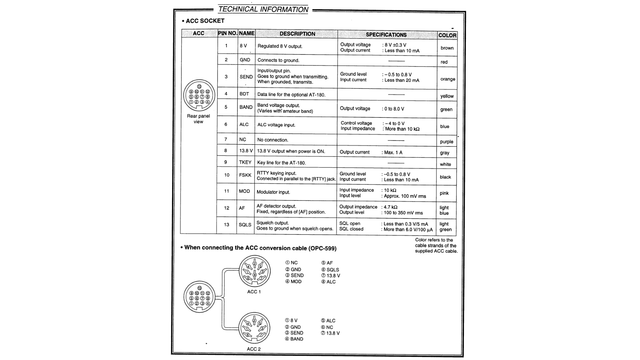
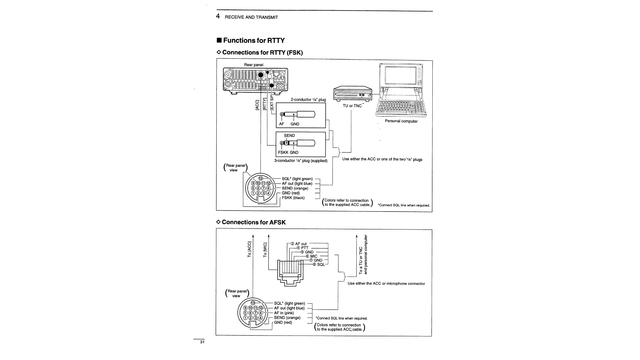

This just doesn't make sense. You would be adding a cable between the mystery cable and the computer so that the radio can send data to the computer?
The mouse port on the computer isn't going to be an output device, mice don't work that way and the radio won't do this bit-banging.
Unless a middle device with two 13-pin ports surfaces, I think the ICOM radio is out as a possible use for the cable.
 Darren
 Mufasa
