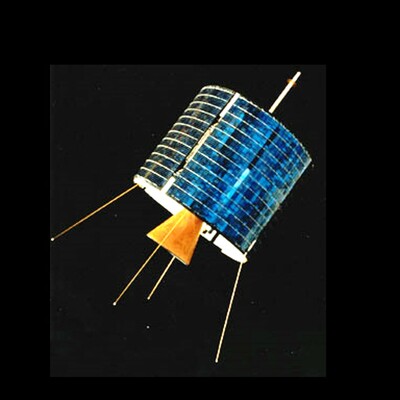
Data downlink from Voyager 2 lost due to a pointing error on its antenna: https://blogs.nasa.gov/sunspot/2023/07/28/mission-update-voyager-2-communications-pause/

Although if I understand this correctly, the carrier is still detectable - it's just faint enough that the modulation isn't.

The spacecraft is expected to automatically repoint in mid-October.

Mission Update: Voyager 2 Communications Pause – The Sun Spot

Voyager 2 was able to receive the "repoint now" command.

QT @canberradsn
2023 August 4

Two-way communications have been restored with #Voyager2
The good news was received through our 70-metre antenna dish, Deep Space Station 43 at 2:29pm AEST, 4th August. #DSS43

Also, the Canberra Deep Space Network station at Tidbinbilla is on Mastodon now: @canberradsn

Recuperaron comunicación con Voyager 2 ⬆️ ⬆️

@michael_w_busch @canberradsn

@michael_w_busch @canberradsn how the hell we punch a signal STRONG enough to reach that mispointed ~10foot antenna 10billion miles away??? i'ma gonna have to learn me some physics!

@barrygoldman1 @canberradsn The 70-m DSN antennas at the Deep Space Network sites were designed specifically to communicate with Voyager 2 - they were originally smaller and were upgraded to their current size before the Neptune flyby in 1989.

A few years ago, #DSS43 was further updated with a new 400 kW transmitter to be able to keep sending commands to the spacecraft.

(#DSS13 in California has a similar-power transmitter, but can't see Voyager 2 anymore. And the frequency is different.)

@michael_w_busch @canberradsn 400kw... i don't know how to calculate what that does. well... it's a lot of light bulbs that's for sure. but then u sort of divide by 10billion squared... i got 20 years left, one day i'll learn.

@barrygoldman1 @canberradsn By my accounting, #DSS43 when uplinking with Voyager 2 puts out the second-most-intense radio beam now available.

The first-most-intense is the Goldstone solar system radar on #DSS13, but it is again on the wrong side of the planet.

(Subject to caveats about some military radars. The Arecibo Observatory had a more powerful transmitter, but it is now lost.)

@barrygoldman1 @michael_w_busch @canberradsn
This screen capture from DSN is from June 2022.
Tx power to Voyager 2 was 19.22 kW. It's a 70-m dish, so the beam width is around 0.1 degrees for the S-band 2.11 GHz signal.
Also see this thread from today for a possible explanation for why the 2 degree mispoint may not have been so bad for the S-band uplink.
https://fosstodon.org/@AkaSci/110831480704126540
AkaSci 🛰️ (@[email protected])

Attached: 1 image How can Voyager 2 decode a signal when its antenna is mispointed by 2°? The graphic below shows the "antenna pattern" of the Voyager antenna. Most of the downlink energy is located in the narrow main lobe, but there is some energy in the side lobes too. The graphic shows 2 such sidelobes. The uplink signal strength has similar but wider lobes, so it is possible for V2 to decode a high power signal from the DSN at a 2° offset. Here's hoping that it does 🤞 https://descanso.jpl.nasa.gov/DPSummary/Descanso4--Voyager_new.pdf #Voyager 2/n

Fosstodon
@AkaSci @michael_w_busch @canberradsn i gotta learn some physics. i stopped my physics education before E&M alas. 0.1 degrees? the beam can stay that tight? at 10billion miles thats still an area of ... like a millionth of a sphere at 10billion miles is still humongous area spread out.
@barrygoldman1 @AkaSci Beamwidth is approximately (wavelength)/(antenna diameter). 2.1 GHz uplink -> 14 cm wavelength -> 0.002 radian beamwidth on a 70 m dish -> 0.115º.
@michael_w_busch @AkaSci somewher in storage i got a physics textbook

@michael_w_busch @AkaSci ok here's my q: wouldn't light be more efficient? or would it get too scattered by spacedust? does the sun put out more light than radio, to swamp a light signal?

sure, light would suck to use when its cloudy.

@barrygoldman1 @AkaSci Optical communication with spacecraft can be more efficient, but it runs into quantum mechanical limits: you need to have several photons per bit. And it doesn't work when it is cloudy.

Also, the Voyager spacecraft were built well before high bandwidth optical communication with spacecraft existed. It is only now being demonstrated over large distances: https://www.nasa.gov/mission_pages/tdm/dsoc/index.html

Deep Space Optical Communications (DSOC)

NASA.gov brings you the latest images, videos and news from America's space agency. Get the latest updates on NASA missions, watch NASA TV live, and learn about our quest to reveal the unknown and benefit all humankind.

NASA
@michael_w_busch @AkaSci see? i know no physics. how do i relate frequency~energy to # photons per bit? hmm...
@michael_w_busch @barrygoldman1
I presume there would be challenges in keeping a laser beam well pointed at large distance, in both directions.
@AkaSci @barrygoldman1 Pointing is a challenge, but more importantly optical beams going through Earth's atmosphere are limited to ~1 arcsecond beamwidth (absent some improvements with adaptive optics). The gain can still be ~10,000x what radio communication can provide; but the energy/photon is higher by a comparable factor. For low-bandwidth signals, radio can be equivalent or better. For higher bandwidths, optical can do better than radio - but only if there are enough photons to work with.

@AkaSci @barrygoldman1 @canberradsn Normal uplink to Voyager 2 is about 20 kW. The high-power uplink transmitter can be run up to 100 kW in routine operations; and up to the full 400 kW with clearance for special circumstances given that the spacecraft is high enough in the sky that the sidelobes of the antenna do not cause too much RFI for the airport and other radio operators in the ACT.

I do not know the actual transmit power used in the recovery.

@michael_w_busch @canberradsn
That is astonishingly cool. That we have folks who can do that, doing their job, probably underpaid for the skill and experience, working away unsung while the news talks about one stupid asshole after another is shameful.