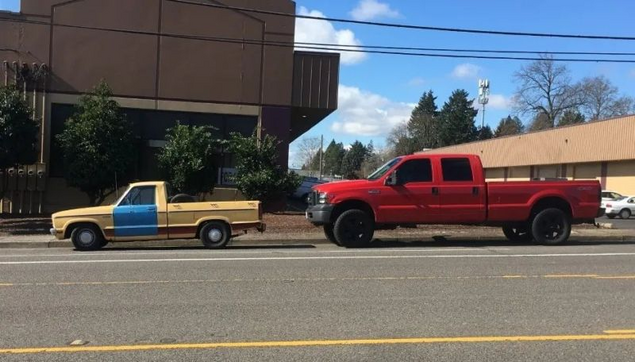
I’ve spent much of this year examining car bloat, the process through which smaller vehicles are being replaced by increasingly massive SUVs and trucks.

What I’ve learned: Huge cars are terrible for society, often in ways that are hidden.

Some basic facts:
◆ >80% of US car sales are now trucks/SUVs.
◆ Models keep expanding. For example, the F-150 is now ~800 lbs heavier and 7 inches taller than in 1991.
◆ EVs can make the problem worse due to huge batteries.

Continued (THREAD)
#cars #climate

Problem 1️⃣ : Car bloat endangers others on the street

Tall vehicles have bigger blind spots and are more likely to strike a person’s torso or head.

Heavier vehicles exert more force crashing into a person, bicycle, or smaller car. They also have longer braking distances.

Problem 2️⃣ : Car bloat worsens climate change

Heavier cars require more energy to move, which makes them guzzle gas.

When electrified, their huge batteries are so inefficient that the biggest models generate more pollution that some gas-powered sedans.

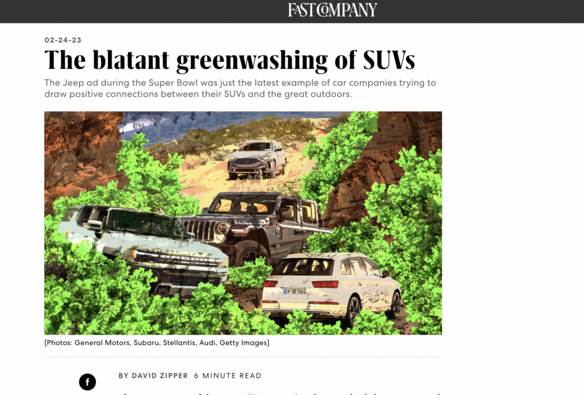
https://www.fastcompany.com/90854942/the-blatant-greenwashing-of-suvs

Problem 3️⃣ : Car bloat shreds tires

Heavier cars exert more pressure on tires, eroding them faster.

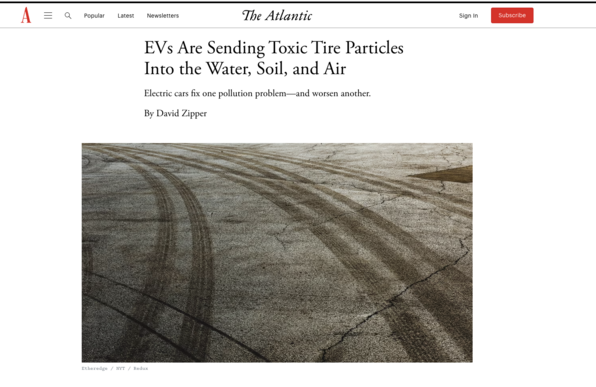
Tire particles are absorbed into water, where they damage ecosystems. They also float through the air, harming human health when ingested.

https://t.co/NN3EguO020

Electric Cars Are Sending Tire Particles Into the Soil, Air, and Water

Electric cars fix one pollution problem—and worsen another.

The Atlantic
@davidzipper so what do we do, David? I mean really all people in the transport planning profession see this, are asking the same questions, but except for some ideas in cities like Paris about more expensive parking, nothing seems to be able to get these car manufacturers to stop bloating.
@Marrekoo @davidzipper taxes per kilogram.