I've been part of IU's Institute for Digital Arts and Humanities (#IDAH) incubator (#IDAHIncubator)for the past two weeks.

It's been amazing to see how much can be accomplished when surrounded by and working with people with different skillsets. It's been a real pleasure.
We are presenting this afternoon for the #IDAHIncubator. I wanted to share some of the things we built.

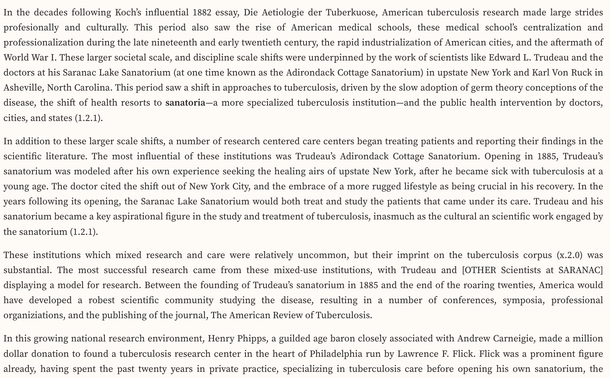
The main goal of the project was to make a web-based where medical historians could think through the open wound which is the primary source record. There are tons of materials which display human remains, with little care as to the lives of their subjects or the impact these modes of extraction had on communities.

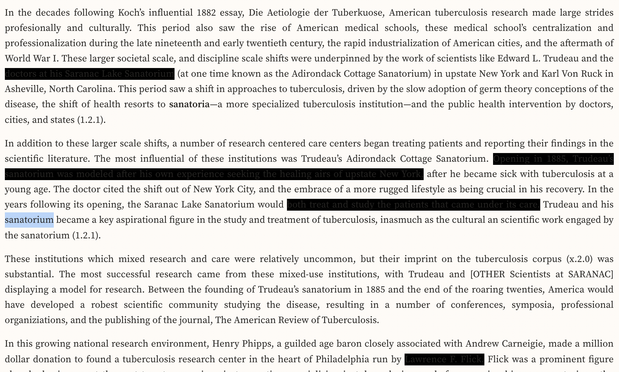
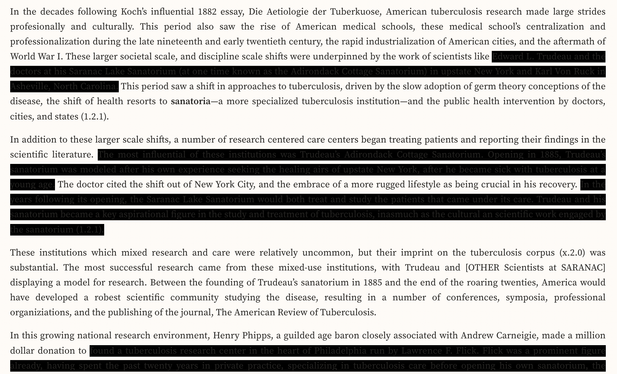
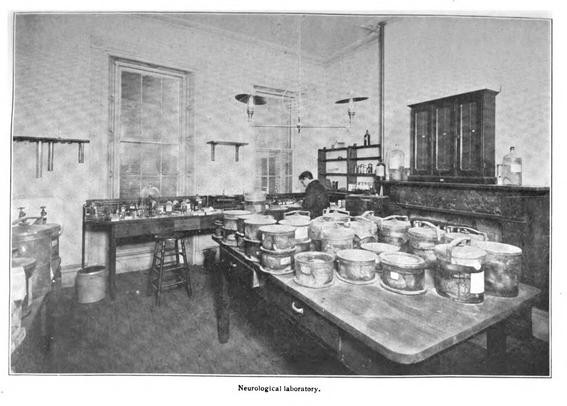
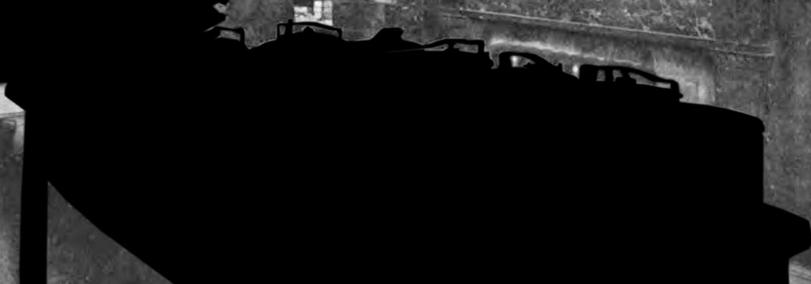
So what my team and I did was 1) prepare methods for making images that did not rely on posthumous exploitation of a dead subject. Differing layers of opacity (borrowed from Eduard Glissant's formulation of the term) were applied to images.

This example is from the Henry Phipps Institute.

We also built some custom code for toggling images in the site. By pressing the "partial opaque" or "opaque" buttons the images would switch out.

These buttons also black out part of the text. (Still having some CSS issues, but the main functionality works!)

I'd be remiss to talk about this project without thanking all the folx who helped with the project the last two weeks: Xavier Daniels and Sagar Prabhu worked as hourlies with Xavier taking care of a lot of the data entry and image questions and Sagar making the custom javascript code.

Also, I have to mention the extremely helpful and supportive work of the @IDAH staff, especially @kalanicraig and @michelledalmau .