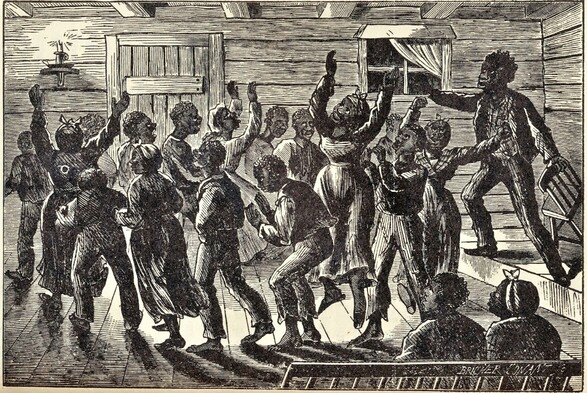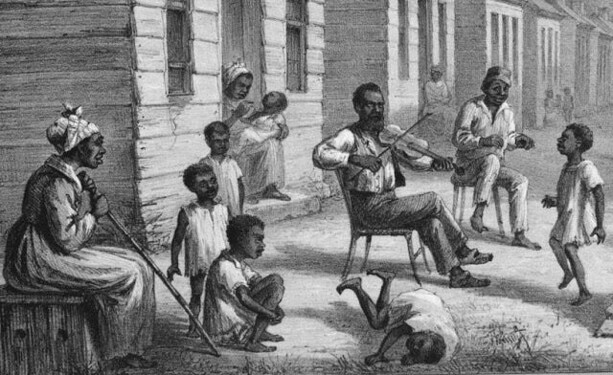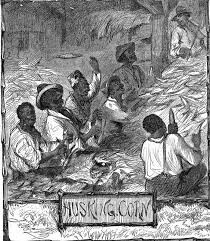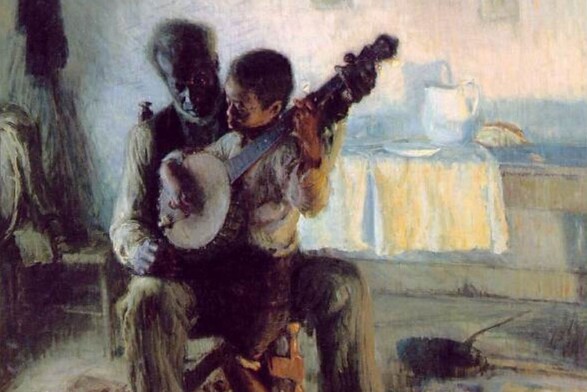
Black-American musical expression during enslavement laid the foundation for blues, jazz, country, gospel, rock ‘n’ roll, R&B, & popular music. Emerging from oppression, it reflected resilience & creativity, becoming anthems for civil rights movements the world over. The emotive force and cultural distinctiveness of those early songs endure, nurturing the ongoing struggle for a more just world.

1/

@[email protected] @BlackMastodon #BlackMastodon #Histodons #History #BlackMastodon #Slavery #Music
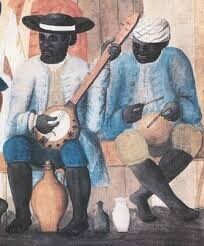
All African tribal groups brought to the New World as slaves shared a common cultural trait: music played an essential role in every aspect of life. It was present during play, work, mourning, and worship, blurring the lines between these purposes. Creating music was a communal effort, with everyone contributing according to their abilities.

2/

#Histodons #History #BlackMastodon #StillWeRise #BlackHistory #Slavery #Music

Even after Africans were forcibly taken from their homes and forced to adapt to a foreign land and culture, music remained central to their lives. Their songs encompassed work, dance, and worship music, forming distinct categories.

3/

#Histodons #History #BlackMastodon #StillWeRise #BlackHistory #Slavery #Music
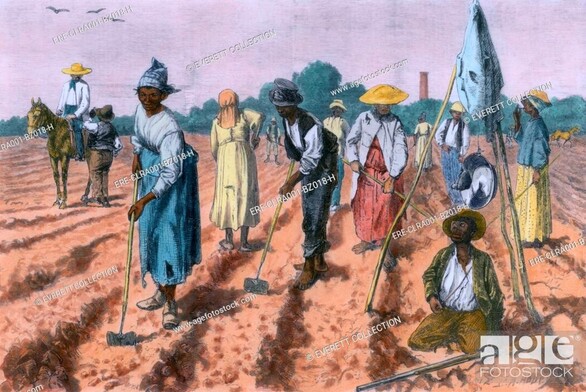
Throughout history, despite the challenges of slavery, the slaves developed a new communication system through these songs. Over time, these musical expressions became the foundation of Black American music, uniting the Black community during years of struggle and hardship.

Subsequent generations built upon this foundation, eventually giving rise to what we now know as Black American culture.

4/

#Histodons #History #BlackMastodon #StillWeRise #BlackHistory #Slavery #Music
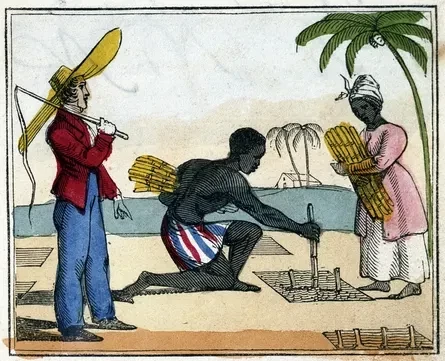
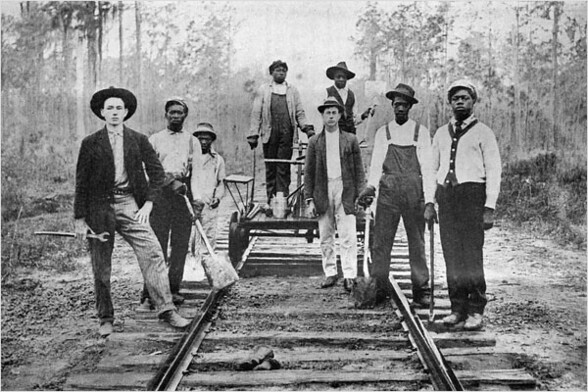
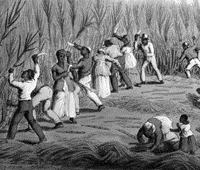
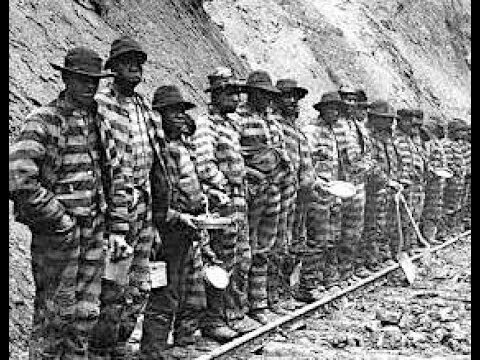
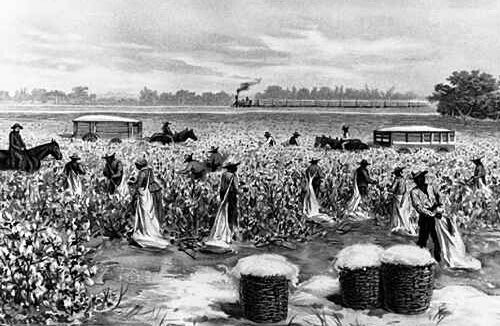
Enslaved people sang work songs while laboring on railways, cutting woods, and clearing bushes for their masters. These songs served as a way to alleviate boredom, express emotions, frustrations, and dreams of freedom. The lyrics provided insights into their harsh life, reflecting on deaths, punishments, starvation, and family separation.

5/

#Histodons #History #BlackMastodon #StillWeRise #BlackHistory #Slavery #Music
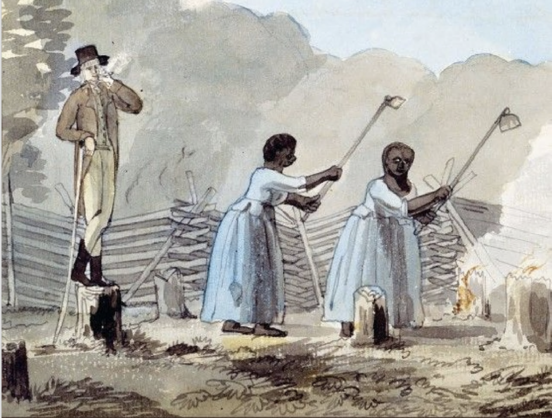
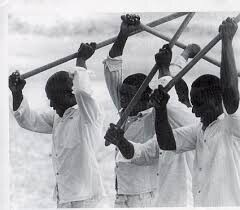
Work songs became a means of covert communication among slaves, using coded messages to mock their masters. These songs fostered a strong bond among the slaves, and they sang together in groups, with a leader starting the line and others repeating it as a chorus. This communal singing improved their coordination and enhanced the effectiveness of their tasks, especially during heavy labor involving dangerous tools.

6/

#Histodons #History #BlackMastodon #BlackHistory #Music #Histodons #History

Work songs varied based on the type of labor, pacing the tasks and making life more bearable. Descriptions of work songs are scarce before 1800, but their modern understanding is based on an intermediate stage of development. These songs evolved from improvised music into roughly predictable rhythmic and metric patterns.

7/

#Histodons #History #BlackMastodon #StillWeRise #BlackHistory #Slavery #Music

Most slave music was delivered in a responsorial fashion, with one singer leading and the others joining in, a practice likely influenced by African singing traditions. This style of singing built community and was essential for ensuring worker safety during heavy labor.

8/

#Histodons #History #BlackMastodon #StillWeRise #BlackHistory #Slavery #Music
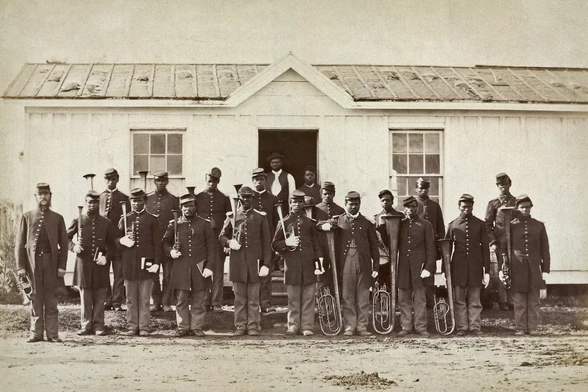
An example of such a song is the railroad work song, which helped coordinate the efforts of workers when hammering spikes or realigning sections of railroad. Chants or songs like "Steel Driving Song" and "Track Callin'" provided the rhythm needed for synchronized labor.

9/

#Histodons #History #BlackMastodon #StillWeRise #BlackHistory #Slavery #Music

Field recordings of work songs were typically not captured while the singers were actually working due to the inconvenience of remote work locations for collectors and the disruptive presence of recording equipment for the workers.

John Lomax and his son, Alan Lomax, were folklorists who unearthed some of the most potent vernacular music from the American South within the oppressive and violent prison system of the region.

10/

#Histodons #History #BlackMastodon #StillWeRise #Slavery #Music

These songs had once been sung throughout the South, but the advent of machines led to the disbanding of work gangs. Subsequently, the songs found their last refuge in the road gang and the penitentiary.

Southern agricultural penitentiaries mirrored 19th-century plantations in many ways, where groups of slaves toiled under the watchful eye of armed white overseers, facing constant threats of severe physical punishment.

11/

#Histodons #History #BlackMastodon #StillWeRise #Slavery #Music

Consequently, it was no surprise that the music of plantation culture, including the work songs, also made its way into the prisons.

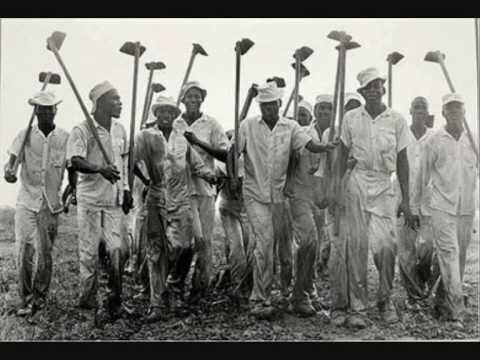
Within the prison environment, the presence of work song collectors became an intriguing novelty for the inmates, who had no choice but to comply with their wardens. Work tasks, like chopping trees or hoeing fields, were sometimes done with the purpose of recording.

12/

#Histodons #History #BlackMastodon #StillWeRise #BlackHistory #Slavery #Music

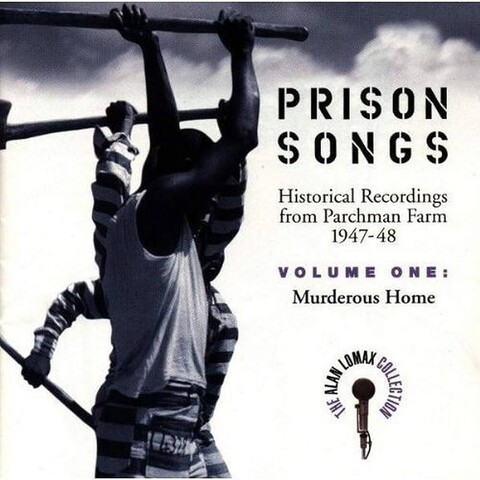
Field recordings made under such conditions, like "Early in the Mornin'" and "Makes a Long Time Man Feel Bad," provide valuable insight into the integration of work & song. Alan Lomax recorded tie-tamping and wood-cutting chants, field hollers, & occasional blues at Mississippi's Parchman Farm Penitentiary in 1947 and on February 9, 1948.

https://youtu.be/3qsRdLXaWBY

Modern interpretation
https://youtu.be/_XfKHm9g-ig

12/

#Histodons #History #BlackMastodon #StillWeRise #BlackHistory #Slavery #Music

No More, My Lawd

YouTube

These recordings were anthologized as "Negro Prison Songs" in 1958 and released in 1997 as two volumes of "Prison Songs" in the Alan Lomax Collection by Rounder Records (1714 and 171).

13/

#Histodons #History #BlackMastodon #StillWeRise #BlackHistory #Slavery #Music

A notable example of a work song assimilated into popular culture is the "Night Herding Song." Historically, work songs have been adapted to suit the styles of various singers who then became inspirations for later generations.

For instance, in 1929, Mississippi John Hurt recorded the popular tune "Spike Driver Blues," his own take on the traditional "Take This Hammer."

https://youtu.be/Q5img4o2Wgc

14/

#Histodons #History #BlackMastodon #StillWeRise #BlackHistory #Slavery #Music

MISSISSIPPI JOHN HURT - Spike Driver Blues [1928]

YouTube

The work song "Black Betty," originally documented by the Library of Congress, has been recorded by rock bands Ram Jam (1977), Spiderbait (2004), and The Melvins (2011). As a result, contemporary pop music carries traces of the driving rhythms and poignant lyrics that echo the centuries of American workers chopping, hammering, and daydreaming.

https://youtu.be/tiCEVl_9-MM

15/

#Histodons #History #BlackMastodon #StillWeRise #BlackHistory #Slavery #Music

Original Black Betty

YouTube

An essential element of all Black American music, particularly work songs, is the "call and answer" structure present in both the musical and textual lines. This structure remains even when there's only one singer, and it persists in modern popular music, regardless of race.

https://youtu.be/4MwQcm4eH18

16/

#Histodons #History #BlackMastodon #StillWeRise #BlackHistory #Slavery #Music

Call & Response. Work song - Prision song (1966)

YouTube

In genres like Blues within Black American music, the "call" portion may occur on a beat or two. The tradition of call and answer singing has endured throughout history, from the construction of the transcontinental railroad to the work gangs in southern penitentiaries until the 1930s, and even in the songs of basic training in the U.S. military.

17/

U.S. Military Drill Training

https://youtu.be/hHs6XQfgLp8

#Histodons #History #BlackMastodon #StillWeRise #BlackHistory #Slavery #Music

Top 5 Best Army Cadences | New intro | Read Desc

These clips in my video aren't mine, I found them off youtube. This video contains 5 clips of U.S Army Soliders, marching, and singing cadences. I select 5 v...

YouTube

During field work, like hoeing, efficiency was crucial for work lines, and the music was not vastly different from "gang" songs. Call and answer melodic lines remained the norm, but the absence of serious injury risk allowed for more improvisational freedom and exploration. This led to irregular line lengths and a more dramatic delivery of the songs.

Example

https://youtu.be/xlaRGTHJbFk

18/

#Histodons #History #BlackMastodon #StillWeRise #BlackHistory #Slavery #Music

Charlie Rocks Cadence REVISED

YouTube

Black improvisation during this time was not concerned with rhyme or syllabification. Syllables were either shortened or elongated to fit the rhythmic unit. Additionally, the origin of the modern guitar "lick" can likely be traced back to the field holler or "arhoolie."

These vestiges of call and answer singing can still be heard in popular music today.

Edwin Hawkins Singers, “Oh, Happy Day, 1968
https://youtu.be/EfGDvDGE7zk

19/

#Histodons #History #BlackMastodon #BlackHistory #Slavery #Music

Oh Happy Day - The Edwin Hawkins Singers

YouTube

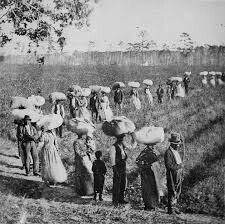
Field hollers represent a form of work songs originating from enslaved individuals who toiled for long hours in the fields. These songs emerged during the peak of slavery in the United States, between the seventeenth and nineteenth centuries, and endured into the twentieth century, carried by African Americans even after the abolition of slavery in 1865.

20/

#Histodons #History #BlackMastodon #StillWeRise #BlackHistory #Slavery #Music

Incorporating distinct elements, field hollers often involved snarls, growls, and other non-musical language or animal sounds, as well as swoops and glissandi—blurring one note into the next without a break between them. All slave music, regardless of its purpose, featured the use of quarter-tone inflections.

21/

#Histodons #History #BlackMastodon #StillWeRise #BlackHistory #Slavery #Music

A quarter-tone denotes the note between two recognized in Western music. For instance, the pitch between E flat and E is neither E flat nor E but a distinct sound in itself. In Blues, these notes are referred to as "bends." These unique musical nuances contribute to the richness and depth of the field hollers and Blues genre.

Example: Mistreatin' Mama by the harmonica player Jaybird Coleman, 1927

https://youtu.be/XvUS-OTF3qA

22/

#Histodons #History #BlackMastodon #BlackHistory #Slavery #Music

Jaybird Coleman Mistreatin' Mama (1927)

YouTube

Slave owners and overseers recognized the significance of work songs and understood that slaves who didn't sing could cause trouble. They also grasped the impact of the music's tempo and its character. Faster, cheerier, major-key songs were encouraged, as they increased productivity. Mournful, sorrowful songs in minor keys were discouraged, as they could affect the mood, slow down work, and lead to trouble.

23/

#Histodons #History #BlackMastodon #BlackHistory #Slavery #Music #StillWeRise

The tempo of work songs sometimes depended on the pace of the machines used, like in grinding. The evolution of work songs' textual content and musical characteristics didn't solely follow African lines or exist in a cultural vacuum. Coastal region slaves worked alongside newly-arrived blacks from the West Indies and immigrants from England and Ireland, resulting in a blend of musical influences from various cultures.

24/

#Histodons #History #BlackMastodon #BlackHistory #Slavery #Music

West Indian music brought fresh African elements into slave music, while the music of immigrants from the British Isles reinforced the initial British influence on the slaves during the seventeenth and eighteenth centuries. The diverse cultural interactions shaped the musical landscape of work songs during that era.

25/

#Histodons #History #BlackMastodon #StillWeRise #BlackHistory #Slavery #Music

The Spiritual emerged as a dominant music type during the evangelical crusades of the nineteenth century. In regions where religious teaching proved successful, spiritual texts replaced the typical texts of work songs. Throughout history, work songs provided slaves with an opportunity to express their emotions by praising or satirizing their masters through song.

https://youtu.be/znDkWgvcLHg

26/

#Histodons #History #BlackMastodon #StillWeRise #BlackHistory #Slavery #Music

I Got a Robe - Moses Hogan (with music score) High Quality

If you need the music score you can contact me via Email : [email protected] traditional spiritual is offered in a fresh and distinctive setting b...

YouTube

"Marching" songs can also be categorized as work songs, as slaves marched to and from labor, to the "big house" for weekly rations, and during migrations to auctions. These marches were more cost-effective than transport by rail or water.

With the emergence of black soldiers in the late 19th century, march songs transitioned into the military, where each troop-unit developed its own songs.

27/

#Histodons #History #BlackMastodon #StillWeRise #BlackHistory #Slavery #Music

Field hollers and work songs share similarities, with the main difference being that work songs have a steady beat, while field hollers lack precise rhythm. Field hollers are predominantly solo performances, while work songs involve group singing. Field hollers played a crucial role in black music, capturing urban environments through amplified sounds.

28/

#Histodons #History #BlackMastodon #StillWeRise #BlackHistory #Slavery #Music

Mississippi John Hurt
https://youtu.be/tx29hxvjPfk

Mississippi John Hurt Spike driver blues

YouTube
Slave Shout Songs from the Coast of Georgia | Smithsonian Folkways Recordings

The McIntosh County Shouters, 1993 recipients of the National Endowment for the Arts National Heritage Fellowship, are known for their compelling fusion of dance, call-and-response singing, and percussion consisting of hand-clapping and beating a stick. The ring shout has African origins, but as …

Smithsonian Folkways Recordings

Books

—Douglass, Frederick. Narrative of the Life of Frederick Douglass, An American Slave. Boston: Published at the Anti-Slavery Office, 1845.

—Floyd Jr., Samuel. "Ring Shout! Literary Studies, Historical Studies, and Black Music Inquiry." Black Music Research Journal 22 (2002): 49-70. Center for Black Music Research, Columbia College of Chicago and University of Illinois Press.

30/

#Histodons #History #BlackMastodon #StillWeRise #BlackHistory #Slavery #Music #Books

More Books

—Jackson, Bruce. Wake Up Dead Man: Hard Labor and Southern Blues. University of Georgia Press, 1999.

—Lomax, John A., and Lomax, Alan. Our Singing Country: Folk Songs and Ballads (Dover Books On Music: Folk Songs). New York: The Macmillan Co, 1941.

—Rosenbaum, Art. Shout Because You're Free: The African American Ring Shout Tradition in Coastal Georgia. University of Georgia Press, 2013.

31/

#Histodons #History #BlackMastodon #StillWeRise #BlackHistory #Slavery #Music #books

A Few More Books

—Spence, John. Annals of Rutherford County vol. 2. The Rutherford County Historical Society, 1991: 20.

—Stuckey, Sterling. Slave Culture: Nationalist Theory & the Foundations of Black America. Oxford University Press, 1987.

32/

#Histodons #History #BlackMastodon #StillWeRise #BlackHistory #Slavery #Music #books

@Deglassco
I so love that you did this thread! I remember a course in grad school on American music history, which covered a lot of the Great Awakening cross-pollination of English/Irish musical influences with African music due to tent revivals within ear-shot of one another. I love learning about the work song aspect of this. Such a rich history, beautiful and terrible due to the specter of slavery, but how impoverished our musical heritage would be without it.
@Deglassco This is a fascinating thread. I remember listening to a work song on Encarta. Also I had no idea about Black Betty being one.
@Deglassco The Encarta Work song I heard had something to do with Berta, I think. it's been a while.

@Deglassco

Thank you so much for this thread. Not only was it fabulously educational (especially as an Australian) and the music beautiful and haunting, but it was exactly what I needed to start a morning where I needed distraction from my pain until my meds kicked in.

@JenMc glad to see that you liked it. Hope you feel better.
@Deglassco Thank you so much for sharing all of this Prof. Glassco! It’s so fascinating to learn how work influenced musical form and structure. I’m so interested in how music functions in our social lives, but I had never thought much about the many ways work affects form. I’ve got some reading and listening to do!