This is a thread about photographer Shah Marai, democracy and women's rights in Afghanistan.

As the Taliban are trying to make everybody forget democracy and women's rights ever existed in Afghanistan, I will take every opportunity to remind everybody that democracy and women's rights in Afghanistan have a long history, and also share Shah Marai's photos. So it will be a long thread.

If you're short on time, after the next post you can hit the eject button before the slideshow begins, ok?

🧵1

If you want to cut to the chase, here it is.

Women have had rights and have participated in society and in democracy in Afghanistan for a long time. They first won the right to vote in 1919. That's a year after women in the U.K. and a year before women in the U.S.

The Taliban's brutal repression of women's rights has nothing to do with Islam, traditions or Afghan values. It's misogyny, plain and simple.

🧵2

The name Shah Marai is not well known outside photography circles, but if you read any news articles on Afghanistan since 2000, you will have definitely seen his work. He first started taking photographs in Kabul, Afghanistan in 1998. Afghanistan was under Taliban rule and photography was viewed with great suspicion. Photographing living beings, human or animal, was forbidden. Shah Marai would sneak his camera out and try to document what was happening in Kabul at grave risk to himself.

🧵3

After the fall of the Taliban, Shah Marai became chief press photographer in AFP's Kabul office. He covered all the huge changes in Afghanistan during those years. You can view his archive of over 20,000 images at his Getty archive. It needs a content warning as he didn't shy away from anything happening in his Afghanistan. It's violent and horrific at times, but it's also filled full of hope, and beauty.

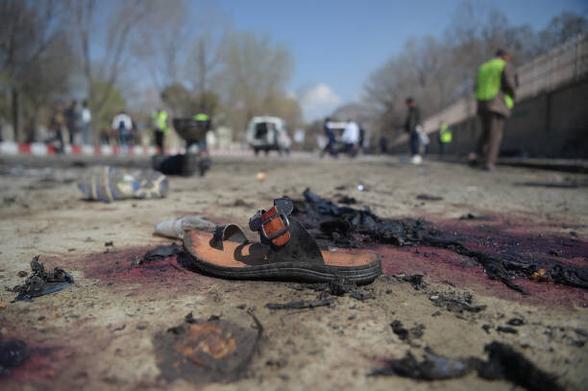
Shah Marai was very much a press photographer. He covered all the news stories. It was mostly a depressingly regular routine of foreign politician's visits and suicide bombings.

While he took lots of the much needed press shots, when he wanted to, he could take documentary shots that were up there with anything you would find in a Magnum photographers portfolio.

🧵5

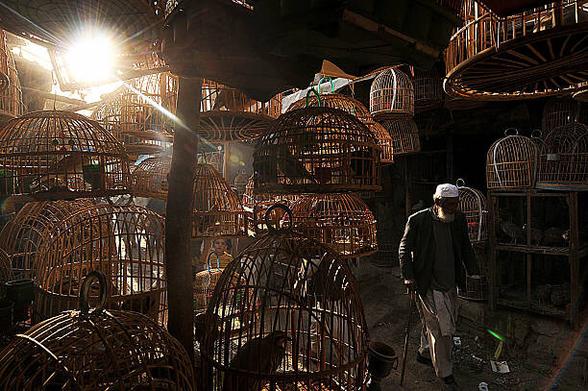
The first photo I saw that really stopped me in my tracks and made me remember the name Shah Marai was this one from 2009. The Bird Cages at Kabul Market. It's breathtaking. The sunlight breaks through onto the birds in the cages as the old man walks away, to me it encapsulates the whole political landscape of Afghanistan at that time.

🧵6

Shah Marai's work helped him support his large extended family, many of whom suffered from a genetic defect that led to blindness. He was always laughing and joking, a kind and generous man who liked to help everybody, he even paid to have a mosque built in his home village.

Shah Marai loved all children, and in 2018 he was completely overjoyed that with the birth of his sixth child, he had finally been blessed with a daughter.

🧵7

18 days after the birth of his sixth child, he was at the site of yet another suicide bombing in Kabul, photographing and looking for survivors. It was then that a second suicide bomber detonated their device. Shah Marai died instantly.

🧵7

I could talk about Shah Marai, his life, his death, his photographs,his Afghanistan, for hours.

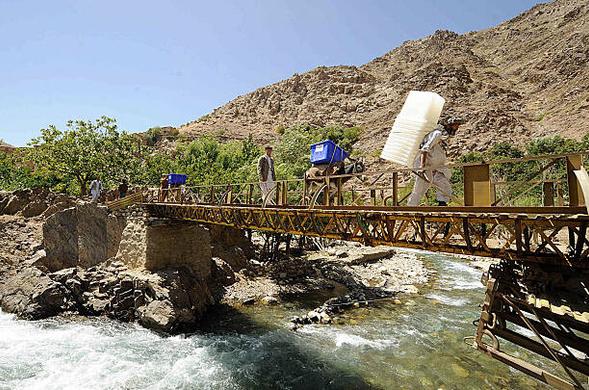
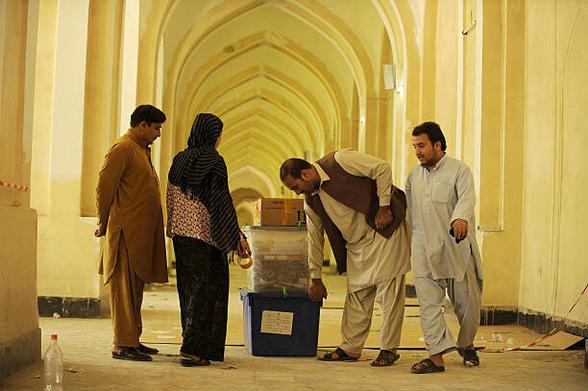
But we're here to talk about what he and I consider to be some of his finest and perhaps most important work. In 2010 Shah Marai travelled all across Afghanistan to photograph boxes. Yes, that's right. Boxes.

🧵8

Shah Marai photographed boxes all over Afghanistan in 2010.

🧵9

Shah Marai photographed boxes in schools in Afghanistan in 2010

🧵10

Shah Marai photographed boxes in government buildings in Afghanistan.

🧵11

Shah Marai photographed boxes in mosques in Afghanistan.

🧵12

Shah Marai photographed boxes on the backs of lorries in Afghanistan.

🧵12

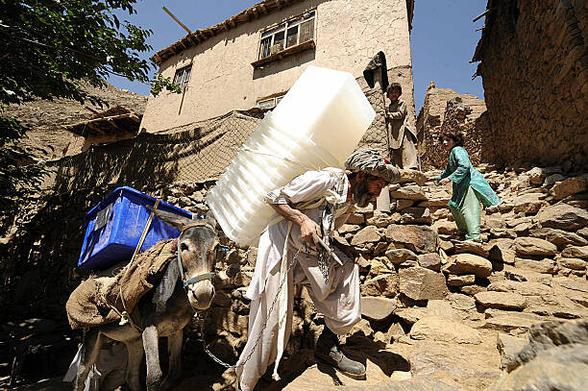
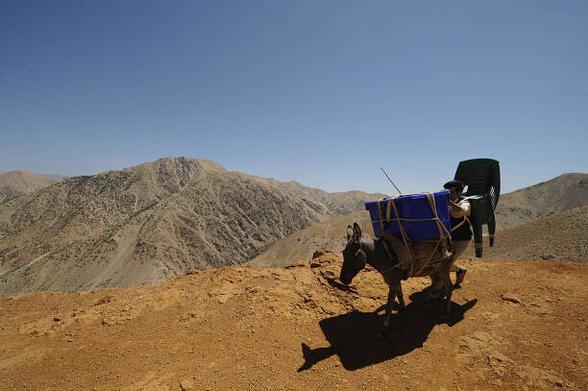
Shah Marai photographed boxes on the backs of donkeys in Afghanistan in 2010.

🧵13

Shah Marai photographed boxes on the backs of people in Afghanistan in 2010.

🧵14

Shah Marai photographed boxes being carried through the streets of the city in Afghanistan in 2010.

🧵15

Shah Marai photographed boxes being carried through the villages of Afghanistan in 2010.

🧵16

Shah Marai photographed boxes being carried on dusty roads through the countryside of Afghanistan.

🧵16

Shah Marai photographed boxes being carried through the desert plains in Afghanistan.

🧵17

Shah Marai photographed boxes being carried up the mountains in Afghanistan.

🧵18

@ProjectFearlessness The same misogyny the extreme right in both US & UK would like to reestablish.
@margarance @ProjectFearlessness as I read the thread I couldn’t help but think that at one time they were more progressive than what part of this country wants to work toward now.
@jag0325 @margarance
Yes. This is very recent history in Afghanistan. Before the Taliban's return in 2021, Afghanistan had 34% female politicians, which compares well with any other democratic country in the world. It was a higher percentage of female politicians than the U.S. has.

@ProjectFearlessness

Agreed fully. But also, misogyny is totally baked into the Abrahamic religions and so they are a vital tool in this program. When people can invoke an invisible, silent sky god to back up their prejudices it becomes a powerful tool. And also infinitely flexible, of course. "God" can say anything the men in charge want him to.

@MylesRyden
I don't disagree, but theology is not my area, so I will have to pass on this. Thanks though.

@ProjectFearlessness

No expert either, just my opinion 😉

@ProjectFearlessness

Any good sources?

The claim that Afghan women had "won/had the right to vote" in 1919 is widely circulating on web pages, but I can't find any serious sources. Art 16 of the 1923 constitution [1] says "all subjects ... have equal rights ... in accordance with sharia and the laws of the state". Arts 40+41 refer to elections. But there are no details. Amanullah Khan's 1919-1929 rule did attempt modernisation [2].

[1] https://web.archive.org/web/20010609023011/http://www.afghan-web.com/history/const/const1923.html

[2] https://en.wikipedia.org/wiki/Amanullah_Khan#Administrative_and_political_reforms

Afghanistan Online: Constitutions of the Past (1923)

Full English Text of Afghanistan's 1923 Constitution.

@boud
The short answer is no. I have read lots of serious articles and academic texts that use that date. I've always assumed it was correct, but as for definite legal proof, I have nothing to back this up. You have got me thinking now. I will try to get back to you if I find anything.

@boud
This is the kind of thing I've been drawing on. Dr Nina Ansari of Cambridge University, England says the year 1919 in this speech. It's a credible enough source for my purposes, but maybe not the kind of proof you're looking for. Sorry I can't be of more help. Good Luck.

https://manaramagazine.org/2024/05/profiles-in-perseverance-the-rise-and-fall-of-womens-rights-in-afghanistan/

@ProjectFearlessness

Did you give the wrong URL? [3] is by Nina Ansary, not Aminira Khan.

Evidence for me personally doesn't count for much; evidence for the openly peer-reviewed encyclopedia is needed [4]. Feel free to add something there if you come across a good source. Even a source stating that elections took place during Amanullah Khan's rule (apart from the 1922 constitutional Loya Jirga) would be (indirectly) useful.

[3] https://archive.today/2024.08.23-172736/https://manaramagazine.org/2024/05/profiles-in-perseverance-the-rise-and-fall-of-womens-rights-in-afghanistan

[4] https://en.wikipedia.org/wiki/Talk:Women_in_Afghanistan#Women%27s_suffrage_in_1919%2f1921

@boud
Sorry, I got the name wrong. Edited now. What you're looking for would take a lot of digging around for, but I'll bear it in mind if I do come across it.
@ProjectFearlessness @boud You made me curious enough to do some searching. The 1919 date is used in this US News article and it refers to an Amnesty International article where the date can be found in their interactive timeline: https://www.usnews.com/news/best-countries/slideshows/womens-rights-in-afghanistan-a-timeline?onepage&utm_source=pocket_shared
The Rise and Fall of Women Rights in Afghanistan | LSE Public Policy Review

The LSE Public Policy Review is an open-access, refereed journal which is published quarterly. Each issue is thematic and concentrates on a key topic at the heart of current debates in public policy. Public policy challenges bring to the fore cross-cutting questions which require a global perspective and a focus on their interconnectedness. Because of this, articles in each issue take different disciplinary perspectives, encouraging interdisciplinary collaboration and analysis at the forefront of current thinking. As a result, each issue presents a comprehensive approach to the specific theme and an analysis that is academically rigorous but also readily accessible to all readers. The LSEPPR publishes original research papers, conceptual articles, review papers written for a general readership, in non-technical language aimed at a wide audience including government, business and policy-makers, as well as academics and students. LSEPPR seeks to actively contribute to the study and development of public and social policy, public administration and public management.  

LSE Public Policy Review
@marfisk @boud
Yes, it's one of those things where it's widely used as the date, but an acceptable and verified source of the information is not so easy to come by. I feel like it's probably stuck in books on shelves of libraries somewhere waiting to be digitised.
@ProjectFearlessness @boud That's quite possible considering the date and how it doesn't quite fit the modern narrative. Amanullah Khan was far ahead of his time. He inspired me as a child to write a poem about him for history class (US foreign service in Afghanistan in early 1970s).

@marfisk @boud

And there was Queen Soraya. It is always incredible to compare Afghanistan in the 1920s to the 2020s.

https://www.arabnews.com/node/1732666/world

Queen Soraya of Afghanistan: A woman ahead of her time

LONDON/KABUL: Born in exile, she died in exile. But during the 10 controversial years she spent as queen of Afghanistan, Soraya Tarzi gave the women of her country a tantalizing glimpse of an emancipated future which, a century on, has yet to be fully realized. Barely remembered in the West, where she was once greeted by vast crowds during a triumphant tour of European capitals in 1927-28 with her husband King Amanullah Khan, earlier this year Queen Soraya was celebrated by Time magazine, in a series honoring the forgotten female pioneers of world history.

Arabnews
@ProjectFearlessness Shah Marai was a very generous journalist, we had him on air on the #BBCWorldService a few times too - unfortunately mostly to bring grim news to a global audience
@fulelo He was great. Unlike you, I was never lucky enough to meet him, but you can see all you need to know about him in his photographs.