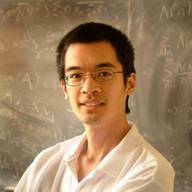
A small anecdote in relation to a recent coffee conversation I had with @TaliaRinger (which they relate over at https://twitter.com/TaliaRinger/status/1681410191278080000 ): Yesterday I spoke with a children's book author who was interviewing me as part of a series she was writing on contemporary scientists. She freely admitted that she did not have great experiences with her math education at an under-resourced school and chose very early on to focus on writing instead. Nevertheless we had an excellent conversation about many mathematical topics that she was not previously familiar with, such as proof by contradiction, Cartesian coordinates, Mobius strips, or compressed sensing, all of which she found fascinating (and said she would read up on more of these topics herself after our interview). I posed to her the isoperimetric problem (using the classic story of Queen Dido from the Aeneid as the intro) and she correctly guessed the correct shape to maximize area enclosed by a loop (a circle), and instantly grasped the analogy between this problem and the familiar fact that inflated balloons are roughly spherical in shape. I am certain that had her path turned out differently, she could have attained far greater levels of mathematical education than she ended up receiving.

This is not to say that all humans have an identical capability for understanding mathematics, but I do strongly believe that that capability is often far higher than is actually manifested through one's education and development. Sometimes the key thing that is missing is a suitable cognitive framework that a given person needs to align mathematical concepts to their own particular mental strengths.

Talia Ringer on Twitter

“Terry Tao and I spoke over coffee for like two hours yesterday, in part about diversity in how people think about math. We both agreed that people who hit these walls early mostly don't learn the way of thinking about math that works for them. It's an educational failure”
Twitter
@TaliaRinger In this specific case, I guessed (correctly, as it turned out), that framing mathematical concepts and problems as narratives (ideally involving children) would be particularly effective in communicating mathematics to a writer of children's books. For instance, in addition to the Dido story, I could explain proof by contradiction through the story of young children challenging each other at recess to name the largest number, until one realized that because they could always add one to the number the other child proposed, that there was in fact no largest number. Compressed sensing I could explain due to the need to have a child sit still for several minutes in an MRI scan before the modern CS algorithms became implemented in the machines. Mobius strips I could explain via a proposed children's activity of cutting such strips to encourage mathematical exploration. These were handpicked examples, but in general I think a lot can be done with creatively reframing the way we present a given mathematical topic.
@tao @TaliaRinger My favorite example of this phenomenon is one I learned several years ago. Consider two questions:

1. Four “Bicycle”-brand playing cards are laid out on a table. Some have red backs, some have blue backs; some are face-up, some are face-down. You would like to check the proposition “if the number on the front of the card is even, then the back of the card is red.” Which of the following cards do you need to flip over to determine if this proposition is true?

A. Face up, showing a five
B. Face down, showing a blue back
C. Face up, showing six
D. Face down, showing a red back

2. Four housemates share a car between them. The house rule is that anybody can use the car, but you have to fill up the tank with gas before you bring it back. If you know the following facts about the housemates, who would you need to talk to to ensure the rule is being followed?

Alice did not take out the car
Bill did not fill the tank
Claire took out the car
Dale filled the tank

Many people, even with some math background, find the second easier, even though it’s logically equivalent