Spent the weekend building and filling a #SolarKiln ... which is a thing for rapidly drying firewood without any additional fuel.

In Scotland, it can take a year or more to season wood. The idea here is to accelerate that process by increasing the temperature.
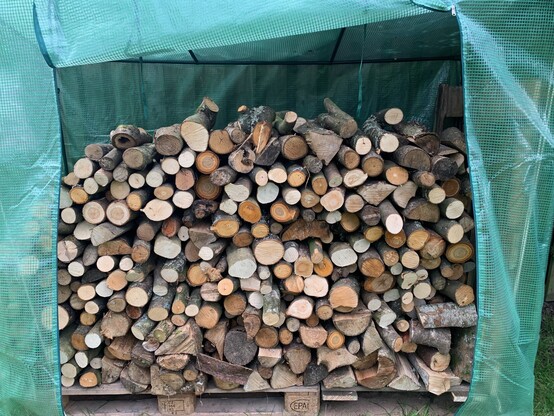
It sounds very high-tech – and you can spend hundreds or thousands of pounds on these things. But I opted to build a low-cost alternative involving a 30 quid plastic greenhouse from #Lidl and 3 pallets we retrieved from neighbours who wanted shot of them anyway.

I knackered my back about a month ago loading pallets into our car. They were sodden, and weighed about 30kg each.

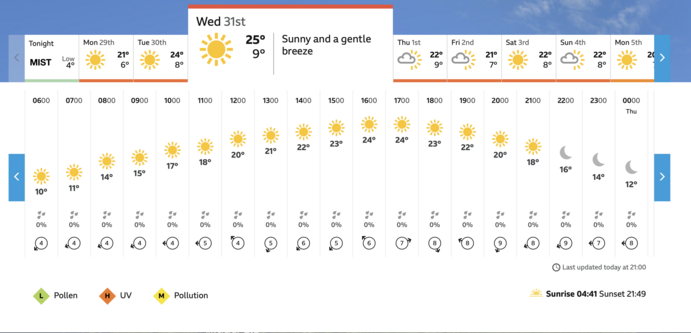
Anyway, I reckon the temperature in there will get up to ~35-40ºC this week, given our weather forecast.

I'll measure actual temperatures over the coming days and record them here.

Meanwhile, here's what the contraption looks like (trigger warning: it looks like a £30 Lidl greenhouse, 3 pallets, and half a tonne of wood.)

The wood slopes downward to the left because that's the south. So it should admit maximum sunlight and, as the wood contracts and settles, it should migrate northwards – where there is full-size support.

It's a #prototype, I suppose.We'll see how it goes.

The frame is tethered to the pallets and half a tonne of wood, and also guyed to the fence behind.

So it should withstand anything but the worst winter storm.

Worst thing that can happen is I have half a tonne of damp wood ¯\_(ツ)_/¯

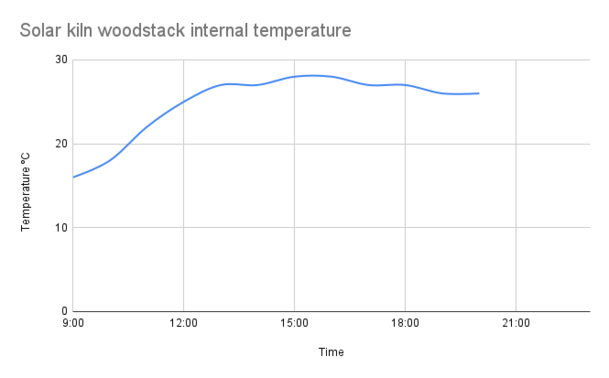
Day 1. Observed temperatures peaked at 22°C here.

Inside the woodstack the peak was 28°. That’s measured in the middle of the pile, 2 or 3 layers from the top. So well out of direct sunlight.

On the surface the temperature peaked at 39°C. Again I chose a spot out of direct sunlight.

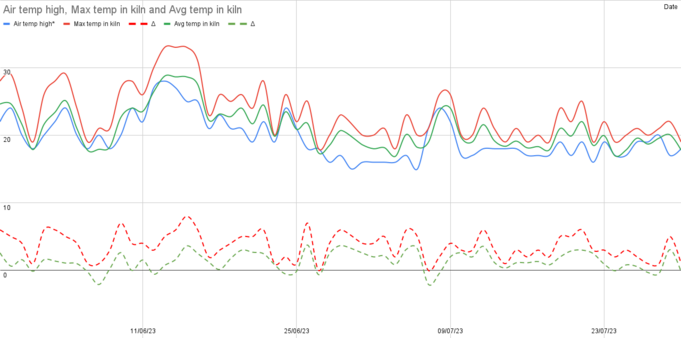
Here's a graph of the data so far for today.

I am, obviously, not going to update this 24/7.

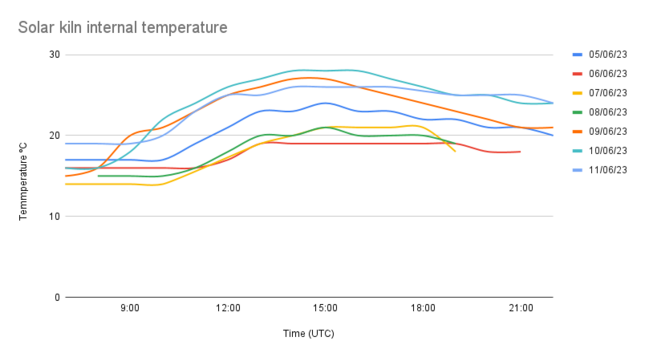
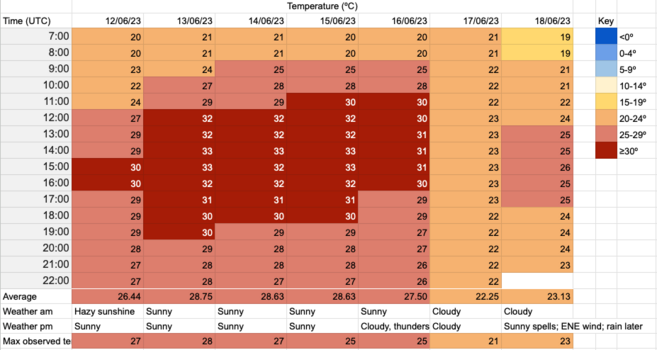
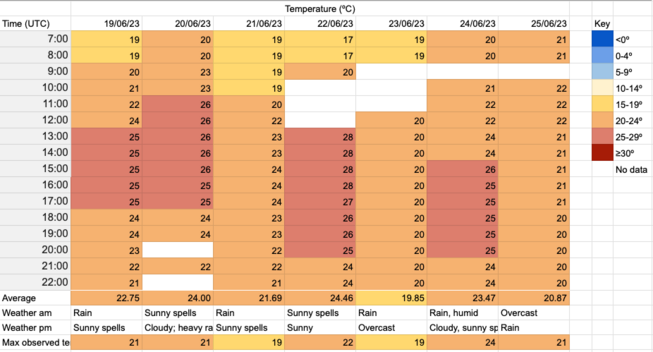
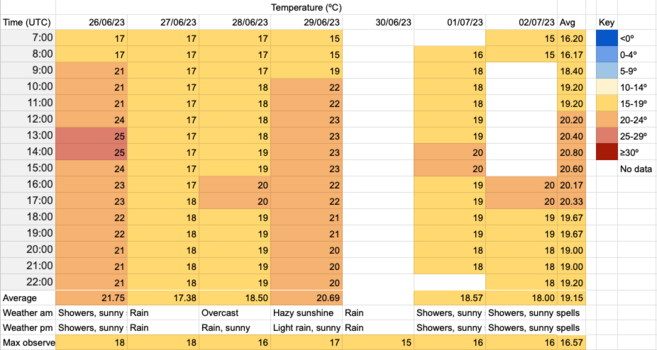
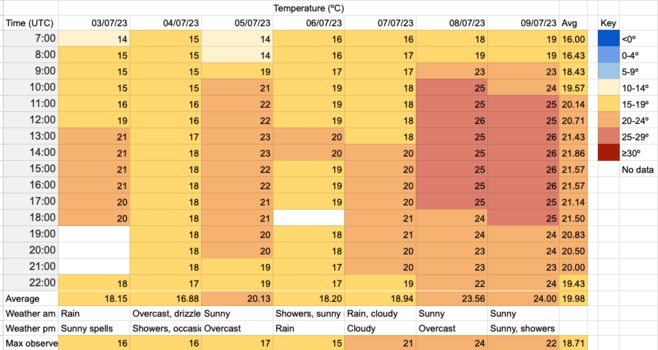
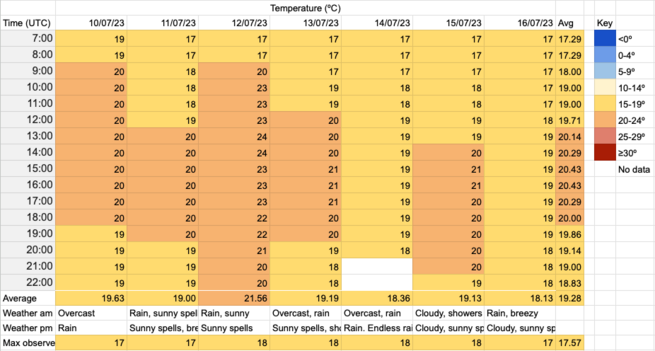
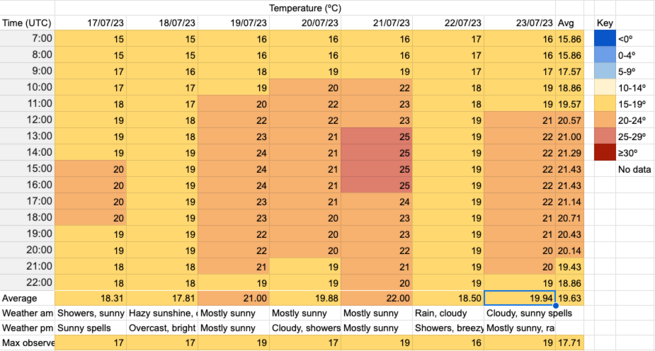
The maximum internal temperature in the kiln was consistently above the daytime max.

So, we're definitely not making things worse, but better.

There were only 2 days in the 63 days of the study when the kiln failed to improve on daytime max.

The biggest difference was +8ºC. On average it was +3.72ºC.

That doesn't sound like a whole lot, but, as I think we're all just beginning to comprehend, it represents a shedload more energy in the system.

On 13/63 days, the mean temperature inside the kiln was lower than the daytime high.

Which means, obviously, that on 50 days it was higher.

On average, the mean temperature inside the kiln was 1.41ºC higher than the daytime maximum.

This is important. It means I can count on maintaining (on average) *at least* and probably plus a bit, the highest temperature in the environment all day.

And, again, +1.4ºC all the time for 7 weeks is a shedload of extra heat energy.

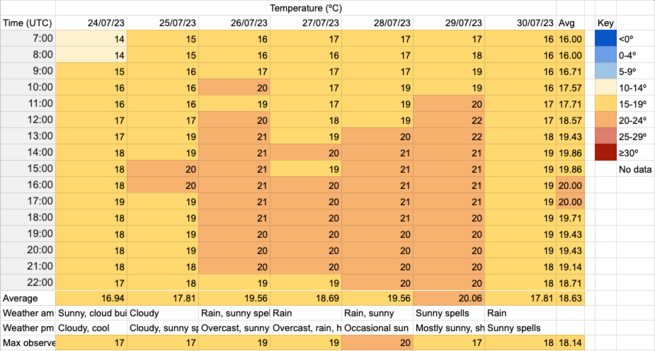
Solar kiln interior temperature

Week 1 Temperature (ºC) Time (UTC),29/5/2023,30/5/2023,31/5/2023,1/6/2023,2/6/2023,3/6/2023,4/6/2023,Avg,Key 7:00,16,19,16,15,16,16.40,<0º 8:00,16,17,18,16,15,15,17,16.29,0-4º 9:00,18,20,16,17,18,20,18.17,5-9º 10:00,22,22,16,19,21,23,20.50,10-14º 11:00,25,25,17,23,25,23.00,15-19º 12:00,27,27,18,25

Google Docs

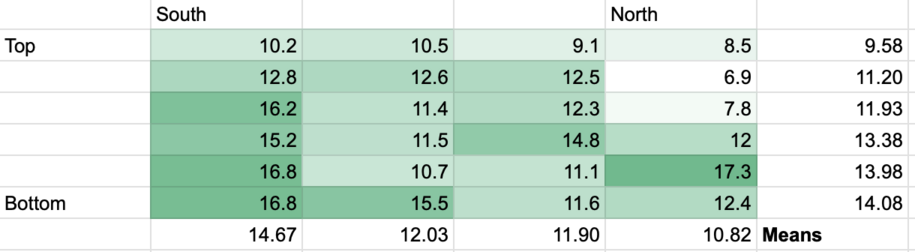
Finally got myself a moisture meter. Took some readings across the woodpile to measure the moisture content of logs throughout the #solarKiln.

Surprisingly, the lowest values were towards the northern end, closer to the top.

I hypothesise that the air movement through the £30 + a back injury kiln is responsible for this.

#ClimateDiary