 sjvn
sjvnTech Hype 2023: The Short Version.
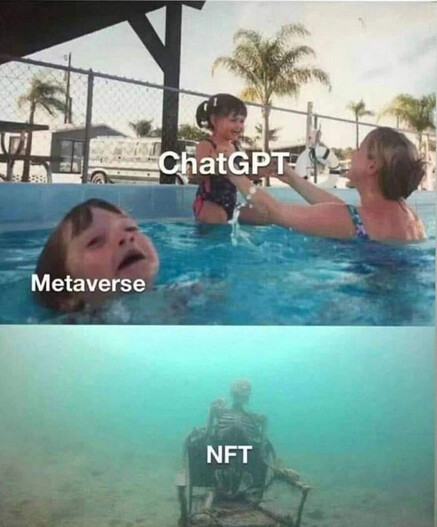

@jacket @sjvn Yeah, it's a funny post but I think these 3 things aren't really comparable.
NFTs seem useful for a certain range of applications, one of which – and I don't think this is what you meant – is specifying who owns what in things like video games. The monkey picture thing seemed pretty stupid indeed, but here's an interesting thought experiment: if you think nft monkeys are stupid, would you want to spend extra for an original painting if you could get a to-the-naked-eye just as good copy to hang on your wall instead?
Metaverse-type technology is obviously potentially super useful for a wide range of things. However, all attempts so far have been extremely underwhelming, and I don't think anyone serious thought that was going to be any different in the near future just because Zuckerberg is into it.
ChatGPT and future iterations seem poised to e.g. make every knowledge worker many times more efficient at large parts of their jobs. This is just not like those other things.
@ech @jacket @sjvn yeah, no. With the way people lose their NFTs via hacks, exploits of bugs in the «trusted» code etc, I prefer the old-fashioned ways of registering ownership. Also, why pay a $5-50 blockchain transaction fee for a $2 video game on sale?
And no, there aren’t any «obvious» benefits to the metaverse, otherwise Second Life would be a greater success than it is (metaverses seem to be bad copies of that).
@Pineywoozle @jacket @sjvn wow 😂
"nobodies saying they are remotely similar" Except they're saying each item is "just flavor of the fervid month", and addressing that was the only point I made.
If I pay a lot of money for an NFT for some art you made, I'm supporting you? The thing you said is the one part of owning original works that actually applies to NFTs in exactly the same way. You realize that, right?
LLMs poses a lot of problems, for sure! I never said otherwise?
 Jacket
 Locksmith
 Andres Jalinton
 Elon Musk stick
 Erik Haugen
 Dan Portales 🇲🇽
 Tor Iver Wilhelmsen
 @pineywoozle ‘s #3WordNote
 Nytefyre