I still have trouble believing they sell twenty times as many smart watches as digital cameras now.

Like I get that a lot of people probably mostly want smart watches as a fitness tracker, and tracking biometrics of some sort is the only reason I really understand to get one. But I feel like there should be a really massive market for standalone digital cameras too and I guess there just isn't.

@Lacci This app having Wear OS support was the only reason I got a smartwatch.

https://play.google.com/store/apps/details?id=prox.lab.calclock

@Mayabotics
My watch would be soooo boring. Also seeing my schedule all the time if I was busier might make me more anxious, but I have OCD so I'm weird. Like if I make to do lists it can be really bad. It's like it just intensifies my anxiety about things. I don't know if it's writing it all down in one place or what.

I guess on the plus side the SD card of my digital camera and my photo library are anything but boring. I mean unless you don't like wildlife, landscape, and astrophotos.

@Mayabotics
It does look like a really cool and legitimately very helpful app though.

@Lacci Completely understand the anxiety issue, and honestly my schedule is pretty boring, but it's expensive to miss doctor's appointments and missing work meetings was a recipe for self-flagellation and anxiety spirals.

Standalone cameras are good though, I need to get out more with my mirrorless, especially since the weather has been good for park wandering.

@Mayabotics
That's totally understandable.

What system do you use? I actually use a Pentax DSLR, so a bit off the beaten path these days. They say they want to stick to DSLRs (which kind of appeals to me), but I am a little doubtful they'll be able to stay in business. Still, all my glass will work well with an adapter on a mirrorless. I mostly have vintage stuff.

@Lacci I use a Sony Alpha A6000, so there is the annoyance of being stuck in Sony's proprietary E-mount for lenses if you're not using an adapter. I had wanted something that would do some hand-holding, because when I bought it, it had been over a decade since I last used something more complicated than a point and shoot.
@Mayabotics
I've heard good things about the A6000. You're stuck with one proprietary lens system or another no matter what unfortunately. I've heard Sony has struggled really badly with lens availability for the E mount and I'm not clear why, which must suck.
@Mayabotics
Pentax K and M42 mounds are nice if you're using an adapter because those mounts weree huge for a long time and so there's a ton of good used glass available. Unfortunately Sony users in particular seem to have figured that out and prices aren't ridiculously low like they were a decade ago. There's still a lot of great deals, especially if you don't mind manual focus. I have a 50mm f1.7 with great optics I got for $17.

@Lacci I didn't have issues finding lenses, but I'm not a collector. Besides the two kit lenses that came with the camera, I bought an UWA, and my go-to prime, a Sigma 30mm f/1.4 lens.

I don't mind manual focus at all, I regularly used a film SLR in high school, just didn't really want to deal with the complications that lens mount adapters bring.

@Mayabotics
That's fair. And an excellent go to prime. I have a 28mm f2.8 that I use quite a lot. And an adapter definitely is annoying, especially with a camera one of who's virtues is being very compact. When you're hauling a 500mm f4.5 its less of an issue.
@Mayabotics
The issues I heard about with Sony were more that lens prices were high and there wasn't as large a variety of lenses as people expected a bit over 10 years after the e-mount came out. But maybe there've been more releases the last few years. I haven't really been paying attention
@Mayabotics
I've always wanted to try a really ultra wide angle lens, I have a 14mm I use quite a bit which qualifies as ultra wide, if only just. It does wonderful shots of the night sky.

@Lacci Yeah, the lenses aren't cheap, especially since the first-party mirrorless lenses tend to have built-in image stablization. Sigma and Rokinon are the more reasonably priced 3rd-party lenses, but they do sacrifice features, typically AF and image stabilization.

My UWA is a 12mm f/2.0, and I haven't used it for astro yet. The light pollution at my typical observing spot has gotten dramatically worse over the last couple years.

I want to get down to Cherry Springs though. The weather didn't want to cooperate this past winter.

@Lacci Oh, since the A6000 has a APS-C sensor, with the crop factor of 1.5, the APS-C 12mm lens is roughly equivalent to a full-frame 18mm lens.
@Mayabotics
Right, that's the same crop factor as mine. Sony actually manufactured the sensor Pentax used in my K-S2 and they came out around the same time so I'd imagine they're fairly similar. Mine has a slightly lower resolution.

@Lacci I think IBIS was an extra product differentiator between Sony's APS-C and Full frame cameras up until recently.

It's slightly annoying not having it, but I also have a remote shutter trigger and a tripod, so I can work around it.

The lens stabilization is a really nice feature on the two kit lenses, especially the telephoto. It's just a shame that that they're kind of cheap in other ways.

That makes sense Pentax is using Sony sensors, they're practically the only OEM left for digital still camera sensors.

@Mayabotics
One nice thing about Pentax has been their kit lenses are actually good, which was really great when I was starting out, though I only had an 18-50. Good kit lenses aren't at all common. I wish I had also gotten their 55-300mm kit lens which is really excellent, but I didn't have the option. It took a while to find some good long lenses I could afford, and since wildlife is huge for me that was key.

@Lacci Yeah, I have no idea how people can afford to buy even the mid-range lenses, never mind the premium ones.

Were you still seeing a decent number of animals when you went out? It feels like everything except white-tailed deer is becoming more rare here.

@Mayabotics
Oh no. :(
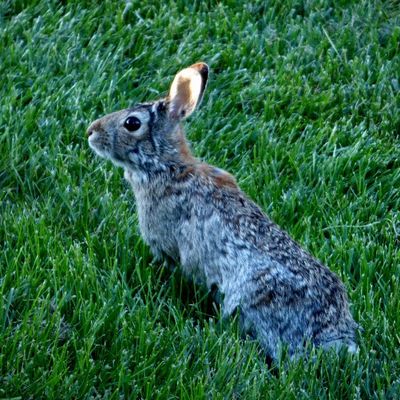
I do see a lot of animals, I actually just saw a cottontail. But I also live in Omaha which is very much not in a densely populated region (though the metro area has around a million people). I've seen a pretty broad range of critters even fairly close to the city. I was hoping to get out to see the sandhill crane migration a couple of hours drive from here this year, but health wise it wasn't happening. I've been once before and it's pretty awe inspiring.
@Mayabotics
I see a fair number of predators foxes, coyotes, eagles, hawks, etc. I even saw a bobcat near where I live a couple years ago. And people report cougars now and then. I heard one doing it's mating call one night. It sounds like a woman screaming in terror which is very unnerving. But where there's a healthy population of predators usually the ecosystem is at least hanging in there.

@Lacci It's probably just me. Thinking back, lately I've been mostly out during the day or well after sunset for stargazing, not really during the dusk or dawn hours.

Where I grew up, we occasionally had an animal scream that sounded like that. Typically it would be blamed on a fisher cat or bobcat, but either a coyote or a red fox were more likely culprits. (Fisher cats have a terrifying scream, but it doesn't really sound human-like.) Though I always found rabbit screams the most terrifying.

@Mayabotics
Hopefully that's the explanation, though things have been rough for a lot of ecosystems.

I thought the scream I heard really was human till it repeated twice. I don't think a human could physically have done that. I suspect this was a cougar because it's the only animal I've found recordings of making a scream like that one, though it's surprising how many animals scream in a human way. But I didn't see it so it could have been something else.

@Mayabotics
The news gets pictures of cougars on people's porches or whatever in the suburbs now and then so they're around and not overly afraid of inhabited areas. They're stealthy and not prone to bother people so you don't usually see them. The population here is a 21st century thing I think, they were wiped out East of like Colorado (except a tiny group in Florida) but their numbers are booming and their range has moved way east. The out of control deer population is a huge boon for them.
@Mayabotics
I think they think it's possible they're breeding East of the Mississippi now, and if not they will be soon, which is quite a ways east of us. And a male trekked all the way to new England not long ago. Males will travel very long distances, females spread more cautiously.

@Lacci Back in CT, there were basically legends about a hidden population of mountain lions (local name in CT for cougars) that somehow managed to survive extirpation in the 1800s, but with the exception of one that was killed by being hit by a car in 2011, there hasn't been any physical evidence for them in the state since they went extinct. I think that one is the male you mentioned.

Most of the time when someone from the CT DEEP's Wildlife Division investigated sightings, they ended up being misidentifications of other animals by the witness, typically bobcats.

In NY, a couple valid sightings have been traced to escapees from zoos, and that treking male. Most of the big predator fears here really seem to be about wolves migrating in from Canada, and not the native black bear population. (Hunters keep killing wandering wolves whenever they do end up in the state, despite it being illegal.)
@Mayabotics I think they call them mountain lions everywhere in the US :)
I expect they'll move in for real unless humans start killing them, which wouldn't shock me. If there is ever an incident people can get pretty nuts, even if all the research shows they extremely rarely hurt humans and reduce fatalities from cars hitting deer by quite a lot (they both reduce deer populations and make deer warier of roads).
@Mayabotics
Wolves actually have a similar effect on deer to cougars but people tend to get freaked about predators if they aren't used to them. I don't know though, cougars have been tolerated here, maybe they'll get along in the east. They're certainly less likely to get involved with people than bears.

@Lacci A lot of the northeast states have pretty regressive hunting policies regarding predators.

I would suspect that if we tried reintroducing cougars here, they would be "mistakenly" hunted as bobcats, like what happens with wolves and coyotes. NY for example, have very few restrictions on hunting coyotes and bobcats.

There were attempts to re-establish a Canada lynx population here in NY 34 years ago that failed, and I suspect more of them were illegally hunted than the 8 known to have been taken accidentally or as damaging wildlife.

@Mayabotics
:(
I don't think intentional reintroduction is really being seriously considered, they're more reintroducing themselves. Of course that might be why intentional reintroduction isn't being considered.
@Mayabotics
Florida did successfully bring eight in from Texas to interbreed and improve the genetic diversity of Florida panthers (a subspecies) but that's the only thing close to reintroduction I've heard of. I think they're considering bringing more in, it's kind of a balance between diluting the gene pool and keeping the Panthers genetically viable. If they do well the population may go up and spread out of Florida, they used to live in seven states in the southeast.
@Lacci That's would be pretty neat if panthers were restored to something close to their original range.
@Mayabotics
It would be. It'll be interesting to see what happens. The population is up from 10 to 230 since 1967, but I don't think they've spread a ton at this point. I don't know if they're hemmed into southern Florida by development or they be able to spread north to where there's a lot more habitat.

@Lacci It sounds like they are encountering something that was seen in NY with the lynx reintroduction attempt, a lot of roadway deaths as the felids try to cross between unconnected wilderness.

There appears a program meant to fix the problem by improving Florida's wildlife corridor.

@Mayabotics
Oh no. I hope they manage to do a better job with wildlife corridors. We need to do a much better job of that all over. And cutting down on car and truck traffic wouldn't hurt either. Certainly that would keep more humans alive, and shifting people to transition and more freight to rail (and/or having less freight) would help with CO2 emissions.

@Lacci Yeah, these environmental and ecological problems are all interconnected.

It's so frustrating that more people don't see that.

@Mayabotics
Very frustrating :(

Social problems as well. The atomization of society is at least partly about lots more work and less free time than we once had. And that excessive focus on productivity, production (often of stuff that breaks far too fast), and consumption keeps all those cars and trucks on the road. And there's a very concerted effort to keep people from really being able to grasp the interconnections, presumably because they might do something about all of it.