Early pious and mystic women were famous for their stubborn trust in their knowledge of God and making their own way in a world that was threatening to exclude them. A taste of early Sufi women's authority in thread of twenty-three toots. 1/22
Some of what follows may be familiar to you if you've read my novels, especially The Lover. Zaytuna and Tein's mother is a composite of early Sufi women and her life story and dialogue and is adapted from these sources. 2/22 www.llsilvers.com
Unfortunately, Women almost entirely disappear from the biographies of Sufis by the 5th/11th century. We argue about why. I think Sara Abdel Latif is right to point at a complex of reasons, an important one being the real risk of violence and shunning over accusations of impiety. 3/22
So biographies that define the Sufi path and its history become more pious-than-thou to protect these communities. The problem is that later Sufis read these sources and think that is how things were and women should be rightfully excluded from authority and even attendance. 4/22
A taste of that trouble brewing shows up in the early reports which depict men vouching for women who teach publicly and privately. In these stories, men challenge the women who then show the men up spiritually with sharp-tongued answers proving they are above reproach. 5/22
A female preacher who taught in the streets is challenged by a man who stood over her aggressively, accusing her of pride. She told him: “Pride belongs to the self. There can be no pride in what comes from God.” Then dismisses him, “Get up and leave when you like.” 6/22
She recited this poem in ecstasy, declaring to him that she was chosen by God for this (not men).
There are elect chosen for His love
He chose them in the beginning of time
He chose them before the splitting of His creation
As ones, entrusted, with wisdom, and eloquence. 7/22
The elderly Umm al-Husayn al-Qurayshiyya of Nasa visited the circles of male teachers and berated Abū al-Qāsim al-Nasrabadhi for his teachings. He snapped at her to be quiet, to which she replied, “I will be quiet when you are quiet! 8/22
Accounts show that women taught others most often in informal environments, through friends, family, met wandering on the road, meeting in the marketplace, on hajj, and anywhere else you can imagine! But sometimes formal gatherings, too. 9/22
If a woman had wisdom to share, Sufis, men and women alike, were going to seek her out and pass along her stories. Men would ask other men if they had memorized sayings of well-known Sufi women. Sufyan al-Thawri (d. 778) was asked about the wisdom sayings of women he met. 10/22
They would visit women who wept and inspired them to weep as well. Shawana was visited by men and women alike in formal gatherings and would preach and weep so profoundly out of her love of God that people could not even understand her! 11/22
Parents sent their children to study with wise women. A child was sent to sit and learn from Talha al-Adawiyya. He describes how she would sit with baskets of raisins, buckthorn, and fresh beans before her, counting praises to God with them and snacking on them in turn. 12/22
Not all women appreciated men’s interest in learning from them. One particularly effective way to get rid of men was simply to pray straight through their visit, leaving the men waiting for her to finish until they leave impressed with her piety, not irritated she ignored them. 13/22
Some women taught only other women. Shabaka of Basra led women in rigorous spiritual seclusion in underground cells dug into the floor of her home, where they likely fasted, prayed, and recited litanies. 14/22
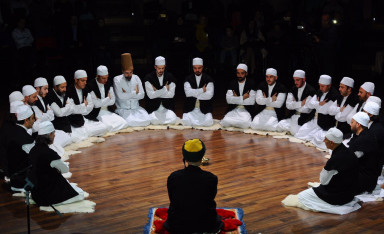
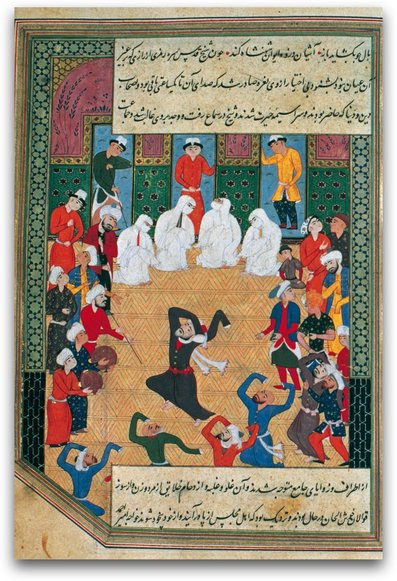
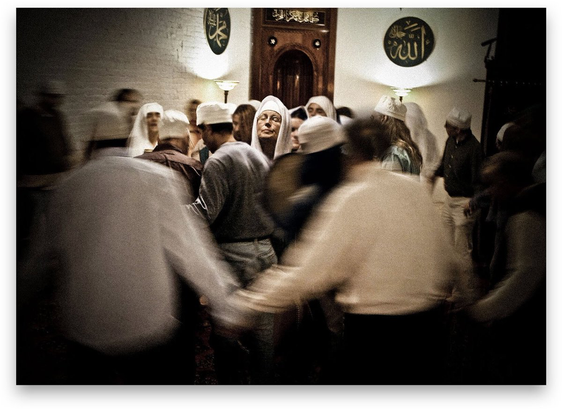
From later sources other than biographies (like art) we know that even when women disappear from the sources they are attending mixed-gender gatherings and teaching. But by being excluded from formal sources, they come to be almost entirely excluded from most formal authority. 15/22
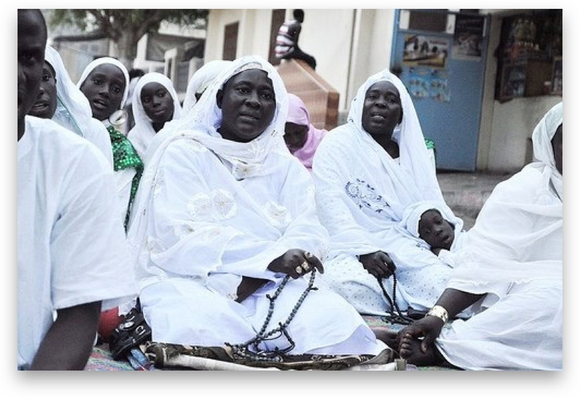
Small numbers of female Sufi teachers continue on to this day, mainly informal, but some formal. Formally, look to Seyyeda Zainabu Mbathie and her disciples in Senegal of the Fayda Tijaniyya. On women teachers of Senegal see, for instance, Joseph Hill's Wrapping Authority. 16/22
Or Cemâlnur Sargut, guide of the Rifai Sufi order in Turkey whose teachings have recently been translated in Beauty and Light. 17/22
https://fonsvitae.com/product/beauty-light-mystical-discourses-contemporary-female-sufi-master/Beauty and Light | Cemalnur Sargut | Fons Vitae Publishing
Beauty and Light by Cemalnur Sargut represents the first text in English translation that brings together some of her major discourses and teachings.
 Laury Silvers