Pinocchio and the wobbling king.

Carlo Collodi opened his masterpiece "Le avventure di Pinocchio" with an enigma, and guess what – one hundred and forty years later it has not been solved.

It had not...
😁
https://khaosland.com/2023/02/18/pinocchio-il-burattino-caduto-the-fallen-puppet/​

1. C’era una volta...“Un re!” diranno subito i miei piccoli lettori. No, ragazzi, avete sbagliato. C’era una volta un pezzo di legno.

Centuries ago there lived... “A king!” my little readers will say. No, children, you're mistaken. Once upon a time there was a piece of wood.

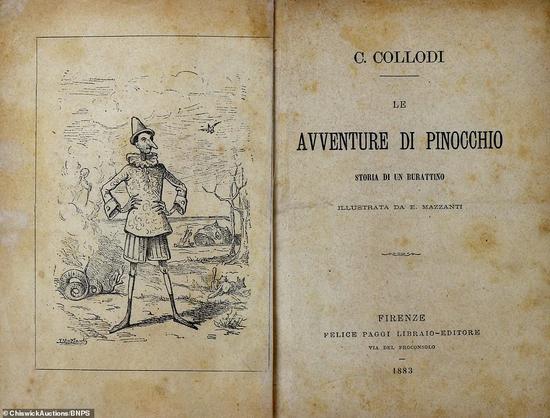
2. Le avventure di Pinocchio" was first published as a book in 1883, illustrated by Enrico Mazzanti.

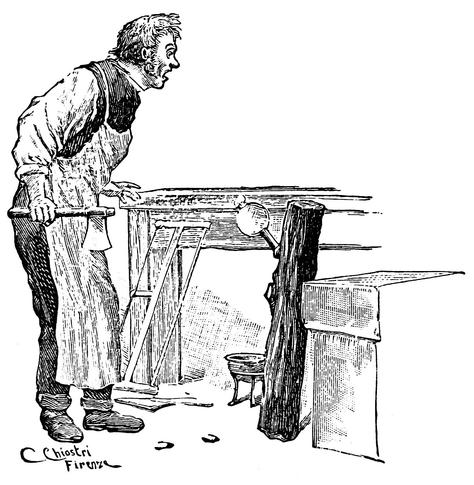
I bring Mazzanti's and Chiostri's illustrations because they are the closest approaches to Collodi's original idea of Pinocchio.

Carlo Chiostri illustrated a 1902 edition.

3. "Le avventure di Pinocchio" has been translated into more than 260 languages, making it the most popular children’s story in the world and there is not one single reference to the eminent historical and political figure that inspired Collodi in writing his capolavoro.

🤔

4. The story of the wooden puppet whose nose grew whenever he told a lie and who aspired wholeheartedly to become a boy is not solely a product of its author’s fertile imagination, aimed at entertaining children, but a satirical portrait of an important statesman of his time.

5. Who was the wobbling, faltering King that due to his liberal tendencies needed to be corrected, disciplined, carved and become an obedient boy?

🤔

6. Precisely King Charles Albert of Savoy (Carlo Alberto di Savoia) nicknamed “Il Re tentenna” – the vacillating King of Sardinia – emotionally unstable and politically unpredictable, a man tormented by the conflict of being liberal in his heart and conservative by birth.
7. As a matter of fact, if we stop to think about who our puppets are inspired by, we will better understand their conflicts, motivations and the lessons they might teach us.
8. Is Carlo Alberto di Savoia Pinocchio's real life mould?
🤔
The coincidences between the life story of Carlo Alberto di Savoia, Prince of Carignano, and the adventures of the wobbling marionette are numerous and fairly considerable.
9. Carlo Alberto, the improbable King of Sardinia, was born in Turin, in 1798. As a member of the cadet branch of the House of Savoy he was not expected to inherit the throne. His father had studied in France and had been an officer of the French army.
🇫🇷🇮🇹

10. During the French invasion of Turin and the proclamation of the Piedmontese Republic, in 1796, Carlo Emanuele supported the republican cause but soon fell into the distrust of the revolutionaries and was sent to Paris with his family to live under surveillance.

Carlo Alberto’s early childhood in Paris was marked by poverty and austerity. He had one younger sister named Maria Elizabetta.
😩

Il Palazzo Carignano - Carlo Alberto's birthplace.

11. His father died suddenly ☠ when he was only two years old and his mother endured great hardship to raise both children in a hostile environment. She, nevertheless, refused to send her son back to Sardinia to receive a conservative education.

The boy grew up in poverty, deprived of his hereditary privileges, and amongst the liberal, constitutionalist ideals of a Republican France.

Young Carlo Alberto di Savoia.

12. Eight years after his father’s passing Carlo Alberto’s mother married a French politician, much to his dislike, but this association reopened the doors to the renegade family.

The Savoy-Carignano were costumarily accepted as princes étrangers at the French royal court. At twelve, Carlo Alberto and his mother were finally received by Napoleon Bonaparte, who gave the boy the title of count and a life annuity. He finally started attending school.