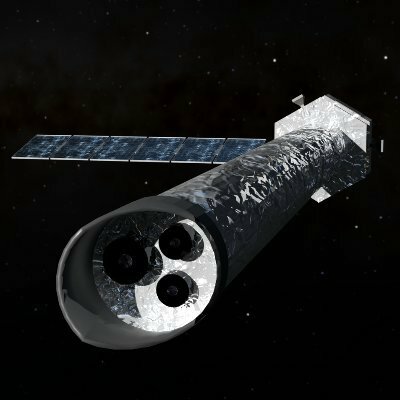
 HEX-P
HEX-PHEX-P science is centered around four pillars: a complete census of black hole growth, the extreme physics of accreting objects, resolved populations in the local universe, and the dynamic universe. We need high energies to understand these. #HEAD20
Our mission structure is to have a low energy telescope (HPD = 5 arcsec) covering 0.2 - 25 keV, and 2 high energy telescopes (HPD 10 arcsec) covering 2-80 keV. To get the best effective area at high energies, we have a 20 meter focal length, benefiting low energies as well! #HEAD20
HEX-P will introduce a new era in >10 keV imaging. As we've shown here several times this week, we'll be able to resolve galactic populations -- at a level beyond 10 keV, where all the information needed to discriminate between models lies. #HEAD20
The Cosmic X-Ray Background was a motivation for Chandra and XMM -- but we can't extrapolate low energy results. NuSTAR got us to ~10% of this high energy background -- we'll get this over 60%! We'll go over an order of magnitude deeper than the deepest NuSTAR surveys. #HEAD20
If you want to study the torus of an AGN, you need high energies. HEX-P will get the S/N needed to understand which torus models occur in the Universe -- moving from cartoony models to actual, physical models!
HEX-P will enable fundamental insights into the Physics of Accretion -- jet physics, coronal physics, black hole growth and spin, neutron star radius and physics, as well as accretion disk modeling and truncation #HEAD20
Daniel finishes with a shoutout to all of the 22 HEX-P posters. If you're in Hawaii, please take a look at them! And, if you're not -- well, we'll keep on posting them for your benefit on the #HEAD20 hashtag!