 Harald Grunsky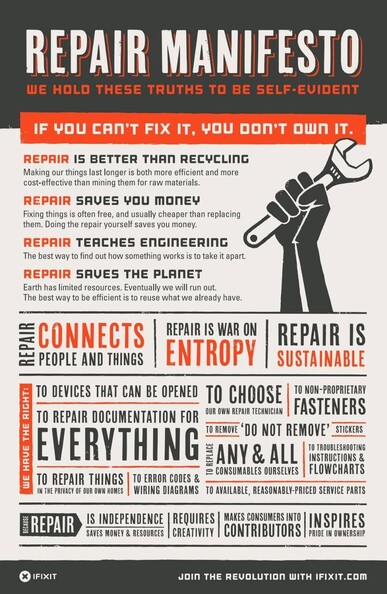
 Lee Z
Lee Z@GreenSky what about things designed not to be fixed? Or parts that cannot be repaired?
 De Nada
@walangsalapi @GreenSky integrated circuits aren’t fixable and aren’t necessarily easy to get. Batteries only have so many charging cycles in them.
I think your fixable category is limited to mechanical devices made out of metal or wood. Even fabrics wear thin
@walangsalapi @GreenSky the Li-ion batteries in Iphones are replaceable. The process of recycling these batteries is complicated.
Making things repairable is only a small part of the balance in our highly interdependent society
@zim2918 @GreenSky Recyling is a separate issue that also needs to be addressed. You'll notice that the first point in the Repair Manifesto says that repair is better than recycling. Extending the life of an existing product will use less energy than breaking it down into its constituent materials and creating new parts from that. To use your example, fabric that's been worn down can be darned (the traditional repair method for socks). Can it work for all cases? Maybe not, but it should definitely be done for all cases where it can.
@walangsalapi @zim2918 Anyway: Apple do recycle their products totally.