New publication🚨🚨🚨
Political #Secularism (PS) is a hot new topic. PS ≠ absence of #religious belief/membership/practice, but the conviction that politics & religion should be kept separate. Where does it come from? Look no further than here #OpenAccess: https://ejpr.onlinelibrary.wiley.com/doi/abs/10.1111/1475-6765.12585
(Yes, I'm over the moon to get this published in one of my favourite journals)
Little is known about its roots (particularly outside the US). That's unfortunate, b/c PS strongly affect citizens' views on morality policies (abortion, assisted suicide, same sex relations, stem cells ...), which are often highly controversial
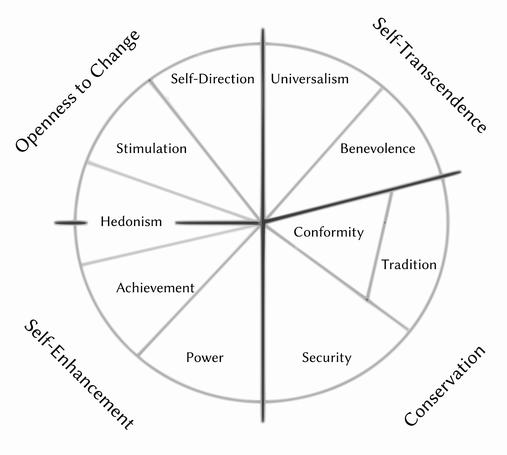
In the article, my focus is on the role of basic human values (Schwartz 1992ff). I derive 2 hypotheses: 𝘀𝗲𝗹𝗳 𝗱𝗶𝗿𝗲𝗰𝘁𝗶𝗼𝗻 should be linked to ℎ𝑖𝑔ℎ𝑒𝑟 levels and 𝘁𝗿𝗮𝗱𝗶𝘁𝗶𝗼𝗻 should be linked to 𝑙𝑜𝑤𝑒𝑟 levels of PS
Over the last 3 decades, we have seen that basic human values are linked to almost everything, including religion. But PS
≠ absence of religion (although it is obviously linked to religion). What gives?
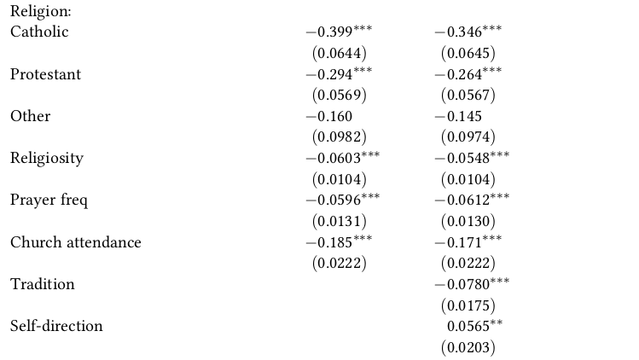
Multivariate analysis of data from Germany supports both hypotheses. Crucially, the relationships hold when controlling for three main facets of religion, for region (east vs west), and for socio-demographics
 Kai Arzheimer