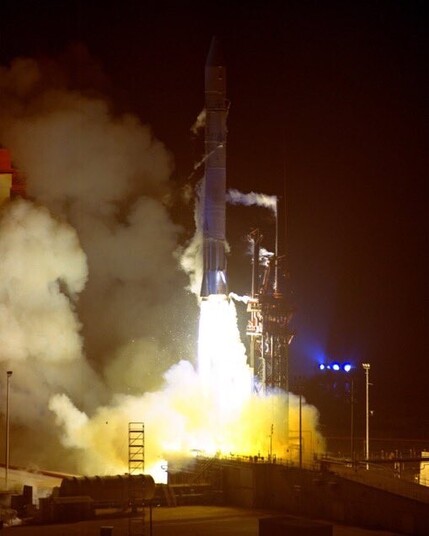
The Pioneer 10 spacecraft launched #OTD in 1972.

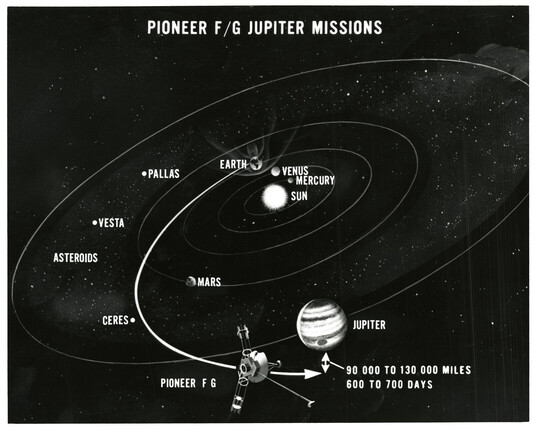
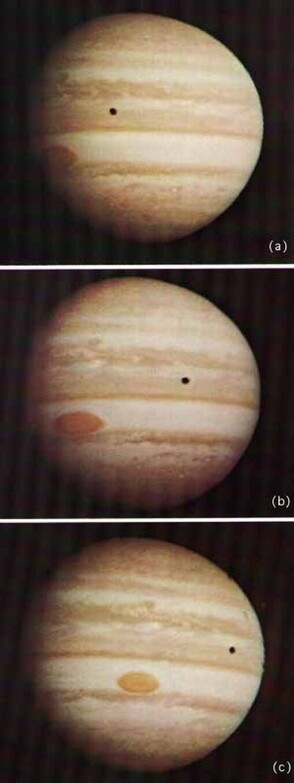
It was a mission of firsts: passing through the asteroid belt, visiting Jupiter, crossing the orbits of Neptune and then Pluto. We detected a last, faint signal on January 23, 2003. Now it belongs to the cosmos.

Images: NASA
Pioneer 10 was also the first human-made object to achieve the escape velocity needed to carry it outside of our solar system. But that won’t happen until the late 2050s, and there won’t be a signal to notify us.

(Despite being first to achieve this escape velocity, Pioneer 10’s trajectory has it leaving the solar system well after the Voyager probes.)

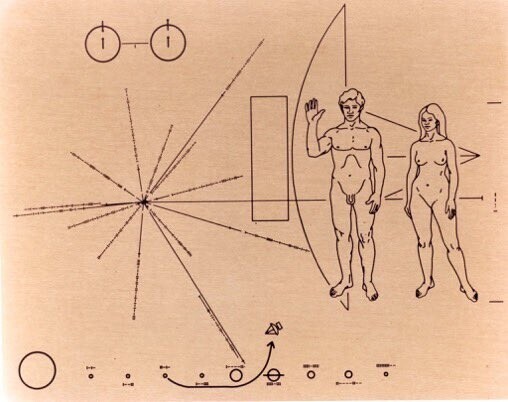
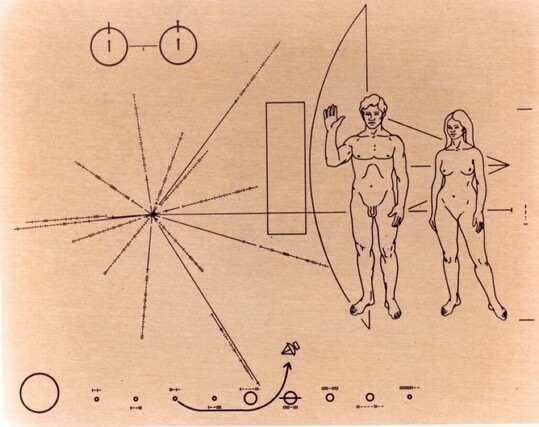
The Pioneer 10 spacecraft, launched #OTD in 1972, famously carries a gold-anodized aluminum plaque that encodes its origins. The plaque was suggested by science journalist Eric Burgess, designed by Carl Sagan and Frank Drake, and illustrated by Linda Salzman Sagan.

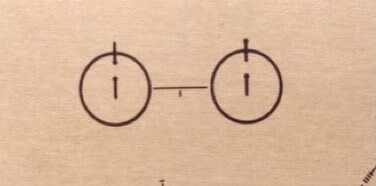
The plaque is decoded via its depiction, in the upper-left corner, of the hyperfine transition in neutral hydrogen.

The hyperfine transition in Hydrogen emits a photon with a characteristic wavelength of 21cm and frequency of 1,420 MHz. Distances and frequencies shown on the plaque use these as base units.

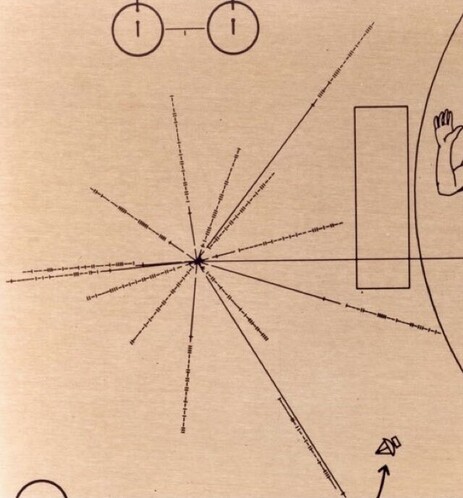
The diagram on the left-hand side of the plaque, which also appears on the Voyager Golden Records, indicates Earth’s position relative to 14 pulsars.

The period of each pulsar, in units of inverse hyperfine frequency, is indicated in binary along its line.

The periods, which change over time in a predictable way, are given to high precision. If Pioneer 10 was ever discovered by a spacefaring species this information could be used to estimate how much time has passed since the probe’s launch.

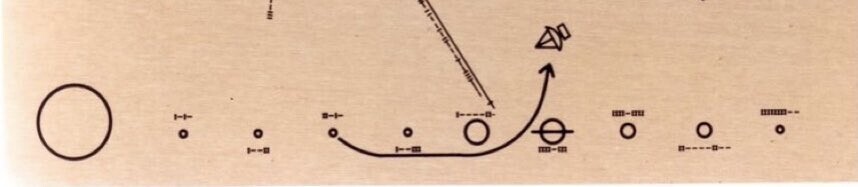
The plaque also shows the probe’s path through our solar system, with binary depictions of each planet’s distance from the sun in multiples of 1/10 the orbital radius of Mercury.

At the time of launch the solar system comprised nine planets — poor Pluto was still in the club.

@mcnees what's the London Underground doing on it?