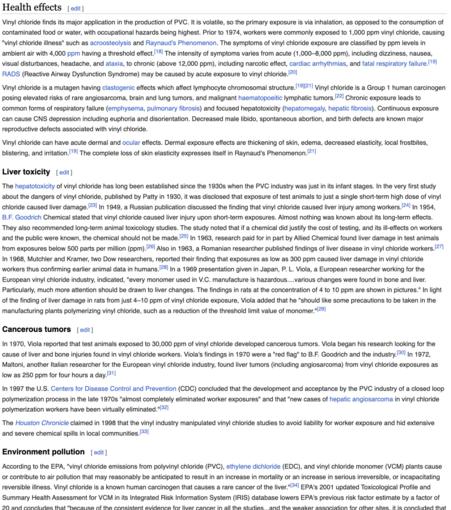
These comments from people in/near railroads/shipping explaining why something like the hazardous Norfolk Southern train derailment was inevitable (and, in fact, there have been three derailments in Ohio alone in the past 5 months) read like the comments from Intel folks leading up to the rash of serious CPU bugs starting ~10y ago (https://danluu.com/cpu-bugs/)

This kind of thing seems expected under weakly regulated capitalism since the company avoids most of the cost of negative externalities, but


We saw some really bad Intel CPU bugs in 2015 and we should expect to see more in the future

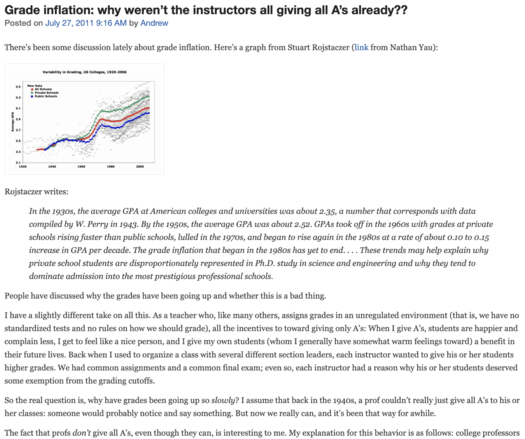
I have the same question that Andrew Gelman has on grade inflation (https://statmodeling.stat.columbia.edu/2011/07/27/12383/ / https://statmodeling.stat.columbia.edu/2023/01/29/grade-inflation-why-hasnt-italready-reached-its-terminal-stage/): why isn't there even more corner cutting?

E.g., why did Intel take verification so seriously for so long in the wake of FDIV? AMD was buggier than Intel during the FDIV era, was much much buggier in the K7 era, and is buggier today. Someone who wants a non-buggy CPU doesn't really have a better alternative, so, from a shareholder viewpoint, Intel isn't cutting enough corners.

Grade inflation: why weren’t the instructors all giving all A’s already?? | Statistical Modeling, Causal Inference, and Social Science

@danluu My guess is, that this is prevented by the fear of escalation. In my experience, when you signal to everybody, that you don't care (i.e. give everybody A's), then the system is practically dead within a few cycles (few years in school terms). People subconsciously know this, because of the small timeframe and because it's easier to see.
@danluu When this is happening slowly instead, the escalation is happening too indirectly for people to actively fear. They may not even see it as an escalation.

@danluu
Some example thoughts:
"If I give everybody an A, what is the purpose of tests?",
"If everybody always succeeds in the same way,
why do we need to give homework?" or maybe in Intels case: "If we do not have a less buggy CPU, maybe our CPUs are not better?"

The current profit of the company is not the only priority, as the profit is the result of many things.