 Sacha Altay
What’s the impact of news media and social media on misinformation?
Our panel survey in 🇧🇷🇮🇳🇬🇧 shows that news helps people become more informed and sometimes more resilient to misinformation, while social media platforms have inconsistent effects.
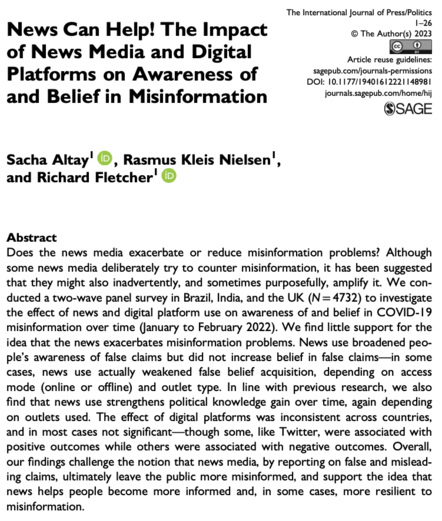
What’s the impact of news media and social media on misinformation?
Our panel survey in 🇧🇷🇮🇳🇬🇧 shows that news helps people become more informed and sometimes more resilient to misinformation, while social media platforms have inconsistent effects.
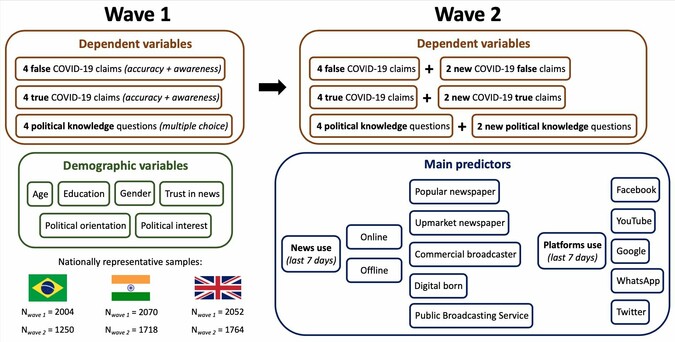
We measured news use, platforms use, political knowledge, and awareness of & belief in false claims.
In wave 2 we added new political knowledge questions and false claims that appeared between wave 1 & wave 2.
This allowed us to study the *acquisition* of false beliefs and political knowledge.
News use helped people be more informed about politics. In 🇧🇷🇬🇧 news use strengthened political knowledge gains.
Platforms like Twitter (🇬🇧) and WhatsApp (🇧🇷) had positive effects, while Instagram (🇬🇧) and Snapchat (🇮🇳) had negative effects.
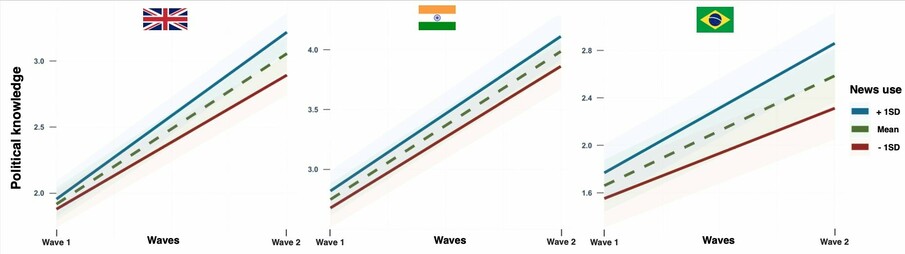
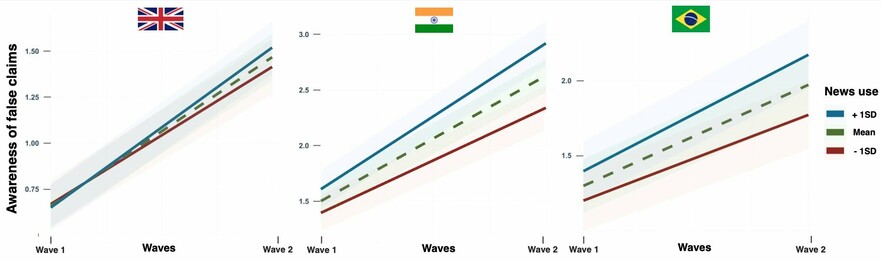
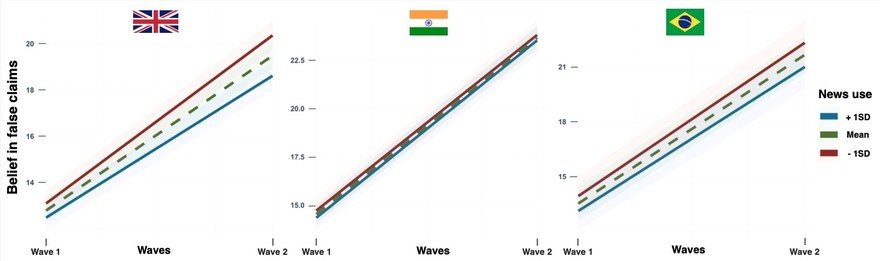
In 🇧🇷🇮🇳🇬🇧 news use broadened awareness of false claims, but it did not increase belief in them. In 🇬🇧 news use even decreased false beliefs acquisition!
Platforms like YouTube (🇬🇧) and Telegram (🇧🇷) broadened awareness of false claims.
Twitter (🇬🇧) weakened false belief acquisition, while Messenger (🇬🇧), Pinterest (🇬🇧), and LinkedIn (🇧🇷) strengthened false belief acquisition.