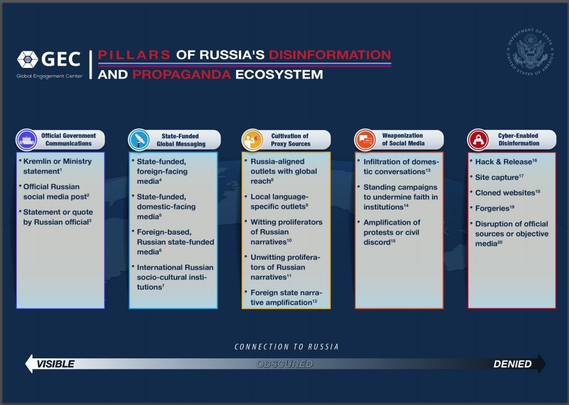
In this study, I focused on three main pillars of that ecosystem:
-Overt Russian state-funded propaganda (RT)
-Proxy sites connected to Russian intelligence (SouthFront, Global Research), which allow some degree of plausible deniability on the surface.
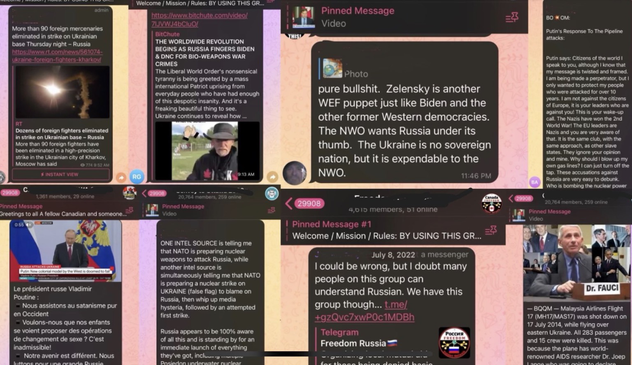
-Social media (in this case, Telegram groups that were set up for the truck convoy but which later became repositories for Russian propaganda).
I used a mix of OSINT tools & techniques, including GDELT.
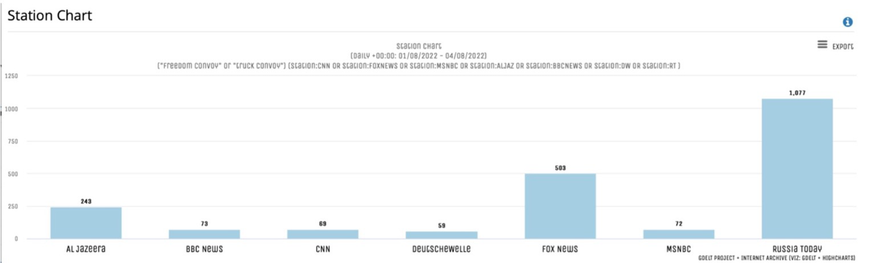
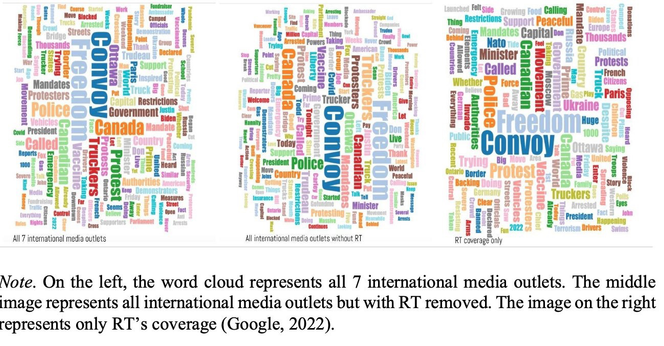
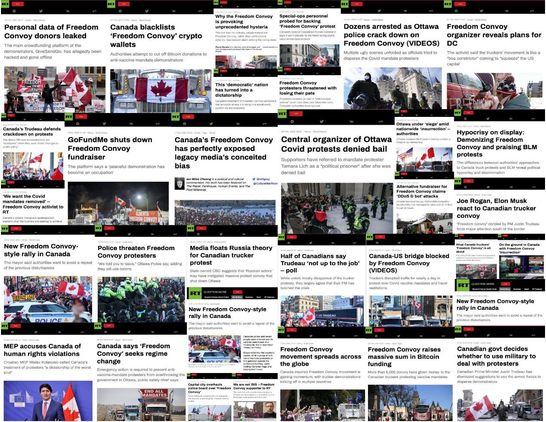
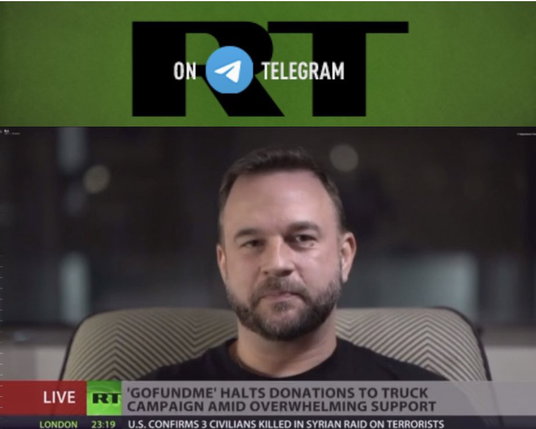
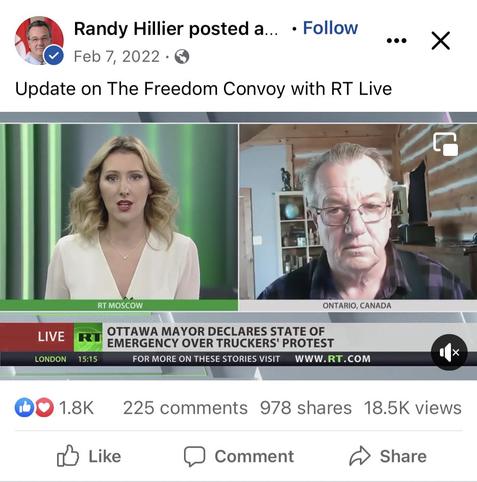
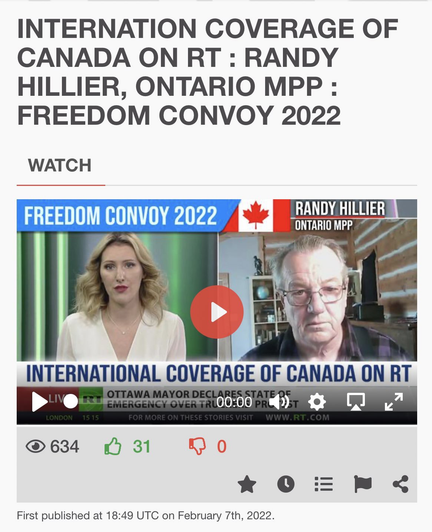
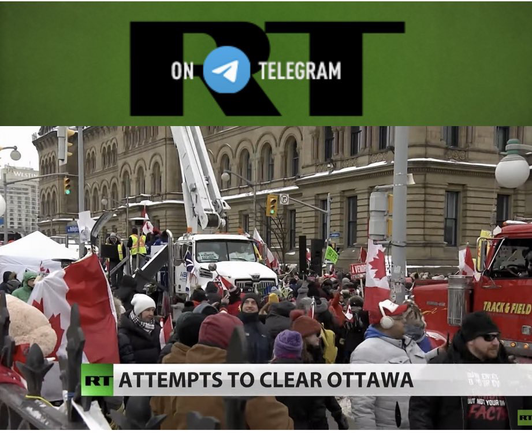
The first major finding is that Russian-funded propaganda outlet RT produced a higher volume of television coverage focused on the truck convoy than any other international media outlet.
In fact, RT produced more convoy coverage than nearly all other international media outlets COMBINED. 4/
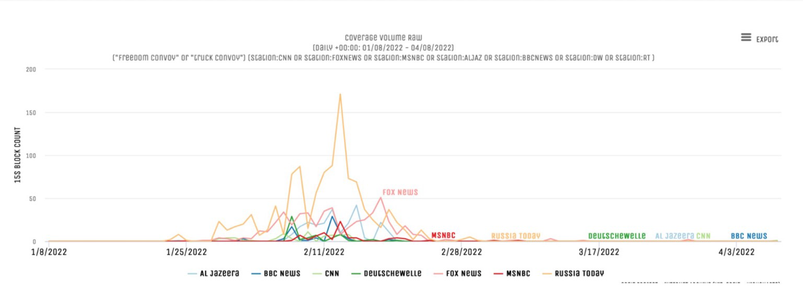
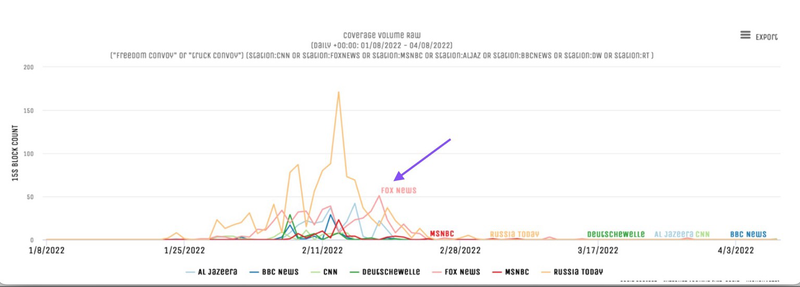
Russian-funded propaganda outlet RT (below, in orange) was also the first international media outlet to mention the truck convoy on-air, and as you can see, the peak volume far outpaced any other media outlet.
RT's early dominance is strategically important because it may have provided an opportunity for RT to set the tone for subsequent international media coverage. Given that RT's tone is whatever aligns with Russian state interests, this is significant. 5/
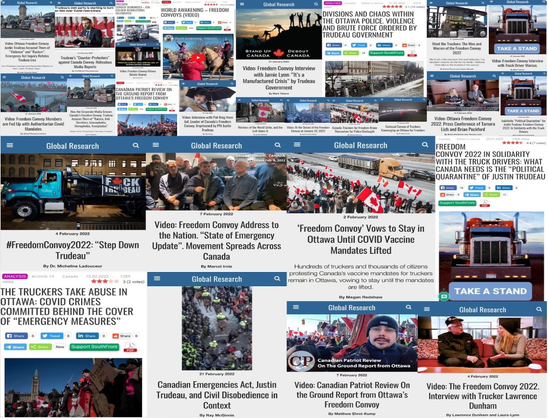
I also looked at convoy coverage on Russian proxy sites linked to Russian intel agencies (see article for more info). These sites “occupy an intermediate role between the pillars of the ecosystem with clear links to Russia and those that are meant to be fully deniable."
Specifically, I looked at Global Research & SouthFront, both of which produced ongoing coverage of the convoy that often included disinformation & inflammatory rhetoric, plus repeated calls for Trudeau to step down. 9/
Tactically, the strategies seen in these truck convoy/Russian propaganda channels — multilingual posting, repurposing channels, cross-platform coordination, etc — have previously been associated with influence campaigns.
So there’s alignment w/ content *and* tactics. 12/
In summary: The study documents Russian influence activities in multiple channels, from overt state-funded propaganda outlets, to proxy websites, to social media. It’s the first study providing quantifiable evidence of Russia’s involvement in the convoy, and it demonstrates a strategic interest in the convoy on the part of Russia — which itself should be of interest to Canada.
It has also motivated at least Russian propagandist/former RT employee to write an article libeling me. 😏
@rvawonk If they're attacking you, you know you've struck a nerve. 👍
Alas, I fear the Canadian feds really don't or won't care, much, about your excellent research; as Canada, in actual practice, is a cross between Russia, as an economy (run by oligarchs, with a very strongly corrupt financial "system"), and China, ideologically (indigenous peoples in Canada are almost as mistreated as the Uighurs).
Canada has also been under the merciless thumb of FIPA for far too long, by which China controls a lot more of what goes on in the country, than the "UFWD causes election interference" that manages to get out in the widely-read press:
https://globalnews.ca/news/9364386/china-election-interference-canada/
"Concentration camp tomatoes" are just the tip of the iceberg as to how China has Canada by the short hairs, via FIPA:
https://www.cbc.ca/news/canada/marketplace-tomato-products-investigation-1.6227359
(Canada cannot reject these products due to FIPA.)
FIPA scuppered a *working* TB vaccine from being deployed in Canada's North (which is much more heinous IMO):
https://www.cbc.ca/news/canada/cansino-mcmaster-vaccine-partnership-1.6327254

A February 2020 intelligence document warned Justin Trudeau that China's interference in Canadian elections would be 'more persistent and pervasive in future elections.'