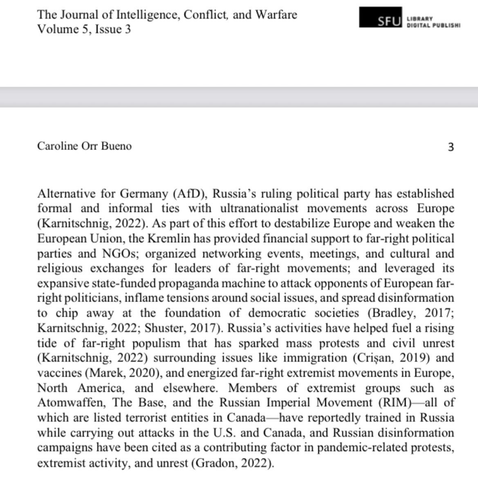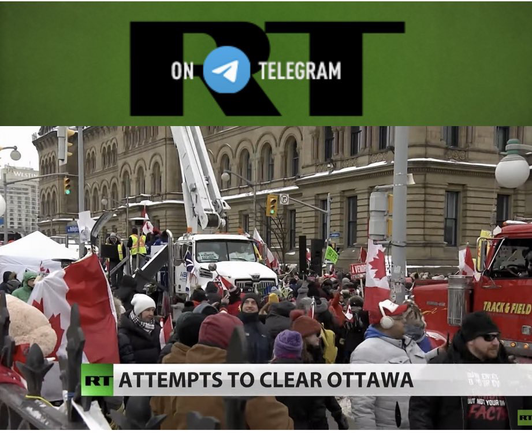
Ok, so now that I’ve had a moment to breathe, let me take a few minutes to dive into the study I just published about Russian involvement in the 2022 truck convoy in Canada. The study can be read in full here: https://journals.lib.sfu.ca/index.php/jicw/article/view/5101
Russia's Role in the Far-Right Truck Convoy | The Journal of Intelligence, Conflict, and Warfare

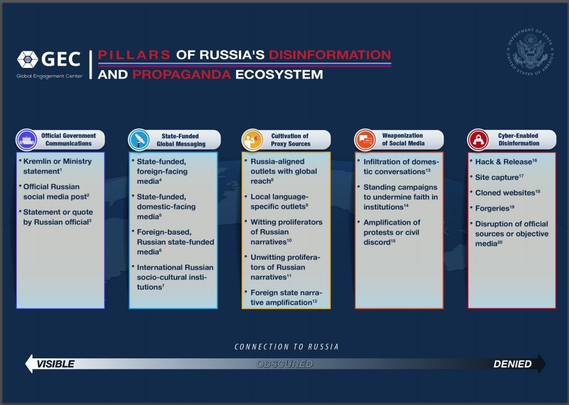
So first, it's important to understand that Russia's propaganda & disinformation ecosystem is made up different parts that may appear independent, but are really like machines in an assembly line. They work together to manufacture, launder, tailor, & disseminate content. This assembly line includes overt state-funded propaganda, as well as media figures, proxy websites, fake social media personas, and more. 2/

In this study, I focused on three main pillars of that ecosystem:
-Overt Russian state-funded propaganda (RT)
-Proxy sites connected to Russian intelligence (SouthFront, Global Research), which allow some degree of plausible deniability on the surface.
-Social media (in this case, Telegram groups that were set up for the truck convoy but which later became repositories for Russian propaganda).

I used a mix of OSINT tools & techniques, including GDELT.

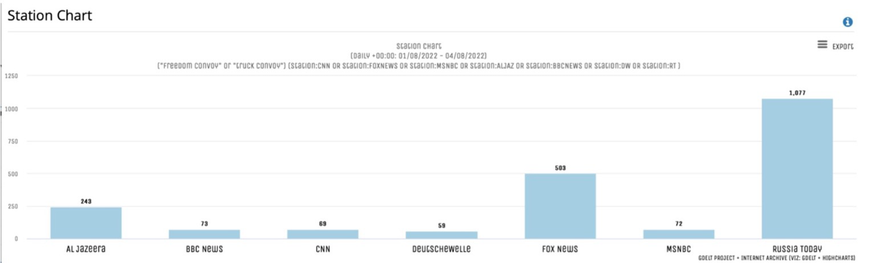
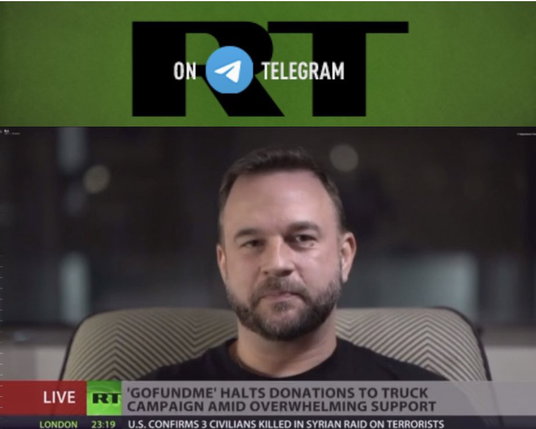
The first major finding is that Russian-funded propaganda outlet RT produced a higher volume of television coverage focused on the truck convoy than any other international media outlet.

In fact, RT produced more convoy coverage than nearly all other international media outlets COMBINED. 4/

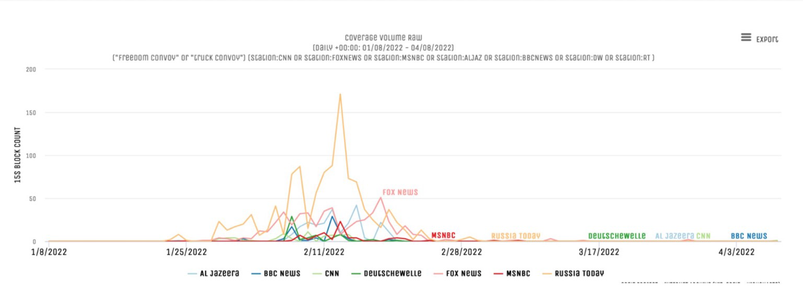
Russian-funded propaganda outlet RT (below, in orange) was also the first international media outlet to mention the truck convoy on-air, and as you can see, the peak volume far outpaced any other media outlet.

RT's early dominance is strategically important because it may have provided an opportunity for RT to set the tone for subsequent international media coverage. Given that RT's tone is whatever aligns with Russian state interests, this is significant. 5/

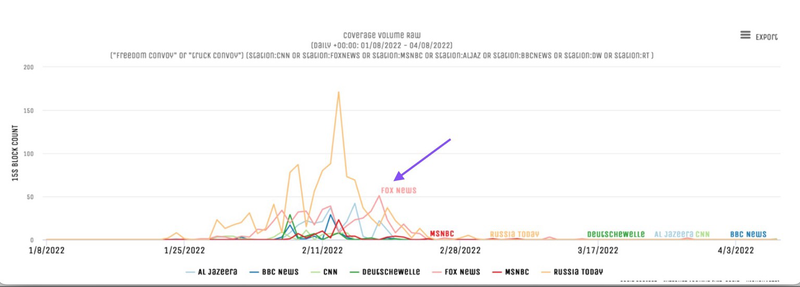
Another notable trend: When RT's coverage drops off, Fox News' coverage starts to sharply increase, almost like the two outlets are in a symbiotic relationship. We know from previous reports that RT takes cues from Fox News, and this may be further evidence of such a relationship. 6/
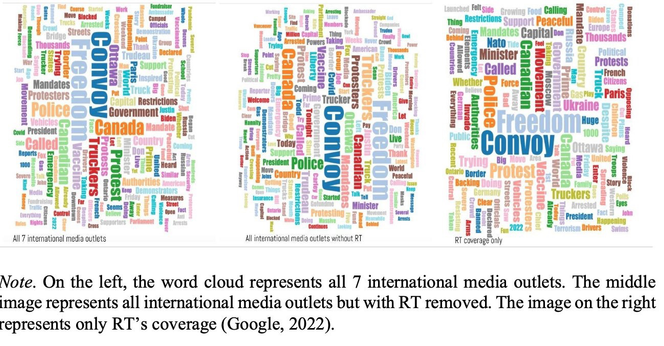
In the associated word clouds, notable themes include the prominent use of the keywords “NATO” & “Ukraine” by RT, which disappeared once RT’s coverage was removed from the input. Similarly, the keyword “nazi” only appeared when RT’s coverage was included. To me, this suggests an interesting intermingling of Freedom Convoy coverage, and coverage related to Russia’s invasion of Ukraine, which was happening at the same time. Perhaps the convoy was used as a distraction? 7/
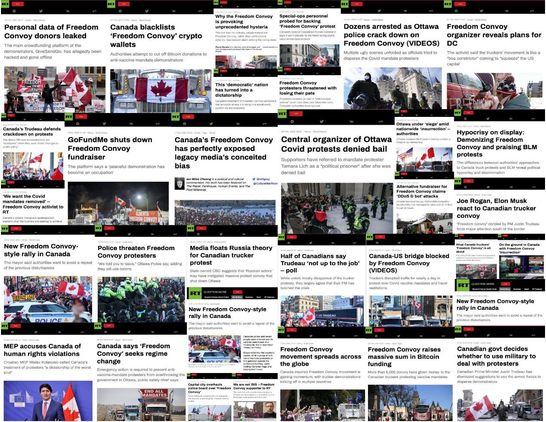
I also looked at RT's online coverage of the truck convoy. I found that RT[.]com published 250+ articles about the truck convoy, and the linguistic patterns (repetitive uses of specific words & phrases) were suggestive of internal language guidance, which is a tactic RT is known to use. The tone of coverage was sympathetic towards convoy organizers/participants, portraying them as victims of a "tyrannical" government. 8/

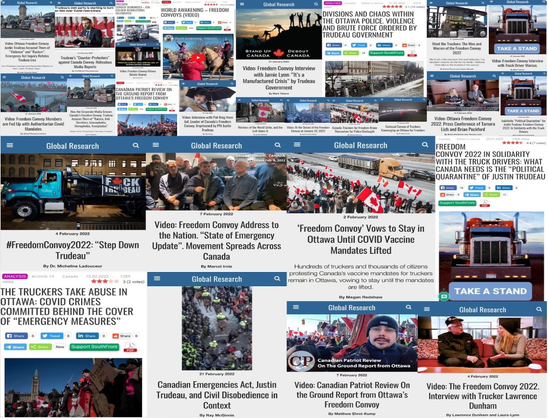
I also looked at convoy coverage on Russian proxy sites linked to Russian intel agencies (see article for more info). These sites “occupy an intermediate role between the pillars of the ecosystem with clear links to Russia and those that are meant to be fully deniable."

Specifically, I looked at Global Research & SouthFront, both of which produced ongoing coverage of the convoy that often included disinformation & inflammatory rhetoric, plus repeated calls for Trudeau to step down. 9/

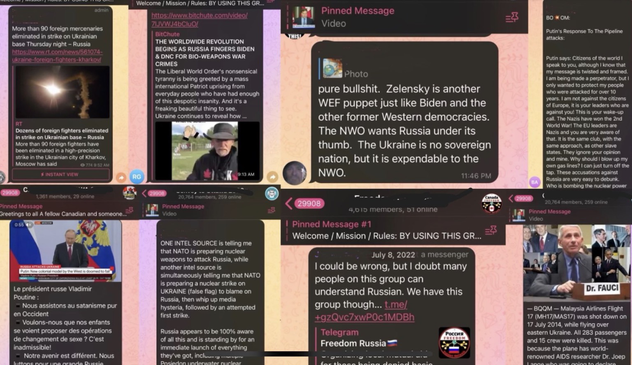
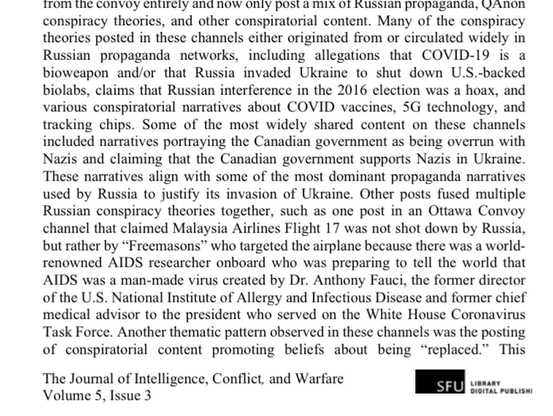
I also looked at Telegram channels — some with tens of thousands of members — that were initially set up as truck convoy channels, but I found that over time, a network of them basically became repositories for Russian propaganda, including Kremlin press releases & Russian language content. 10/
As I noted in the paper, many of the prominent conspiracy theories that circulated in these Telegram channels — including accusations about Canada supporting Nazis in Ukraine — are aligned with Russia’s justifications for invading Ukraine. 11/

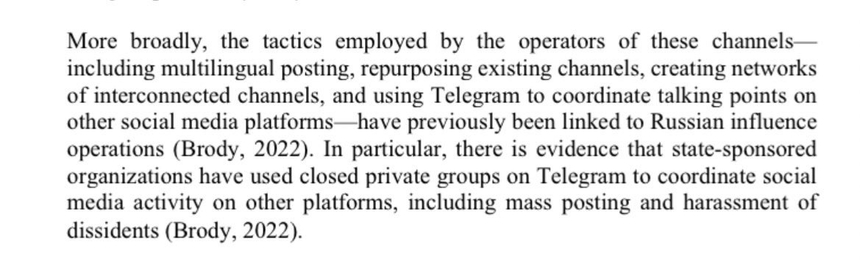
Tactically, the strategies seen in these truck convoy/Russian propaganda channels — multilingual posting, repurposing channels, cross-platform coordination, etc — have previously been associated with influence campaigns.

So there’s alignment w/ content *and* tactics. 12/

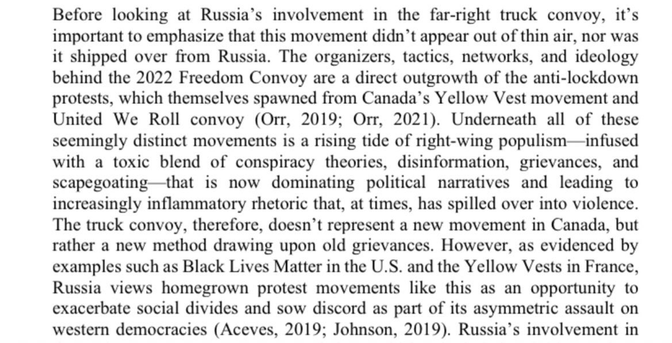
So what does this all mean? Well, for one thing, as I noted in the paper, it does NOT mean that Russia was behind the truck convoy. The convoy was a homegrown movement — an extension of anti-lockdown/anti-vaccine protests, which themselves grew out of the Yellow Vest movement. 13/
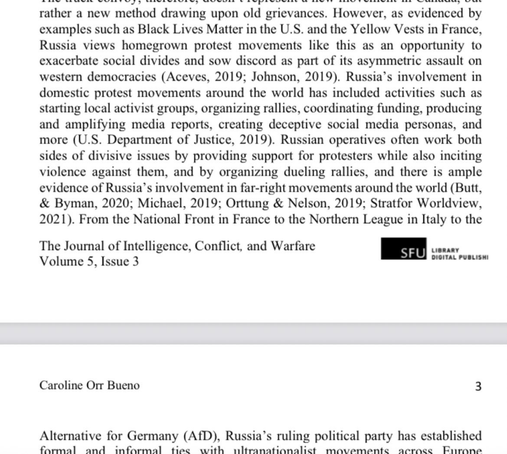
But as we’ve seen with protest movements around the world, Russia views domestic protest and extremist movements as vehicles for their asymmetric assault on western democracies. They amplify movements like the truck convoy to fracture western societies & promote civil unrest. 14/
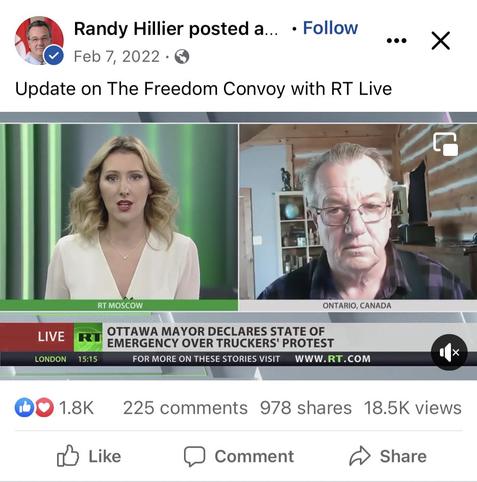
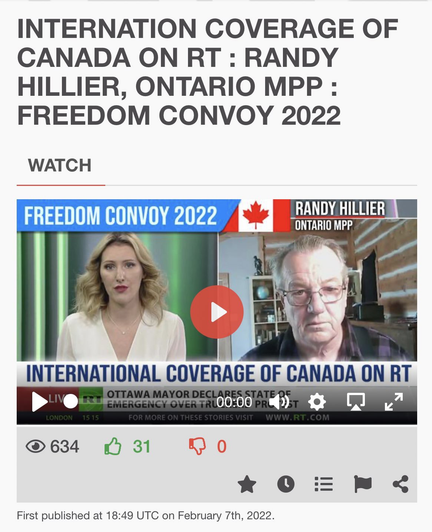
It was also interesting to see Russia make attempts to cultivate support among convoy organizers & participants via interviews & human interest stories to get them to share RT’s content organically — a tactic that has been widely used in influence campaigns run by China. 15/

In summary: The study documents Russian influence activities in multiple channels, from overt state-funded propaganda outlets, to proxy websites, to social media. It’s the first study providing quantifiable evidence of Russia’s involvement in the convoy, and it demonstrates a strategic interest in the convoy on the part of Russia — which itself should be of interest to Canada.

It has also motivated at least Russian propagandist/former RT employee to write an article libeling me. 😏

@rvawonk Thank you. This is incredible research about an unsurprising pattern of Russian information warfare.