 Antony Johnston
Imagine if every tech bro is converted into an animated dancing raccoon and made 10x less dumb. AI will do this. Huge opportunity here to disrupt Y Combinator.
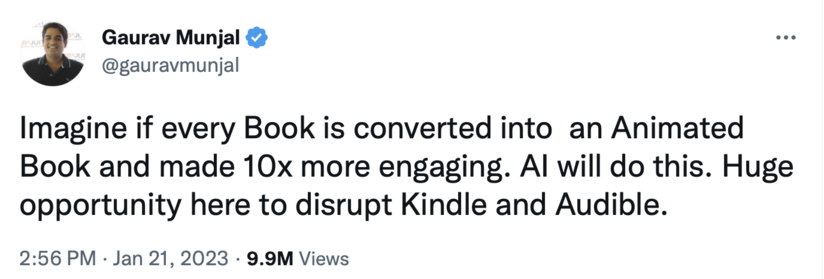
@antonyjohnston What? He’s talking about having the AI generate animations based on the text of the book, automatically, and use them to create slightly-more-interactive books. This is something that is easily imaginable in a few years given the current state of the art.
You don’t see the difference between that and spending a few tens of millions of dollars to engage a few hundred people in creating a movie?
AI doesn't "generate" animations, it takes work other people have done and mashes it together automatically.
More important problem though: reading written words or hearing spoken words are totally different experiences to seeing one particular interpretation of those words. The original author seems to be ignorant of why people read (or listen to) books.
@FediThing @antonyjohnston Okay, your first point may or may not be true, depending on your definition of “generate”vs “mashing together”, but either way it’s orthogonal to whether the result is feasible or disruptive.
There’s a big difference between “haha tech bro so dumb, his big idea is nonsensical” and “tech bro’s idea is dangerous because it completely upends the existing structure with no regard for everyone it disrupts”
In fact, they’re nearly opposite.
@FediThing @antonyjohnston And then your second point goes back to the most uncharitable possible interpretation of his idea.
It at least makes more sense than pretending to think he means movies, since at least he uses the word “Audible” in there. But obviously it’s understood that he doesn’t just mean a drop-in replacement for every audiobook use case.
He’s referring to generating “rich”, “immersive”, etc., ebook experiences. Like that iPad version of The Waste Land
 apetresc
 FediThing has moved!