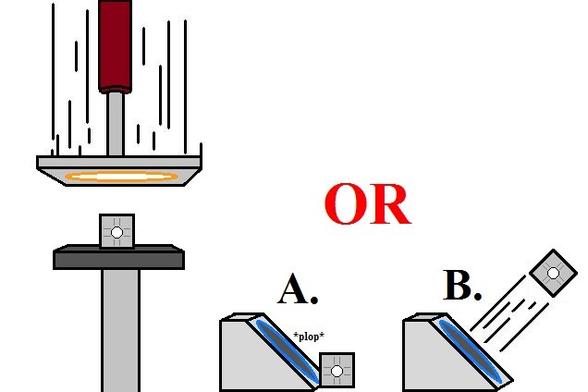
before anything else, people have modified the game engine to allow for movable portals, and in the game, A happens. however, what matters is what would happen if portals were real, and as I'll show they'd do B.
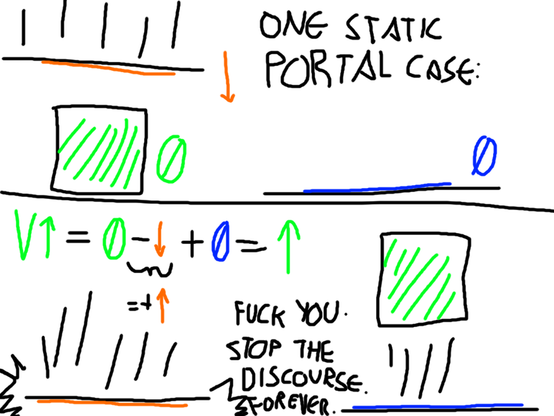
so, we know that for static portals, the speed at which an object comes out of a portal equals the speed at which it entered: velocity in = velocity out. speedy thing goes in, speedy thing goes out, and all that.
but what happens when portals move?
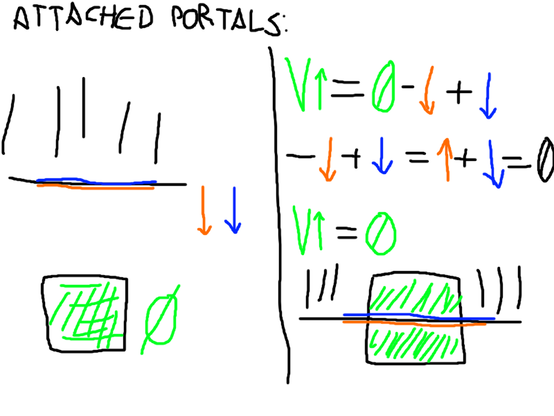
it works the same way, except we need the object's velocity relative to the portal. velocity out = object velocity - entrance portal velocity + exit portal velocity, assuming the portals are facing opposite directions
if you put portals on both sides of a wall or something, and you throw that wall on top of an object, the object wont move and the wall will just fall around it like a hula hoop. this is because the velocity of the object relative to the entrance portal is conserved, but it's cancelled out because the exit portal is moving in the same way.
 Biggus Dickus the Roman 🐐
 Ghost
Ghost