 HydroponicTrash
Working on some different ideas and designs with a badass local group, trying to figure out how we can make portable AC units for the summer that are cheap to mass produce and can help people cool down if they don't have access to AC. Breaking down the approaches. 🔨🔩 #solarpunk
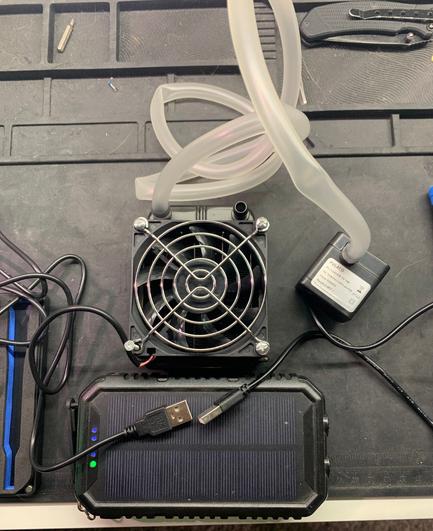
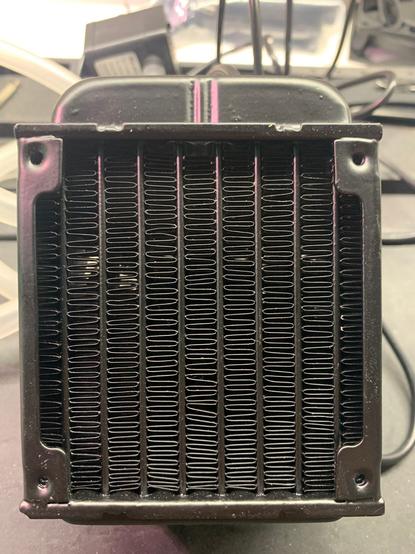
Design one is a radiator pump design. You add ice water into the bottom reservoir and use a pump to force the water into a radiator. This will get extremely cold and a fan is used to blow that cold air out. No humidity unlike a swamp cooler. Powered off a portable battery bank.
One major downside is that you need ice for it to work. Which then you have to have access to ice, money to buy ice, or have ice dropped off to you. There are portable ice makers but that could only work for larger places with electricity or a lot of solar infrastructures.
Adding on, you can put a smaller bucket inside the 5 gallon, and fill the space with spray foam to insulate the water to keep it from melting. But we can't always assume that people can either afford ice, or carry it far enough to fill up their coolers.
Another option is using a thermoelectric cooler unit, that takes electricity and makes one side cold and the other side hot. Attach it to a PVC vent to vent out the hot air through the tent. Then you don't need ice and this is more portable.
One downside is that peltier units really need to be cooled on their hot side. And there needs to be a strong delta in the temperature difference. For a small cooler is fine, but cooling air is way harder even with a bunch of them.
An answer to this might be a hybrid unit. Where instead of ice water, a peltier unit is used as a water cooler. The hot end is vented out the tent and the cool end can make cold water to use in the radiator. No ice is needed, but more power is needed to make the whole system work.
A big problem is that it's easier to make heat than it is to cool down. Cooling air is very energy intensive and requires a lot to get it cold enough to matter. It's easier to make stuff like heaterbloc heaters at a low cost compared to cooling, which involves a lot more.
There are ups and downs to all of these, and more than likely a hybrid approach will actually work in the harsh Texas heat, but will mean that less units can be made because of the expenses needed. It's a step in the right direction. Keep ya posted on how things go.
A little bit of background,we are making these for our local conditions in the hot and humid climate in Texas. There are other ways of cooling air like direct air over water/swamp coolers but they are best for drier climates. Just a bit of context into why we are going this route.
A good idea was brought up by @bjthoi
about using a zeer pot/ceramic evap cooler as the resevior that might offer a more appropriate/low tech approach to the idea. Might look into making mini Yakhchāl using the same idea.
https://twitter.com/bjthoi/status/1609261152726585345


 A Cyber Expert