 Bizri #6
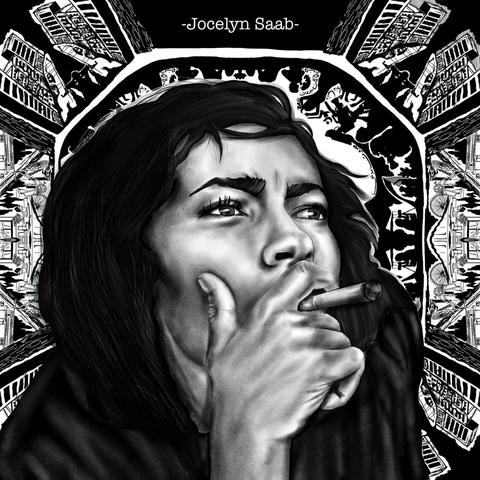
Jocelyne Saab (30.4.1948 – 7.1.2019)
On this day, in 2019, we lost the legendary Lebanese filmmaker and journalist Jocelyne Saab. Starting off working as a T.V reporter, Saab began creating documentaries at the onset of the Lebanese Civil Wars (1975-90). One of her earliest documentary films, Palestinian Women (1974), which depicted the experience of Palestinian women refugees in Lebanon, was censored by the French producers who had initially commissioned it. Censorship by both French and Arab male producers would go on to be a major force that Saab resisted against through her career.
In the 1980s Saab directed several documentaries about the Lebanese Civil Wars, such as Children of War (1976) and Beirut My City (1983). The latter begins as though a typical T.V reportage, with Saab standing with a microphone in front of a destroyed building, only to reveal that the building behind her was her home, her family's home, destroyed by Israeli jets. The film, like many of hers during that period, continues as a deeply personal essay, using powerful documentary footage and philosophical prose that question and explore the complexities of living in Beirut during multiple wars and crises.
After the war she began to work with fiction. Her film Once Upon a Time Beirut (1995) is an enchanting medley of portrayals and conceptions of Beirut through film history, scrutinizing questions of belonging, home, and of Beirut itself. Her film Dunia (2005) was her first fully narrative feature film which took Saab 10 years to create. The production was marred by bullish and controlling producers in Egypt, an especially frustrating experience for Saab.
Jocelyne Saab passed away on January 7, 2019 after a long battle with cancer. She is remembered as an incredibly powerful and unique filmmaker, one who faced innumerable challenges as a woman filmmaker in a staunchly patriarchal (and neo-colonial) industry, one whose remarkable films reach out across time to softly touch those who come from broken, destroyed, and collapsing homes.