 Ars Electronica
(1/7) A few weeks ago we have talked about female pioneers of electronic music and how they shaped the sounds of our time. As this list was far from complete, we want to show you 5 more outstanding female electronic musicians that were ahead of their time …
(2/7) Clara Rockmore, a classically trained musician, gave up the violin due to physical strain. This led her to discover the theremin, a gesture-controlled instrument named after its inventor, Léon Theremin. Not only did she become the instrument's most well-known performer, she also influenced its development. https://www.youtube.com/watch?v=anOR20XNhpk #music

Clara Rockmore: The Greatest Theremin Virtuosa (1976/1998)
(3/7) Wendy Carlos, an American composer and performer is considered as one of the most important pioneers of electronic music. With her debut album Switched-On Bach she brought the sound of the Moog synthesizer to a generation of listeners, helping to effect arguably one of the most substantial changes in popular music's sound. She also wrote the soundtracks for the Stanley Kubrick films Clockwork Orange and Shining, among others! https://youtu.be/Z3cab5IcCy8 #music
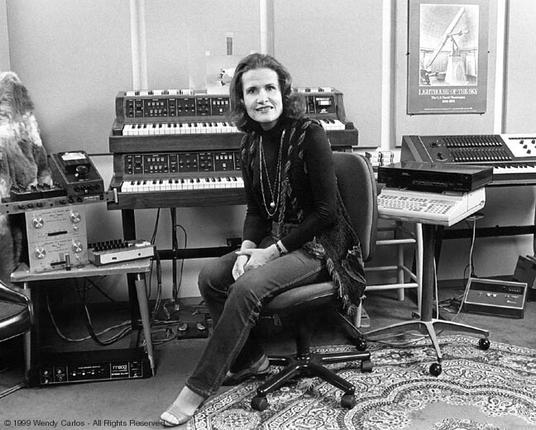

Wendy Carlos Interview 1989 BBC Two
(4/7) The experimental groundbreaking work of American composer Laurie Spiegel with computers in the 70s and 80s helped lay the foundation for many of today's electronic noise makers. https://youtu.be/zLd1RUDmX6w #music

Laurie Spiegel - Waveshaper TV Ep.6 (Part 1 of 3: Bell Labs)
(5/7) Bebe Barron was an American pioneer in the field of electronic music. Together with her husband Louis, she is credited with inventing the tape loop and the first entirely electronic film score for the movie Forbidden Planet. https://youtu.be/aryHMPH7Kcc #music

Louis and Bebe Barron: Forbidden Planet (1956)
(6/7) Suzanne Ciani an American composer and sound design pioneer was one of the first to pursue electronic sound design and created some of the most universally recognizable advertising soundbites of the time for brands like Atari, Coca-cola and many others. https://youtu.be/bFymP0PujmY #music

Suzanne Ciani | Arte TRACKS
(7/7) We know we’ve shared this one already, but this video is too important to not share again. If you haven’t seen it yet, do yourself a favour and take a look at this must-watch documentary: https://youtu.be/YceI6MDjbv4

Sisters with Transistors, Pionierinnen der elektronischen Musik | Doku HD | ARTE
 fluffy 💜
@arselectronica I didn't see your other thread but have you highlighted Delia Derbyshire?
 Kevin Marks
@fluffy @arselectronica they did https://social.ars.electronica.art/@arselectronica/109499828496533942

Ars Electronica (@[email protected])
(1/5) Music might be the most emotional of all art forms, but it is also deeply connected to mathematics, to the physics of sound production, especially when it comes to electronc music. This means that from the very beginning, the history of music is also the history of the instruments, tools, and devices needed to perform it, record it, and reproduce it. Today, let’s take a look at the female pioneers of electronic music and how they shaped the sounds of our time ...
 Essjay 🏳️🌈
Don't forget Delia Derbyshire of the BBC Radiophonic workshop who realised Ron Grainer's score for the Dr. Who theme.
This before synthesisers had come into common use.

Creating the Theme | Radiophonic Workshop | Doctor Who
@essjaykeys of course not! We've already included her in our first part here https://social.ars.electronica.art/@arselectronica/109500427008230996

Ars Electronica (@[email protected])
Attached: 1 image (4/5) Delia Derbyshire created the theme music for the science fiction series "Doctor Who," making electronic music respectable among the general public with the help of a television series. She usually used recorded sounds as the basis for her works, these were then altered with the help of oscillators, filters or other tape manipulation techniques. And all this was quasi basic research, because at that time electronic sounds were still a mystery. https://youtu.be/nXnmSgaeGAI #music #technology
Sorry, I missed it.
Anyway she's always worth another mention.
@essjaykeys no worries, you're right!
 wipeout
@arselectronica There is a great article on Wendy Carlos in the El Pais - https://english.elpais.com/culture/2022-12-12/wendy-carlos-the-brilliant-but-lonely-life-of-an-electronic-music-pioneer.html

@wipeout thanks for sharing!
Congratulations. This must the first article about her that I have seen that doesn't gratuitously dead-name her. 👍
 Andy Lowry
@arselectronica
Both parents were symphony musicians and public-school music teachers, and I remember when that Bach album appeared at home when I was twelve. My mother, a flutist, was enthusiastic. My father, an oboist, was taken aback. I liked it, but then you could do most anything based on Bach and I'd like it.
I bet a person could do a psychology study on the reactions to Carlos amongst musicians. 😉
@AndyLowry yes, I am pretty sure this would be a really interesting study.
@arselectronica
Though it would be difficult to keep it from being tainted by attitudes towards Carlos' sex change, I suspect.
Though it would be difficult to keep it from being tainted by attitudes towards Carlos' sex change, I suspect.
 Christ van Willegen
@arselectronica she also did an album with "Weird" Al Yankovic, Peter and the Wolf/Carnival of the animals. Highly recommended!!
@cvwillegen thanks for the tip, didn't know that!