Looking for people who know something about early computing, especially in the Netherlands. Please boost and help me solve the mystery of this custom made plate that used to belong to my grandfather Bram Jan Loopstra, one of the pioneers of Dutch computing. What do the pictures mean? #computing #history (EDIT: Wow, thanks for the overwhelming response! You may have to check the post on my instance to see all the MANY helpful reactions.)
The binary is obviously a date, 8-3-1956. That's the year that my grandfather and his collaborators finished the ARMAC computer. So my first hypothesis is that it's a commemorative plate for that. If so, the pictures may have something to do with this computer.
The words at the bottom are the motto of early modern Dutch scientist Simon Stevin. It means something like: "It's a miracle, but not a miracle", indicating the power of science to explain the seemingly miraculous.
@victorgijsbers the pictures in the middle look like a 5 bit punch tape

@wtremmel @victorgijsbers

The code for the middle section reads:

(Top dots)
0-1-0-1-0
0-0-0-1-0
0-1-0-0-0
0-1-0-0-0
0-0-0-0-0

(Bottom dots)
1-0-1-0-0
1-0-1-0-0
0-0-1-0-1
0-0-0-0-1
1-0-1-0-0

At that point in history, this is NOT likely to be ASCII. Can anyone decipher that binary?

https://itenterpriser.com/knowledge-base/what-is-punched-paper-tape-how-to-read-it/

What is Punched Paper Tape, and How to Read It ITEnterpriser

Punched paper tape was a way to encode data on rolls of paper, first used in the 1950s. So why are we still talking about it today?

ITEnterpriser
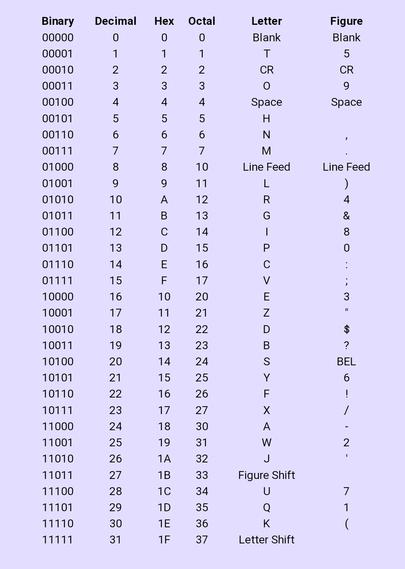
@AnneTheWriter @victorgijsbers read it from top to bottom or from left to right? As for code, lookup Baudot.
@wtremmel @victorgijsbers
my deciphering was from top to bottom and left to right, yes. I'm not sure what the original intended.
ARMAC | Unsung Heroes in Dutch Computing History

@wtremmel @victorgijsbers
I looked up Baudot. The possible interpretations are too many for my available time this afternoon, I'm afraid. Perhaps someone else can have more success?

https://en.m.wikipedia.org/wiki/Baudot_code

Baudot code - Wikipedia

@wtremmel @victorgijsbers
Another Baudot chart. This one seems different? Using Baudot, the message makes no sense in any language-- too many constants. (Or maybe I'm doing it wrong.)

https://cs.stanford.edu/people/eroberts/courses/soco/projects/2008-09/colossus/baudot.html

Baudot Code