Looking for people who know something about early computing, especially in the Netherlands. Please boost and help me solve the mystery of this custom made plate that used to belong to my grandfather Bram Jan Loopstra, one of the pioneers of Dutch computing. What do the pictures mean? #computing #history (EDIT: Wow, thanks for the overwhelming response! You may have to check the post on my instance to see all the MANY helpful reactions.)
The binary is obviously a date, 8-3-1956. That's the year that my grandfather and his collaborators finished the ARMAC computer. So my first hypothesis is that it's a commemorative plate for that. If so, the pictures may have something to do with this computer.
The words at the bottom are the motto of early modern Dutch scientist Simon Stevin. It means something like: "It's a miracle, but not a miracle", indicating the power of science to explain the seemingly miraculous.
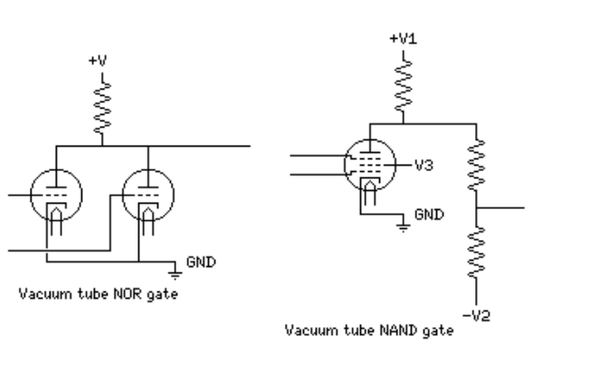
@victorgijsbers The figure on the left is a vacuum tube. In the 1950's they would have been used to develop computers (because transistors were not available at that point). http://www.quadibloc.com/comp/cp01.htm
What Computers are Made From

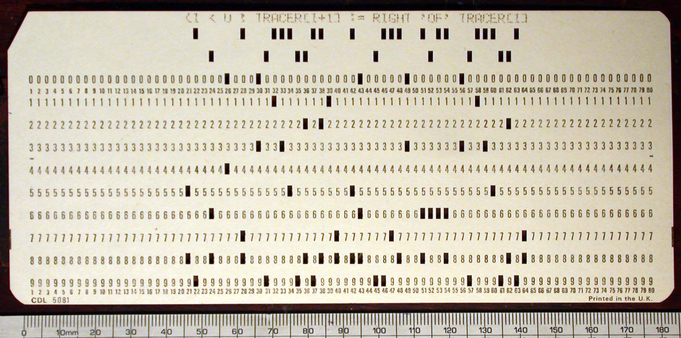
@victorgijsbers The middle column (grid) is clearly a reference to the way those computers were typically programmed; they had a grid of on/off positions to specify the operations to be taken by the computer (computer instructions). Probably an actual switch back in the 1950's, later these were done with punch cards.
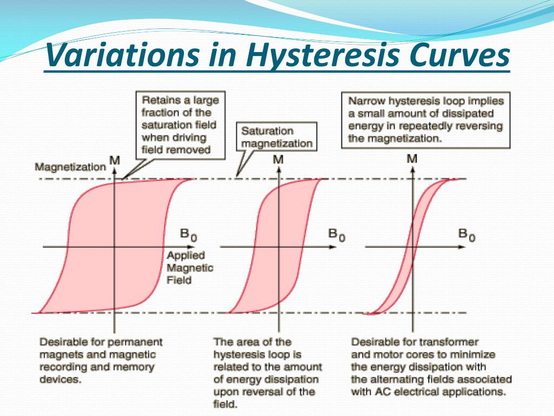
@victorgijsbers The figure on the right is a reference to some kind of hysteresis curve/loop, which is typically an electrical or magnetic property.
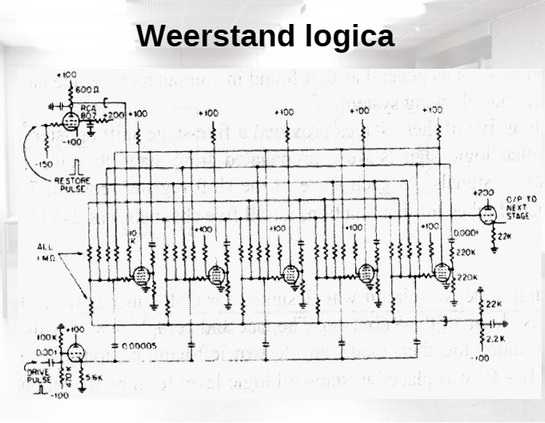
@victorgijsbers This looks to explain some of the machine after the ARMAC, probably similar. here's that vacuum tube and grid used for logic, the left and center diagrams in your plate. (Correction: "Weerstand logica" is "resistance logic" in Dutch) https://docplayer.nl/10851283-De-bronnen-van-de-computer-en-de-rol-van-de-electrologica-x8.html

@ai6yr @victorgijsbers
Assuming the middle section is punch ribbon, then this would be the code...

https://mstdn.party/@AnneTheWriter/109627253594416795

AnneFisher (@[email protected])

@[email protected] @[email protected] The code for the middle section reads: (Top dots) 0-1-0-1-0 0-0-0-1-0 0-1-0-0-0 0-1-0-0-0 0-0-0-0-0 (Bottom dots) 1-0-1-0-0 1-0-1-0-0 0-0-1-0-1 0-0-0-0-1 1-0-1-0-0 At that point in history, this is NOT likely to be ASCII. Can anyone decipher that binary? https://itenterpriser.com/knowledge-base/what-is-punched-paper-tape-how-to-read-it/

Mastodon Party
@AnneTheWriter @victorgijsbers Hmm, possible... could also just be instructions for that particular machine.
@ai6yr @AnneTheWriter @victorgijsbers I was wondering if it was simply the first programme they ran on the machine
@AnneTheWriter @ai6yr @victorgijsbers I was messing with a https://www.dcode.fr/baudot-code (which decodes from a number of different baudot codes at the same time including showing showing both the decoding if it's LSB first and MSB first)) the other day to try to try to decode it but I didn't get anything useful out of it, but maybe I missed something if it isn't just some instructions which would come out looking random if you don't know the instruction set of the machine.
Baudot Code (Telegraph) - Online Decoder, Translator

Tool to decode/encode with Baudot. Baudot code is one of the first telecommunication code in binary from a machine (telegraph), it uses 5 bits per character and 2 character sets.

@ai6yr @victorgijsbers

Weerstand is Dutch for resistance, so "resistance logic" is likely an early name for resistor-transistor logic (RTL), which this would predate as a structural and functional equivalent.

@ai6yr @victorgijsbers well spotted! The "Weerstand logica" example in that slideshow looks like a 4-bit finite-state machine, perhaps counting up to 10? The "restore pulse" from the tetrode circuit at the upper left is fed to the screen grid of the first pentode; there's a drive pulse... and the function being computed is essentially hardwired into the resistive interconnections on the control grids of the five pentodes.