 demofox
If you've heard of monte carlo geometry processing and wondered what it's all about, give this a read!
In short, it's a way of interpolating data using random walks. An implementation looks quite a bit like ray marching an SDF, including needing to know the distance to the closest feature, from within a loop!
https://blog.demofox.org/2020/07/11/interpolating-data-over-arbitrary-shapes-with-laplaces-equation-and-walk-on-spheres/
In short, it's a way of interpolating data using random walks. An implementation looks quite a bit like ray marching an SDF, including needing to know the distance to the closest feature, from within a loop!
https://blog.demofox.org/2020/07/11/interpolating-data-over-arbitrary-shapes-with-laplaces-equation-and-walk-on-spheres/
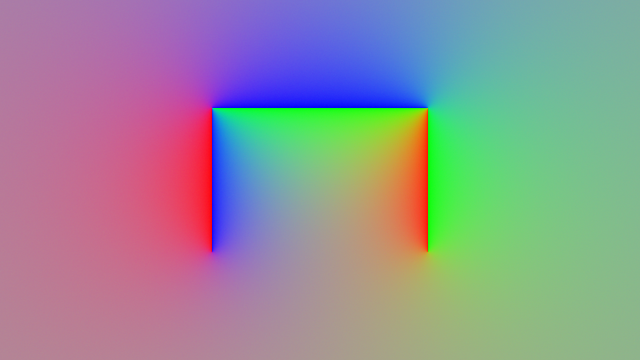

Interpolating Data Over Arbitrary Shapes With Laplace’s Equation and Walk on Spheres
A very cool paper was accepted to SIGGRAPH 2020 called “Monte Carlo Geometry Processing: A Grid-Free Approach to PDE-Based Methods on Volumetric Domains” The paper is here: You can find…
 j_bertolotti
 Nikita Lisitsa