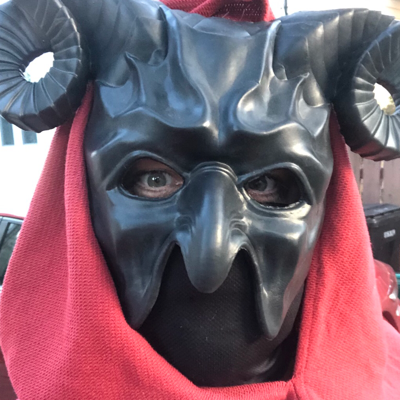
 Eldritch Scerry
Regret hit both man and animal with their first step outside. Fancy regretted not shitting in the house, and Gem regretted forgetting Fancy’s raincoat. For the uninitiated a Chinese Crested is mostly hairless, with mottled pink-grey skin save four socks on its feet, a flowing horse’s tail, and a mullet that breeders call a crest. Vicky had picked up Fancy on the cheap following her mom’s affair with a bulldog. Fancy had width and a flattened snout that were against breed standard, but no coat.
The dog curled its cold wet body into a tight immovable unmotivated ball once it touched the ground. Fancy pulled her neck back towards the living room, hoping Gem would be merciful. Gem wasn’t; he picked up the dog under her barreled chest and walked her into the driving rain. He kept walking as the wind howled around them, drowning his string of curse words unseparated by breath. It was a reliable maneuver: carry Fancy to a far spot she regularly marked and then let her retreat to home base.
Gem and Fatty lived with Fancy and Vicky in Endecott Gardens, a condominium complex that infringed on the marshland running out of town. Buggy in the summer and floody when it rained, Endecott Gardens was built in the late 70s when cocaine mattered more than building codes. From that moment to this it served bachelors, single parents, immigrants, and the forgotten. Gem stormed past his neighbors’ condos with built-in garages collecting water. He could not afford such luxury. He parked outside.
Fifty yards from his front door and Gem lowered Fancy across the parking lot above an ineffective culvert. A crash of symbols echoed from the overflow. Gem never told Fancy that two years earlier he’d found a scrawny kitten down below; it was instinct to commemorate the spot with urine and feces.
“Come on you stupid horrible primadonna. Shit and we can run back home! No one wants to be out on a night like this. And I refuse to suffer without something coming out of your—”
Fancy hunched her back.
“Come on you stupid horrible primadonna. Shit and we can run back home! No one wants to be out on a night like this. And I refuse to suffer without something coming out of your—”
Fancy hunched her back.
As Gem felt relief at Fancy’s relieving a street light turned on the far end of the lot. The few working were sensitive to motion, and it was true to its design, discriminating between the driving rain and its discovery of denizens, a dozen of them, determined to demonstrate.
The complexity of Endecott Gardens involved a series of dead ends, figurative as mentioned but also literal. Parallel parking lots bisected by one main exit, with condo footprints configured in Ls and 7s on both sides.
The complexity of Endecott Gardens involved a series of dead ends, figurative as mentioned but also literal. Parallel parking lots bisected by one main exit, with condo footprints configured in Ls and 7s on both sides.
Gem lived at the end of the last L on the left, number 63 at the bottom of Endecott Gardens. As he kicked Fancy’s leavings into the marsh, the dog began pulling Gem home. Gem did not follow. It was a dark and stormy night. Too dark and too stormy for a dozen assholes standing in the middle of it fifty yards away. Three more joined the cast from the end of the last 7 on the right. Fifteen people in the rain, standing still in front of number 64 at the bottom of Endecott Gardens.
“What the fuck.”
“What the fuck.”
Gem got an answer. Amidst the percussion of water on the yellow vinyl of his hood, the crash of water inside the culvert, and the howl of wind around him, Gem heard from behind what sounded like the clicks of plastic teeth when you run your thumb along a comb, or pull a zip tie. He suddenly smelled the rank air of low tide during the summer that made him light headed. But this was intense. The world spun and he went with it. The dog barked, then yelped, as his eyes went dark and his mind stormy.
Chapter 2: Where Heathen Gods with Praise Are Crown’d
The names of English settlements in the early 1600s were pretty straitforward: king (Charlestown), colonizer (Endicott), birthplace (Boston), and biblical concept (Providence). If Algonquian words made it onto a navigator’s map they outlived their native tongues more out of political convenience than polite convention. The tidal marshes ten miles north of Boston, called Saugus by the Naumkeag, were rebranded in 1656 for a reverend.
Michael Wigglesworth came to the New World a young boy with his father, Edward, and mother, Ester, in 1638. Michael was seven. Boston was eight. And New College was two years into teaching proper religion in Newtowne, renamed Cambridge by alumni of their English alma mater. Everyone would be a year older before New College took the name Harvard.
Young men of rank who did not die went to Harvard. Wigglesworth was no exception, graduating first in his class of ten at Harvard’s tenth Commencement.
Young men of rank who did not die went to Harvard. Wigglesworth was no exception, graduating first in his class of ten at Harvard’s tenth Commencement.
Opportunity was not immediate. Cromwell’s Civil War and Dutch hostilities meant English ministers found colonial favor outside the fields of combat. Wigglesworth would have to wait. Tutoring at Harvard, Michael felt the constant disapproval of the Lord his God and communicated that to his discipuli. His sensitivity provoked a frail constitution and a talent for poetry. Only when Cromwell was established as Lord Protector in late 1653, and the tide of ministers ebbed, did Michael find his flock.
As early as 1633, settlers from nearby Endicott had made their way to the wilderness indigenously called Saugus. The marsh provided shellfish, the woods provided timber, and the Smallpox provided little resistance. Within twenty years the new residents had built a mill for grist and a furnace for pig iron, but neither a meeting house to define their heaven nor a legal charter to define their earth. To secure both it made sense to obtain spiritual counsel, and Harvard had the perfect candidate.
In under two years, Michael Wigglesworth helped shape the civic and religious structures of this settlement, physically and ideologically. And despite a perpetual lack of self-worth due to his inherent human depravity—or specifically because of it—Wigglesworth was ordained minister of its congregation in 1656. To commemorate the occasion the elders of Saugus voted to sin against their new reverend’s humility, renaming the settlement Wigglesworth. Despondent, its namesake fell ill for six months.
The reverend would get better (eventually) but refused to call the community by his name for the rest of his days. During convalescence, poetry was the only balm to his restoration. Metaphysical meditations bearing biblical allusion with alternating rhyme, and often meter:
'Tis not Affliction barely
That doth my Soul distress:
But rather multitude of sins
And mine own wickedness.
Nor is it former faults
That now are brought to minde,
So much, as swarms of present sins
And hateful Lusts I finde.
'Tis not Affliction barely
That doth my Soul distress:
But rather multitude of sins
And mine own wickedness.
Nor is it former faults
That now are brought to minde,
So much, as swarms of present sins
And hateful Lusts I finde.
They were not all so positive. In darker moods Reverend Wigglesworth would set his mind and verse on the Black Man that could be found, travelers whispered, waiting for the vulnerable on a heath within the densest thicket of the forest. To clarify, not African. European lineaments chiseled in a monolith of obsidian, whose words vibrated with the many tongues of Babel, and whose gaze could shake the oaken faith of all but Jesus Christ. There you made your mark in the skin of his ancient tome.
Those woods remained nameless for generations, suspected by rumor and invested with superstition. Pirates buried treasure in its caverns. Natives baked the unbaptized in its limepits. And Quakers practiced equality in its pastures.
But far beyond these profane acts against God and man were those committed by the Black Man’s covent. While witchcraft had run rampant in Connecticut colony some years before, unblemished were the residents of Massachusetts Bay before 1692. Well, maybe.
But far beyond these profane acts against God and man were those committed by the Black Man’s covent. While witchcraft had run rampant in Connecticut colony some years before, unblemished were the residents of Massachusetts Bay before 1692. Well, maybe.
Reverend Wigglesworth had spent two score years witnessing the presence of the divine since his Commencement from Harvard. He also had occasion to challenge the infernal. Milk clotted from the cow’s udder. The married men in a family tree found withered at the root. A suckling pig born with cherubic face. Convulsions, and crawling, and curses were all confronted with the power of Christ, which he balanced with the medicinal properties of God’s garden. The latter trick was quaint and uncommon.
For all his private flagellation, Wigglesworth publicly weighed God’s wrath with Christ’s love, and that had been a primary reason his congregation christened their settlement with his surname. He often led with the New Testament over the Old.
“Beloved, let us love one another: for love is of God; and every one that loveth is born of God, and knoweth God. He that loveth not knoweth not God; for God is love.”
The same approach was not apparent in his ecclesiastical colleague, Cotton Mather.
“Beloved, let us love one another: for love is of God; and every one that loveth is born of God, and knoweth God. He that loveth not knoweth not God; for God is love.”
The same approach was not apparent in his ecclesiastical colleague, Cotton Mather.
Much has been written of Mather: his family, his worldview, and his worry. A legacy within New England theology, Cotton came from rigid materials. Both of his grandfathers defined orthodoxy in Boston and Dorchester’s theocracies. Nonconformist in England and intolerant in America, John Cotton and Richard Mather helped banish, disfigure, or execute the spiritually different. The question of intention grew inherent to their teaching, and suspicion within their offspring, culminating in Cotton.
Cotton’s father—Increase Mather—was tutored by Michael Wigglesworth at Harvard, little good that it did him. Increase cared less for poetry and more for propriety. His prose proposed a concern for witchcraft that contradicted Calvinist thought on Divine Providence if argued to a logical conclusion. No one took that position before children found witches in their midst in 1692. By then it was too late. The rope hung and damage done in Endicott, Cabot, and Andover. But no witches in Wigglesworth.
Increase and Cotton fostered guilt with select judges and spectral evidence. The community of ministers in the Cambridge Association, which the Mathers organized and Wigglesworth attended, kept quiet until the obvious could no longer be avoided. Men and women may have dealt with the Devil, but none who cried innocent. Those not yet executed were released from jail. Reparations were demanded and denied. Reputations were tarnished then polished. And the Mathers balked at their laity’s liberalism.
Reverend Wigglesworth was 62 once the hubbub subsided. He could have rejoiced in clear skies and safe harbors if not haunted by Acts.
“He therefore hath purchased a field with the reward of iniquity: and when he had thrown down himself headlong, he brast asunder in the midst, and all his bowels gushed out…insomuch, that that field is called in their own language, Akel Dama, that is, The field of blood.”
In both sermon and stanza he now called his own field Akel Dama, and himself Judas Iscariot.
“He therefore hath purchased a field with the reward of iniquity: and when he had thrown down himself headlong, he brast asunder in the midst, and all his bowels gushed out…insomuch, that that field is called in their own language, Akel Dama, that is, The field of blood.”
In both sermon and stanza he now called his own field Akel Dama, and himself Judas Iscariot.
None amongst his flock had been sacrificed to accusation despite proximity to Endicott, and the nameless woods within the boundaries of his eponymous settlement. But he knew—he knew—the Black Man held his mark in the Cambridge Association’s charter. Reverend Wigglesworth had eight children across his three successive marriages. His youngest, Edward, was just learning to walk. How could he let this child stand in the shadow of his sin, prevented the light and love of Jesus Christ?
He could not.
He could not.
To Increase he waxed:
“I am well assured that yourself, your son, and the rest of our brethren have a deep sense upon our spirits of the Divine displeasure that we lie under this day. God hath a controversy with us about what was done in the time of the Witchcraft. The whole country lies under a curse by all that have had their hands defiled therewith. Innocent blood hath been shed, and God expects a Public and Solemn acknowledgment of it and humiliation for it in order to obtain His pardon.”
“I am well assured that yourself, your son, and the rest of our brethren have a deep sense upon our spirits of the Divine displeasure that we lie under this day. God hath a controversy with us about what was done in the time of the Witchcraft. The whole country lies under a curse by all that have had their hands defiled therewith. Innocent blood hath been shed, and God expects a Public and Solemn acknowledgment of it and humiliation for it in order to obtain His pardon.”
With this contrition, Reverend Michael Wigglesworth diminished, waning in early June and passing one week later. When the news reached Boston, Cotton Mather traveled to the family forthwith. In their hour of need his sympathies touched their grief, and his hands touched Michael’s private diaries. Claiming them for preservation with the Cambridge Association, Cotton made quick work of their coded confessions, to present in sermon to several local congregations and publish in pamphlet thereafter.
Cotton Mather’s conviction over the evidence was persuasive. The Wigglesworth community’s acknowledgment was solemn, and humiliation public. The Wigglesworth family dispersed to the South and West, to the more tolerant settlements of Providence and New York. Meanwhile the name remained, a reminder of God’s disfavor and the Cambridge Association’s insistence. While man is weak, the congregation is strong. Strong enough to display the blemish of their birth name for the embetterment of the masses.
But of the masses, embitterment was their blemish. A shame more appropriate for the murder of nineteen falsely accused witches in Endicott, transferred to the community of Wigglesworth that killed none. And an honorable memory died soon after its community’s namesake, buried to await the Resurrection without living relative to tend the grave.
Of course, the community continued. From village to town in 1705. Then one town to two in 1815 when the southwest reincorporated as Saugus.
Of course, the community continued. From village to town in 1705. Then one town to two in 1815 when the southwest reincorporated as Saugus.
Inevitably, Puritans begot patriots begot transcendentalists begot abolitionists begot realists begot modernists begot postmodernists begot the Internet. Someone in the middle of that, divorced from history and espoused to alliteration, came up with Wiggle’s Woods to identify the impenetrable thicket that no one could commercially renovate. The town council approved, more out of political convenience than polite convention. Much later came attempts at hiking trails and landscape architecture.
Of Wigglesworth’s industry, shellfish and iron became textiles and tanning. The affluent moved to neighboring resorts, turning old townhouses into tenements to fill with immigrants applying manu for their facturing. First Irish, then Polish, then others, but not before the town turned city in 1850. Factories filled the center. Children filled the factories. Sewage filled the marshlands. Coliforms filled the aquifers. Smoke filled the atmosphere. Families filled the graveyards.
With poverty came crime, abuse, and vice. Rev. Wigglesworth would not recognize the land that took his name when ordained its shepherd, nor the flock upon it. Catholics, Jews, and Hindus mixed with the godless, the lawless, the loveless. All scrabbling at bits to get by. There were other industries. Drugs and prostitution were not legal, just overlooked. The city caught a catchphrase by the 1970s. When visiting, people would ask if you “Got your wiggle’s worth?”
“And then some,” was a response.
“And then some,” was a response.
By the 1980s it was more than just the clap. AIDS took their tithe; so did crack. The commonwealth finally realized the cavity that remained required filling. Environmental protection started with Wiggleswoods (lost apostrophe) and spread to the marshlands and shoreline. Subsidies seeded the slow renovation of factories into lofts and local businesses. People did not yet care, as generations of indifference are difficult to crown with new bridges and the germ of gentrification, but some started.
Still, any reference to the city prompted the question, “Got your wiggle’s worth?” It was what you asked yourself every time you passed the city limits and were welcomed by the name on the sign. “And then some,” you’d mutter. Route 107 ran out of town towards Boston. It cut through the marsh that was now seasonally toxic instead of perennially. The side roads off 107 grew scarce without terra firma, but Endecott Court was longstanding. So long it used an alternate spelling to the name Endicott.
Gem Lembeck hated the alternate, living off Endecott Court in Endecott Gardens. He’d spell them with an I anyway, angry at the inconvenient convention. Of this history he only knew the very last part from growing up in Wigglesworth. He used to drink in Wiggleswoods and tag the exposed rock with his friends: a big diamond ring with the band in the shape of an uppercase G. His answer to the question everyone asked was “Fuck you.” And this exposition is now closed as he’s waking up in the hospital.
Chapter 3: Dining In or Taking Out?
Gem was riding in an elevator with the Brat Pack from The Breakfast Club and other ’80s movies when he first heard the beep. It was a glass elevator running along the outside of the Sears Tower, delivering them to the Pope before he went to New China. They carried top secret documents in a briefcase handcuffed to Gem’s wrist. His fingers were cold. The elevator kept moving and the scene unchanged. How long did it take to reach the right side of a building?
That beep again. He could not tell where it came from. Ally Sheedy did not look like Ally Sheedy. Was it Molly Ringwald? No. Judd Nelson. That beep again. What were we doing?
Gem’s eyes opened. He could remember the Sears Tower. He’d never been to Chicago. Was this Chicago? He was in an unfamiliar room. That beep again. His head turned. It hurt. There were machines with numbers and a bag with a tube. It ran down to his arm. A hospital? His eyelids closed. That beep again. This was not Chicago.
Gem’s eyes opened. He could remember the Sears Tower. He’d never been to Chicago. Was this Chicago? He was in an unfamiliar room. That beep again. His head turned. It hurt. There were machines with numbers and a bag with a tube. It ran down to his arm. A hospital? His eyelids closed. That beep again. This was not Chicago.
Gem’s eyes opened to look at his wrist. It was missing something metal. His fingers were cold. Running a thumb along the four fat tips on his right hand they were blushing like a rooster’s comb. Four similes stuffed like cushions with pins and needles. Gem coughed, forced through a tight throat and dry lips. He smacked them, then ran a thick tongue between, failing to moisten what felt like seasoned bark. A coat of scum dressed his tonsils like a tailored suit left in a public bathroom. Water.
“Water,” he croaked. The room had closed blinds on one side, an open curtain on the other, an uncomfortable vinyl chair, and some drawers and cabinets, but no other bed with roommate or visitors with flowers to witness his impression of a frog. Light from the hallway poured into his dim room from a narrow window in the closed door. Hospitals had nurses, and buttons to press, and wires to pull when he could not find the nurses or the buttons. There was one on his chest. Gem pulled the wire.
The beep became a drone. The heart monitor stopped caring about his heart, declaring him dead to the nurses’ station. Within a four count, a black woman who’d define as “big but working on it” opened the door with haste. She hit the switch to bring up the fluorescent lights, then greeted him with a smile once she saw him living. Her perfect teeth showed professional tenderness.
“Look who’s awake! How are you doing?” She made it to the bedside to check his vitals and sort out the wire.
“Look who’s awake! How are you doing?” She made it to the bedside to check his vitals and sort out the wire.
The nurse took the sensor from Gem, its sticker was half attached to a shaved spot on his chest.
“I feel like shit.” Gem never minced words coated with sugar. He served the hot and sour truth. She pulled a thermometer from the breast pocket of her blue scrubs and stuck it in his mouth.
“None of that potty mouth, thank you.” She delivered it with fact not opinion. There was a tag on her v-neck that read Nayo. Nurse Nayo reattached the sensor underneath the sticker. The machine stopped droning.
“I feel like shit.” Gem never minced words coated with sugar. He served the hot and sour truth. She pulled a thermometer from the breast pocket of her blue scrubs and stuck it in his mouth.
“None of that potty mouth, thank you.” She delivered it with fact not opinion. There was a tag on her v-neck that read Nayo. Nurse Nayo reattached the sensor underneath the sticker. The machine stopped droning.
That beep again.
Nurse Nayo examined Gem’s head, neck, and arms. When she touched his fingers he winced. She smiled. “Let’s see if you’re ready to come out of the oven.” She pulled the thermometer from his mouth to read the line in the mercury.
“Around 100,” she squinted. “Still warm, but not as hot as when you arrived. Welcome back.”
“What happened?” Gem asked. He remembered being home, and something about Chicago. And then suddenly here and now. Was there a John Hughes movie? he wondered.
Nurse Nayo examined Gem’s head, neck, and arms. When she touched his fingers he winced. She smiled. “Let’s see if you’re ready to come out of the oven.” She pulled the thermometer from his mouth to read the line in the mercury.
“Around 100,” she squinted. “Still warm, but not as hot as when you arrived. Welcome back.”
“What happened?” Gem asked. He remembered being home, and something about Chicago. And then suddenly here and now. Was there a John Hughes movie? he wondered.
“You came in about midnight last night,” the nurse remembered. “You were unresponsive, and—”
The door opened and a short, balding Indian man in a lab coat walked into Gem’s room, gave a quick nod and wave, and said smiling, “Pardon me, but no Code Blue?” The accent was strong.
“Thankfully no, Doctor.” Nurse Nayo turned back to Gem. “Dr. Patel might be the best person to explain what happened to you.”
She looked down at Dr. Patel, now standing at the foot of the bed and reaching for Gem’s chart.
The door opened and a short, balding Indian man in a lab coat walked into Gem’s room, gave a quick nod and wave, and said smiling, “Pardon me, but no Code Blue?” The accent was strong.
“Thankfully no, Doctor.” Nurse Nayo turned back to Gem. “Dr. Patel might be the best person to explain what happened to you.”
She looked down at Dr. Patel, now standing at the foot of the bed and reaching for Gem’s chart.
“Dr. Patel, he’s registering a temperature of 99.8 degrees, and his fingers are still swollen and sensitive. He has questions. Can I be of any further assistance?”
“Do we have a name?”
Nurse Nayo looked at the patient.
“Gem.”
“Hopefully we can get answers together.” Dr. Patel took out a pen from his lab coat. “I should be okay, Nayo, if you want to go.”
Nurse Nayo looked at Gem and gave a slight nod. “I’m right outside if you need anything. Please use the call button next time?” She smiled.
“Do we have a name?”
Nurse Nayo looked at the patient.
“Gem.”
“Hopefully we can get answers together.” Dr. Patel took out a pen from his lab coat. “I should be okay, Nayo, if you want to go.”
Nurse Nayo looked at Gem and gave a slight nod. “I’m right outside if you need anything. Please use the call button next time?” She smiled.
Gem liked Nurse Nayo, but if pulling the wire brought a faster response, he’d do it for orange juice and a pudding cup, not just medical necessity. Thinking of food made Gem think about the bill. How did I get here? Would I have to pay for this? He wished he gave another name. Stupid.
Dr. Patel read from the top line: ‘Okay, now. Your full name?”
There was a clatter as Nurse Nayo had walked over to the blinds and pulled them open. Gem squinted at the light, not a midday flood but a morning tide.
Dr. Patel read from the top line: ‘Okay, now. Your full name?”
There was a clatter as Nurse Nayo had walked over to the blinds and pulled them open. Gem squinted at the light, not a midday flood but a morning tide.
A soft pink tinged the white concrete blocks on the opposite wall. Clear skies after a dark and stormy night.
“What time is it?” Gem asked instead.
Nurse Nayo looked at her watch as she walked towards the door. “It’s almost 7am. We’ll have a shift change in the next hour and rounds after that.”
“Thank you.” Gem looked back at Dr. Patel as the nurse left his line of sight. “Ben. My name is Ben Jemiston. How did I get here?” It was a name he’d used before, and the best defense was a quick offense.
“What time is it?” Gem asked instead.
Nurse Nayo looked at her watch as she walked towards the door. “It’s almost 7am. We’ll have a shift change in the next hour and rounds after that.”
“Thank you.” Gem looked back at Dr. Patel as the nurse left his line of sight. “Ben. My name is Ben Jemiston. How did I get here?” It was a name he’d used before, and the best defense was a quick offense.
“Ehhh, how do you spell that?” Dr. Patel was reconciling what he heard first with what he heard second. His hands could save a life but could not spell to save his own. How is this still hard? Why did I offer to complete the chart? Pride kept him from asking Nayo to do the writing. Stupid.
“Well, Ben is B-E-N. And then J-E-M-I-S-O-N. Where are my things?” Gem could not remember leaving his condo, but if they needed a name then he must not have a wallet.
“J-E-M-I-S…I-I thought I heard a T?”
“Well, Ben is B-E-N. And then J-E-M-I-S-O-N. Where are my things?” Gem could not remember leaving his condo, but if they needed a name then he must not have a wallet.
“J-E-M-I-S…I-I thought I heard a T?”
“Maybe the accent?” Gem did not specify whose. “Do you know how I got here?”
Dr. Patel ended the name with an N and looked at the rest of the empty fields. “If you fill in your details I’ll tell you what happened?”
That would do nicely. “Whatcha got?” Gem reached out and Dr. Patel gave him the clipboard. It felt prickly in his hands. He reached for the pen and it felt the same. The more Gem pressed the more his fingers radiated nettles. He could still write a date of birth, just not his own.
Dr. Patel ended the name with an N and looked at the rest of the empty fields. “If you fill in your details I’ll tell you what happened?”
That would do nicely. “Whatcha got?” Gem reached out and Dr. Patel gave him the clipboard. It felt prickly in his hands. He reached for the pen and it felt the same. The more Gem pressed the more his fingers radiated nettles. He could still write a date of birth, just not his own.
Someone had added “John Doe,” which Dr. Patel had crossed out, scribbling whatever Gem’s name was. There was also a date: 11/21/04. “Is it Sunday?” Gem asked.
“Yes,” confirmed the doctor.
Gem had the day off, so no manager to call with excuses to make. Thank God. Fucking Jared would never have believed him.
Of course there would still be questions. If his girlfriend did not bring him to the hospital, then a four-day silent treatment would conclude with accusation on Thanksgiving.
Typical Vicky.
“Yes,” confirmed the doctor.
Gem had the day off, so no manager to call with excuses to make. Thank God. Fucking Jared would never have believed him.
Of course there would still be questions. If his girlfriend did not bring him to the hospital, then a four-day silent treatment would conclude with accusation on Thanksgiving.
Typical Vicky.
Pass the gravy and the guilt trip, first-class accommodations sponsored in part by Vicky’s mom, Delia, showing up Thursday morning from neighboring Saugus with a spoon to stir the drama. Gem thought about cutting to the end when he’d bellow, “Fuck this! I’m going to the PortHole!” Why take the journey when he knew the destination?
Because he knew the PortHole did not have cots, even for a regular like him. Gem wanted a Crown and Crown so bad he could taste it from the hospital bed.
Because he knew the PortHole did not have cots, even for a regular like him. Gem wanted a Crown and Crown so bad he could taste it from the hospital bed.
Gem scribbled fiction on the medical chart. “Were you here when I arrived, Doc?”
“Yes. EMTs brought you in around 12:15. You were not looking too good. Thankfully it was wet last night but not too cold. You did not suffer from acute hypothermia.” Dr. Patel wanted to be sure he understood. “Frost bite.”
EMTs meant an ambulance, and an ambulance would mean a bill. His mom had been charged a grand once when she’d fallen and could not get up. Gem caught hell for calling 911. “I was outside?”
“Yes. EMTs brought you in around 12:15. You were not looking too good. Thankfully it was wet last night but not too cold. You did not suffer from acute hypothermia.” Dr. Patel wanted to be sure he understood. “Frost bite.”
EMTs meant an ambulance, and an ambulance would mean a bill. His mom had been charged a grand once when she’d fallen and could not get up. Gem caught hell for calling 911. “I was outside?”
“Yes, for some time. Do you remember anything?”
“Nope.” It was gross outside. He was inside, watching late-night cartoons and wearing his robe. Nothing about Chicago. John Hughes was a red herring. Yes, Vicky put on Christmas Vacation a week into November, and Gem declared it couldn’t be watched before Thanksgiving. He owned every National Lampoon movie. “Pick a different Vacation!” he’d yelled. “Or Planes, Trains, and Automobiles for fuck’s sake!” Then that mulleted mongrel barked at him, and—
“Nope.” It was gross outside. He was inside, watching late-night cartoons and wearing his robe. Nothing about Chicago. John Hughes was a red herring. Yes, Vicky put on Christmas Vacation a week into November, and Gem declared it couldn’t be watched before Thanksgiving. He owned every National Lampoon movie. “Pick a different Vacation!” he’d yelled. “Or Planes, Trains, and Automobiles for fuck’s sake!” Then that mulleted mongrel barked at him, and—
“Fancy,” Gem muttered. Dr. Patel could not tell what was fancy. The doctor watched his patient’s eyes dart left and right without seeing here and now. His patient was a Caucasian male in his thirties. Brown hair receding at the temples, beginning to thin on top. He had round features, nothing too angular or lean. His face was puffy, which Dr. Patel could account for—at least in part—medically. The rest was probably due to diet and lifestyle habits that would need to change with his diagnosis.
“You were wearing a rain jacket, which we could save, Mr. Jemisssn. The pajamas underneath it were bagged for forensic evidence, but are…beyond use.”
The word forensic broke Gem’s concentration on Fancy. Vicky’s dog would have gone outside last night. He would’ve worn his rain coat. “What happened to my clothes?”
“The EMTs had to cut the shirt for CPR. But your pants and robe were soiled.” Dr. Patel thought about the right way to say it. “Your body evacuated while unconscious.”
“I shat myself?”
The word forensic broke Gem’s concentration on Fancy. Vicky’s dog would have gone outside last night. He would’ve worn his rain coat. “What happened to my clothes?”
“The EMTs had to cut the shirt for CPR. But your pants and robe were soiled.” Dr. Patel thought about the right way to say it. “Your body evacuated while unconscious.”
“I shat myself?”
“Yes. But why you did it is why you came here. You’ve presented many of the symptoms of a severe allergic reaction.”
Two clicks behind the doctor caught Gem’s attention. There was a long man at the door, who immediately turned his eyes to Dr. Patel.
“Oh! Sorry. Do I have the right room?”
“Definitely not this one, Billy,” said the Doctor.
“My mistake. I was in the neighborhood and figured…” Gem didn’t like the intrusion, both in general and at this specific moment.
“Fuck off, Billy! Wrong room!”
Two clicks behind the doctor caught Gem’s attention. There was a long man at the door, who immediately turned his eyes to Dr. Patel.
“Oh! Sorry. Do I have the right room?”
“Definitely not this one, Billy,” said the Doctor.
“My mistake. I was in the neighborhood and figured…” Gem didn’t like the intrusion, both in general and at this specific moment.
“Fuck off, Billy! Wrong room!”
Billy’s lean face did not react to Gem’s request. Not a grimace nor a wince. He did not look away in sheepish apology. Billy just stared at Gem, and Gem was the first to blink.
“Well, I’ll be around,” Billy directed at Dr. Patel.
“Yes, thank you.” Once Billy left the doorway, Dr. Patel turned back to Gem. “I understand you might be embarrassed. You were at a low point when you came in. But we are all glad to have you back, and based on the severity of your reaction that was not guaranteed.”
“Well, I’ll be around,” Billy directed at Dr. Patel.
“Yes, thank you.” Once Billy left the doorway, Dr. Patel turned back to Gem. “I understand you might be embarrassed. You were at a low point when you came in. But we are all glad to have you back, and based on the severity of your reaction that was not guaranteed.”
Gem looked down from the top of the medical chart where he had finished his fictional statistics to a section listing some general symptoms. Someone had circled Breathing Problems, Sweats, and Diarrhea, then added in cursive Unresponsive and Swelling. He looked at his hands as he passed the chart back to Dr. Patel. Besides the pins and needles, his fingers felt tight in their skin, like hotdogs in boiling water. None of this made any sense.
“Doc, I’m not allergic to stuff. Like, nothing. Never.”
“Doc, I’m not allergic to stuff. Like, nothing. Never.”
“Never?” Dr. Patel asked, beginning to write on the chart. “Once you were stabilized we tried to find an external source for the allergen.”
“External?”
“Like an insect bite. Admittedly we don’t see a lot of bee stings this time of year,” the Doctor smirked. “It’s also possible you ate something.”
Gem thought about it. “Frozen pizza, Doc. Maybe around 9 o’clock last night? It had pepperoni.” And not spiders, Gem added in his head.
“It is not unusual for people to develop allergies later in life.”
“External?”
“Like an insect bite. Admittedly we don’t see a lot of bee stings this time of year,” the Doctor smirked. “It’s also possible you ate something.”
Gem thought about it. “Frozen pizza, Doc. Maybe around 9 o’clock last night? It had pepperoni.” And not spiders, Gem added in his head.
“It is not unusual for people to develop allergies later in life.”
“To pepperoni?” Gem was incredulous.
“No, not pepperoni,” so was the Doctor. “Food allergies can include dairy, so cheese, but it’s also peanuts, tree nuts, gluten, soy, shellfish. ”
“Doc, I didn’t touch any of those last night.” Some of those Gem would never touch, some of those Gem would regularly touch, and some of those Gem would not know if they touched him.
“There are others. We’ll need to schedule tests to determine the culprit.”
“What are we talking about here?” This felt like an upsell.
“No, not pepperoni,” so was the Doctor. “Food allergies can include dairy, so cheese, but it’s also peanuts, tree nuts, gluten, soy, shellfish. ”
“Doc, I didn’t touch any of those last night.” Some of those Gem would never touch, some of those Gem would regularly touch, and some of those Gem would not know if they touched him.
“There are others. We’ll need to schedule tests to determine the culprit.”
“What are we talking about here?” This felt like an upsell.
“An allergic reaction occurs when your immune system identifies a harmless substance as dangerous. Stings and foods are common allergens. Then there’s medicines, dust mites, pollen, mold, pet dander–”
“Pets!” Gem interjected. “I have pets.” Fancy still nagged at him. EMTs dropped him off. They found him outside. He would’ve walked Fancy. Where was the dog? He could picture his cat staring at them from the comfort of the living room as they peered into darkness from the front door. Then nothing.
“Pets!” Gem interjected. “I have pets.” Fancy still nagged at him. EMTs dropped him off. They found him outside. He would’ve walked Fancy. Where was the dog? He could picture his cat staring at them from the comfort of the living room as they peered into darkness from the front door. Then nothing.
“If you’ve developed an allergy,” the Doctor continued, “your immune system responds to these allergens by trying to fight them off like a germ or virus. They’re false alarms, of course, and in order to identify what’s triggering your allergies, we’d need to run skin and blood tests for formal diagnosis.”
“Sounds expensive.” Normally Gem would not have been so candid, but distracted by his blackout the inner thoughts came out.
“This is serious,” the Doctor stated. “What price is your life?”
“Sounds expensive.” Normally Gem would not have been so candid, but distracted by his blackout the inner thoughts came out.
“This is serious,” the Doctor stated. “What price is your life?”
A couple hospital aspirin and maybe a bandaid, Gem thought. Healthcare was for the wealthy. “What do I need to do once we’ve figured it out? Is there medicine?”
Dr. Patel looked relieved at this assurance. “Once we know what has caused your anaphylaxis then you need to avoid situations where it occurs, and carry antihistamines as well as an epinephrine injector just in case. That’s a pen that carries adrenaline to manage anaphylaxis.”
Twice with that fancy word. “And anaphylaxis is my allergy.”
Dr. Patel looked relieved at this assurance. “Once we know what has caused your anaphylaxis then you need to avoid situations where it occurs, and carry antihistamines as well as an epinephrine injector just in case. That’s a pen that carries adrenaline to manage anaphylaxis.”
Twice with that fancy word. “And anaphylaxis is my allergy.”
“Anaphylaxis is your reaction,” corrected Dr. Patel. “If you just had an upset stomach, or itchiness, then your allergy would be mild. But you came to us unconscious, your face and throat were swollen, obstructing your ability to breath. You had a severe allergic reaction that required adrenaline to relax your airways, and medical supervision to assure you did not go into cardiac arrest. Not to mention your loss of memory along with your unconsciousness. Can you remember why were you on 107?”
“Where was I on 107?” Here was something new. Gem lived in Endecott Gardens, which was off Endecott Court, which eventually reached Route 107. That was at least a mile from his condo. The medical chart did not ask for an address, but someone would ask eventually, and no one could go door to door to find him if they didn’t find him at a door to begin with.
“I don’t know. The EMTs would have a report. We did not know who you were when you arrived, so no doubt the police will want to know more.”
“I don’t know. The EMTs would have a report. We did not know who you were when you arrived, so no doubt the police will want to know more.”