 Jeff Gilchrist
Even mild COVID infection increases risk of blood clots and death
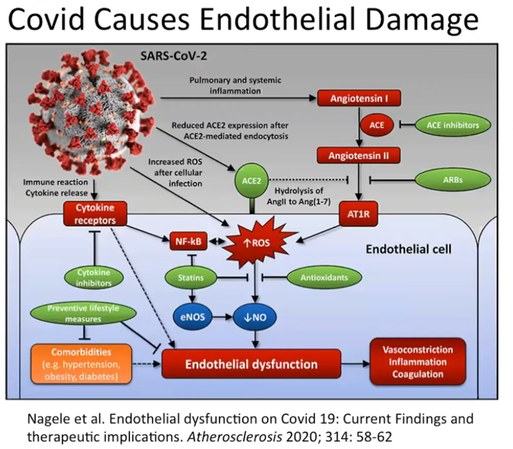
A study in the UK found that mild (non-hospitalized) infections led to a 2.7x higher risk of blood clots and 10.2x higher risk of death compared to controls ( https://heart.bmj.com/node/174901.full ). H/T: @[email protected] 🧵 1/

Cardiovascular disease and mortality sequelae of COVID-19 in the UK Biobank
Objective To examine association of COVID-19 with incident cardiovascular events in 17 871 UK Biobank cases between March 2020 and 2021. Methods COVID-19 cases were defined using health record linkage. Each case was propensity score-matched to two uninfected controls on age, sex, deprivation, body mass index, ethnicity, diabetes, prevalent ischaemic heart disease (IHD), smoking, hypertension and high cholesterol. We included the following incident outcomes: myocardial infarction, stroke, heart failure, atrial fibrillation, venous thromboembolism (VTE), pericarditis, all-cause death, cardiovascular death, IHD death. Cox proportional hazards regression was used to estimate associations of COVID-19 with each outcome over an average of 141 days (range 32–395) of prospective follow-up. Results Non-hospitalised cases (n=14 304) had increased risk of incident VTE (HR 2.74 (95% CI 1.38 to 5.45), p=0.004) and death (HR 10.23 (95% CI 7.63 to 13.70), p<0.0001). Individuals with primary COVID-19 hospitalisation (n=2701) had increased risk of all outcomes considered. The largest effect sizes were with VTE (HR 27.6 (95% CI 14.5 to 52.3); p<0.0001), heart failure (HR 21.6 (95% CI 10.9 to 42.9); p<0.0001) and stroke (HR 17.5 (95% CI 5.26 to 57.9); p<0.0001). Those hospitalised with COVID-19 as a secondary diagnosis (n=866) had similarly increased cardiovascular risk. The associated risks were greatest in the first 30 days after infection but remained higher than controls even after this period. Conclusions Individuals hospitalised with COVID-19 have increased risk of incident cardiovascular events across a range of disease and mortality outcomes. The risk of most events is highest in the early postinfection period. Individuals not requiring hospitalisation have increased risk of VTE, but not of other cardiovascular-specific outcomes. Data may be obtained from a third party and are not publicly available. The UK Biobank will make the source data available to all bona fide researchers for all types of health-related research that is in the public interest, without preferential or exclusive access for any persons. All researchers will be subject to the same application process and approval criteria as specified by UK Biobank. For more details on the access procedure, see the UK Biobank website: <http://www.ukbiobank.ac.uk/register-apply> <http://www.ukbiobank.ac.uk/register-apply>.




 Eli Perencevich
 TransitBiker
 Citroen_2CV_Rules 🇨🇦 🇺🇦
 J.H.Noyes
 Mathew Samuel