 Ken White
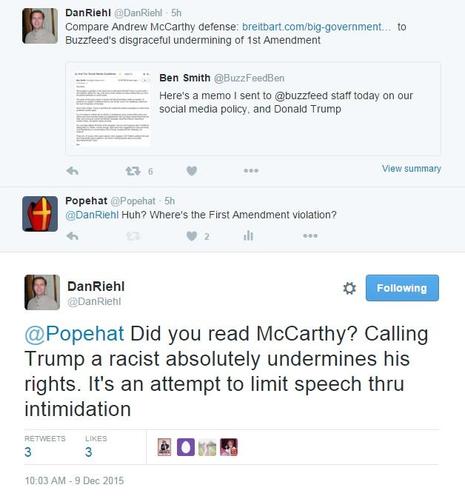
A long-form discussion of why I think it’s important to be specific when we’re debating free speech. Are we talking law, culture, or decency?
https://popehat.substack.com/p/in-defense-of-free-speech-pedantry?sd=pf
A long-form discussion of why I think it’s important to be specific when we’re debating free speech. Are we talking law, culture, or decency?
https://popehat.substack.com/p/in-defense-of-free-speech-pedantry?sd=pf
@Popehat
Yeah, it's difficult to communicate in short messages. This is a good example of what I was referring to. The reference to "academic freedom" is an implied acknowledgement that free speech rights were not involved, but that is a subtlety that the general public might miss. An explicit statement would be more educational.
@Popehat
Excellent analysis.
At risk of making a long article longer, I would add to the free speech rights section the observation that the law varies by country, with two examples:
- Germany enshrines one aspect of its its national culture and decency into its law: glorification of Nazis is forbidden.
- Although some authoritarian countries have no real free speech rights, some have partial rights, but with exceptions such as blasphemy and criticism of government.
 Arkenor ☿️
 Alistair Young
 BruceToman
 Tom Wild
 R. Robot
 Steve
Steve WesDym