 Giselinde Kuipers
On the road again.
One of the more astonishing things about Krakow is that here you can take the train to Auschwitz (oswiecim)...
I am now on the direct train from Przemysl, very close to the Ukrainian border. Many families (women and children, no men) with huge suitcases left the train in Krakow.
Katowice. Capital of Silesia, big industrial boom town if the 19th century. Also, the first public zionist meeting was held here in 1884. I once attended a Lutheran service here in (a sort of) German which is also spoken here.
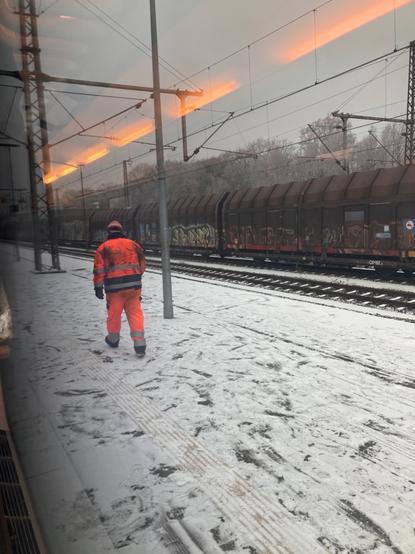
Opole. Still snowing, whatsapp buzzing with colleagues with delayed flights. Across from me in the six-person compartment a student is listening to a streamed chemistry (?) lecture in Italian. Next to me a Pole reads a book on pope Francis. The other three fast asleep.
Wroclaw, formerly known as Breslau (oddly still known as Breslau on apple maps).
Home town of my intellectual hero Norbert Elias.
Also one of the two post-German post-socialist cities studied by my former PhD student Nastya Halauniova who received her degree last year.
Home town of my intellectual hero Norbert Elias.
Also one of the two post-German post-socialist cities studied by my former PhD student Nastya Halauniova who received her degree last year.
And we are back in the world of endless birch trees. The view from Berlin to Wladiwostok, i am told.
Glogow. I had never heard of it but wikipedia informs me that one of my professors at the university of Amsterdam was born here: Johannes Fabian.
Station doesnt have much character though.
Station doesnt have much character though.
Also there are some very dedicated Wikipedians covering Poland. Every town or village has an impressive list of notable people. Rzepin, for instance, is the birthplace of a German pioneer in micropaleontology.
Berlin! 😍 One night stopover, caught up with old friend from Amsterdam, now prof at Humboldt. Also, accidentally ran into another Dutch friend on Friedrichstrasse.
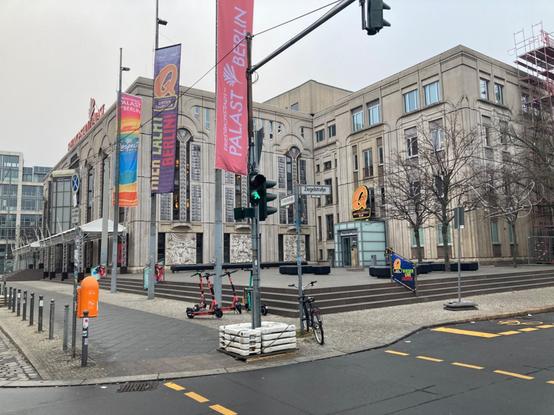
One of the strongest experiences I have of getting older is that wherever I go, I have memories of how a place used to be interfering or at least presenting themselves rather strongly.
This is expecially strong in Berlin, because the place changes so much. For instance:
This is expecially strong in Berlin, because the place changes so much. For instance:
Friedrichstrasse station, December 1989.
Now just a train and metro station, then a border crossing between west and east Berlin, just a month after the Wall opened. Packed with Ossis queuing to get back home, carrying tv sets, stereos and boxes of bananas.
Now just a train and metro station, then a border crossing between west and east Berlin, just a month after the Wall opened. Packed with Ossis queuing to get back home, carrying tv sets, stereos and boxes of bananas.
On Saturday morning, all Easterners passed to the West, exchanging all their Ostmarks into D-marks (at a very unlikely and highly subsidized rate of 1:1) to buy Western consumer goods in shopping streets full of christmas decorations and elated Ossis. The smell of gluehwein and burning coal. East Berlin completely deserted.
And for the sociologists: Friedrichstrasse is where Georg Simmel lived all (I think) of his life and wrote his famous essay on metropolis and mental life.
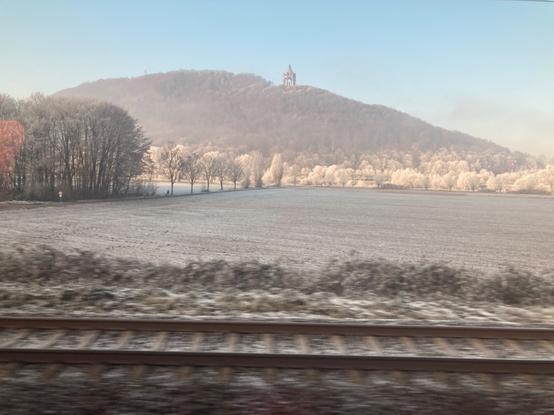
Porta Westfalica. Kaiser Wilhelm Denkmal. Gigantic monument for Emperor Wilhelm I. Only real landmark between Berlin and the Netherlands. Image doesnt really do justice to the size of this very German building/object/construction. (Germans really like big buildings)
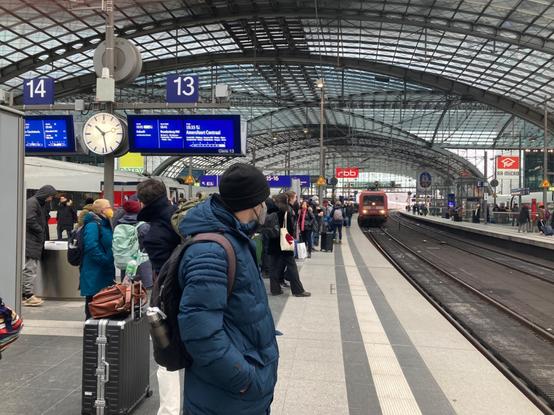
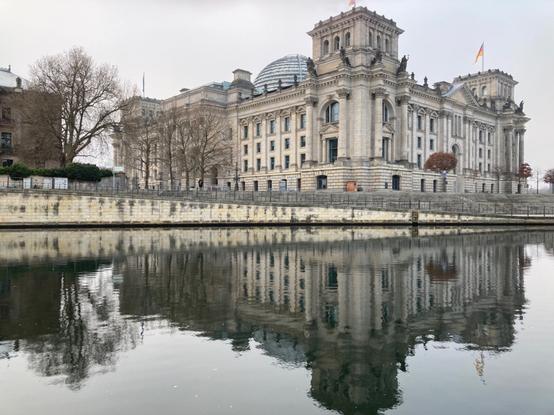
Big German buildings might be a nice theme for a next trip... This trip already had quite a few: the unphotographable Koellner Dom, Volkswagen factory, Berlin central station (also quite irrationally huge) and of course the Reichstag (incidentally, famously set on fire by a Dutchman)
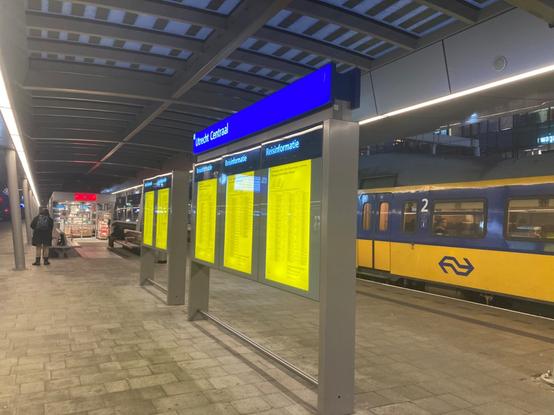
Thoughtful conductor warns smokers, in three languages, that this is their last chance for a smoke on the platform, as smoking is not allowed anywhere in Dutch stations.