#Neuroscience folk designing behavior experiments & wishing to boost their conceptual grasp of the embodied/embedded mind should read #Dewey:

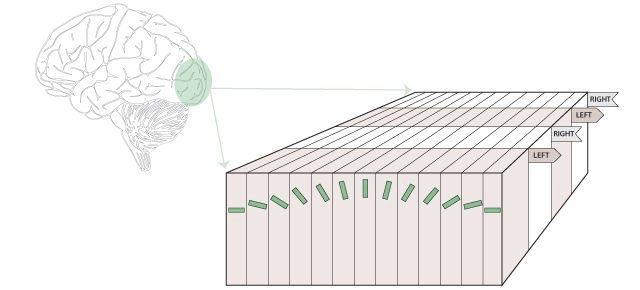
"While the optical apparatus may be isolated in anatomical dissection, it never /functions/ in isolation. [...] The habitual properties of lines cannot be got rid of even in an experiment that endeavors to isolate the experience of lines from everything else." (1934)

Insight transposable to countless other cases.
#philosophy
@neuro @cogsci @philosophy

What does he mean by 'habitual properties of lines'?

@WorldImagining @neuro @cogsci @philosophy

@DrYohanJohn Lines as experienced in real life; edges of books and buildings, horizons, contours of pencils, strings of yoyos, etc.

@WorldImagining

Right but how can lines have habits?

@DrYohanJohn Ah, I see. No, lines don't have habits, rather lines are habitually encountered in nature, in experience, and through these experiential encounters lines gain properties (in experience). Dewey wants to say that even if we present lines in a "pure" manner, observing them, experiencing them, will implicitly elicit those "habitual properties" accrued from our past experiences of lines in the wild. Dewey isn't interested in any objects per se. Only in our experiences of objects.

@WorldImagining @neuro @cogsci @philosophy

Loved Dewey, a while back ago, when writing my dissertation. Nice quote here!

@aledaus You'll find lots more on my feed 🙂 And plenty more to come too; he's the central philosopher to my own current research.

https://mastodon.social/@WorldImagining/109354021640173251