"'Do you see the puckering around this white mass?' The radiologist pointed to a white blur on the monochrome scan. To my untrained eye, it resembled a comet throwing out plumes of dust in the blackness of space. 'That’s a tell-tale sign.'

I had just turned 40, and until this point I had never even had a mammogram. Now I was being told I had breast cancer."

My article in the @wsj about historical treatments of #breastcancer, and my own experience with the disease.
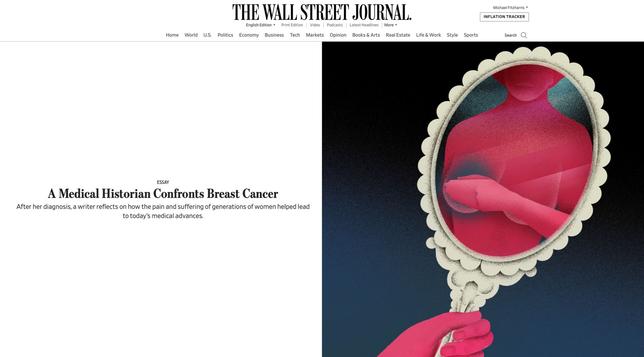
https://www.wsj.com/articles/a-medical-historian-confronts-breast-cancer-11669917623?st=47w2guxbp6b1rtf&reflink=desktopwebshare_permalink&ns=prod/accounts-wsj

A Medical Historian Confronts Breast Cancer

After her diagnosis, a writer reflects on how the pain and suffering of generations of women helped lead to today’s medical advances.

The Wall Street Journal
@DrLindseyFitzharris @wsj breast cancer in one’s 30s is hugely disorienting—I totally agree. I love how you’re giving voice to a journey that’s comparable to mine; when I was having chemo/radio surgery etc. it was mid2000s and I didn’t feel I had public spaces in which to speak it x

@dianajspencer @DrLindseyFitzharris @wsj

100% agree re voice. . . was 34 y.o. in early 2000s - felt very alone w much support geared toward ppl in 50s / 60s. For ex. Menopause vs child bearing.

@CLMilne @DrLindseyFitzharris @wsj exactly! Systems (at that time, at least) not set up (in tone and framing of treatment) at all for anyone non-“standard”…