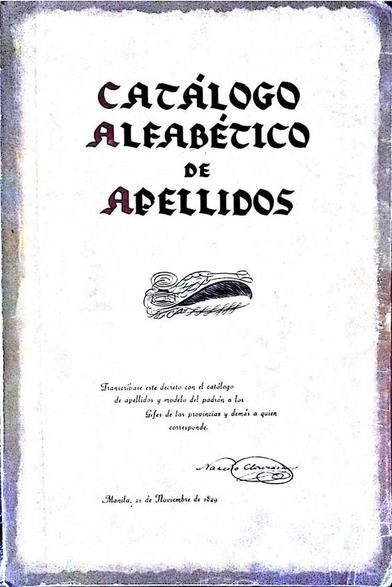
#TodayinHistory in 1849, Spanish Gov-Gen Narciso Clavería y Zaldúa decreed that all #PH inhabitants "shall choose or be assigned" one of the surnames compiled in his "Catalogo alfabetico de apellidos." This explains why many Filipinos have Spanish surnames. THREAD. #History #Kasaysayan
It has often been a common misunderstanding abroad that Filipinos are a "Spanish-speaking" people for simply having Spanish surnames. While the Spanish language gained traction from colonial years up to pre-war, records show that the use of these surnames only began in 1849.
Spanish gov-gen Narciso Clavería had a knack for order. He began his governance in 1844 & was acknowledged as a good administrator, codifying & harmonizing contradictory laws, local gov jurisdictions & boundaries.
Most of all, Claveria fixed the #PH calendar w/c had been out of sync from the rest of the world. Prior to Claveria's decree (16 Aug 1844), PH used European day-time monitor, w/c made PH one day behind its Asian neighbors. 31 Dec 1844 was therefore omitted to help #PH keep up.

A prob observed by Claveria was the Filipinos' "general lack of individual surnames w/c distinguished them by families." The arbitrary adoption of the names of saints resulted in recurrence of surnames even when these people aren't related by blood.

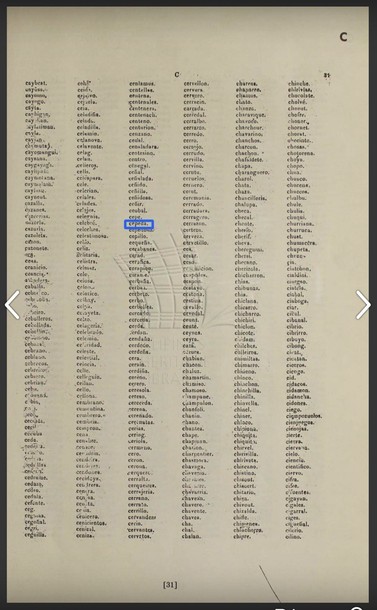
The decree of 21 Aug 1849 instituted surnames to all the inhabitants of #PH under Spanish rule was accompanied by a catalogue of surnames—Spanish & selected "indigenous names collected by Rev. Fathers Provincial of the religious orders..." for use.

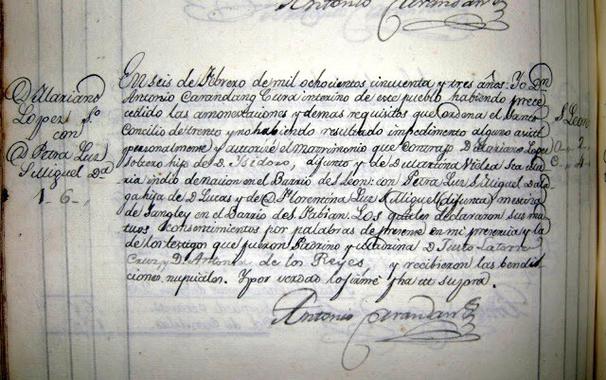
The decree stated: "Each cabeza shall be present w/ the individuals of this cabecería, and the father or oldest person of each family shall choose or be assigned one of the surnames in the list, which he shall then adapt, together w/ his direct descendants." That's why, even up to now, in Albay, Sorsogon, & Catanduanes, Spanish surnames beginning w/ letter A often originated in the provincial capital, B & C are those from along the coast, E to L along the coast of Sorsogon.
In Oas, Albay, R surnames are prevalent. Indeed, the changing of the names of colonial inhabitants are the indelible marks of colonization. It marked an erasure of a large portion of the populations' indigenous identity replacing it w/ a "Christianized" Spanish surname.
Photos:
- Portrait of Narciso Clavería y Zaldua,
- Front page of Catalogo alfabético de apellidos, republished by Domingo Abella, 1973
- The Clavería decree implemented according to church records, from Renz Marion D. Katigbak
@indiohistorian Delighted to see your first #TodayInHistory on this platform, sir Kris! Grateful for your #Filipino #History work! ☺️
@suisei a big adjustment for me, but the first step is always the hardest. Thank u for the support!
@indiohistorian Oh, an artilleryman? Look like bombs on his collar.
@indiohistorian It's so awesome that you've finally created an account here because I love your Twitter page. And your first thread is about a topic I've been wondering about for ages--why we have American names and Spanish surnames. Hope to see more of your posts here!