
#DrainWaterHeatRecovery (#DWHR) technology is pretty common in Canadian new builds. There are a bunch of different products from different manufacturers, but they’re all pretty derivative. And for the better part of a decade, the industry was marked by endless infighting — accusations of IP theft, counterfeiting and use of toxic materials were rampant.

But this thread isn’t about any of that. Today, we’re talking about the outlier.

(1/6)
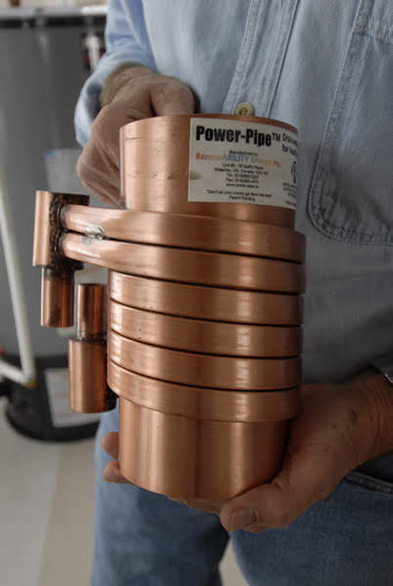
For the uninitiated, drain water heat recovery (DHWR) systems consist of a 3-4” copper pipe that replaces part the ABS drain stack, and a copper water supply line that wraps around the outside. During a shower, the warm water flowing down the pipe clings to the interior surface, and pre-heats the incoming cold water. DWHR is simple, reliable, and can recover 30-50% of the heat that otherwise flows down the drain. Though products differ in geometry, they all work the same way.

(2/6)

But in 1994, Michael Lucking of Heat Exchanges in Newfoundland dared to be different. He envisioned DWHR-equipped showers as an integrated product. As far as I know, the only reference to his ideas appeared in the May 1994 issue of Popular Science, which also included this fanciful illustration. Lucking’s concept located the heat recovery apparatus in the shower floor — thereby scavenging heat before it left the bathroom.

(3/6)

Few people know about Lucking’s concept, and even fewer have ever set eyes on his prototype. But here it is - largely indistinguishable from any other corner shower unit you can buy at your local home improvement store.

(4/6)

Of course, all the magic happened below the drain pan. Drain water would flow through a serpentine labyrinth, preheating incoming cold water that flowed in the opposite direction.

No word on efficiency or pressure loss. But anybody who has ever fished hair out of their bathtub drain should spot the obvious flaw in this approach.

(5/6)

Even so, Michael Lucking managed to solve a problem that DWHR developers still struggle with today - how to recover shower wastewater heat when the shower and water heater are on the same floor.

[Efficient drain water heat recovery in horizontal domestic shower drains](https://www.sciencedirect.com/science/article/abs/pii/S0378778812006755)

(6/6)