 Florin
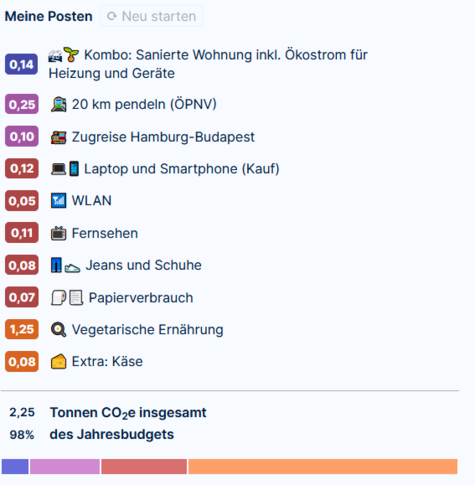
German #newspaper “Berliner Morgenpost” made a playful #visualisation about the personal #climate budget - it shows vividly where individuals quickly reach their limits and why politics urgently needs to act. There even is an interactive version: https://interaktiv.morgenpost.de/co2-budget-pro-kopf-testen-klimawandel/ #infographics #climatechange

 Kurt Battisti
@florin Fascinatingly realized. Unfortunately, very, very sobering.
 hatschito
@florin wow, I am far away to reach the 2030 goal.
 a
a@florin CO2-Tetris
 Dr. Heloise Stevance✨🐍
@florin this is such powerful visualisation I'm going to use the idea for other things in the future
 Faye
Faye@florin Personally I think this is bartering on somethjng one shouldn’t barter with. My ecological footprint is very small compared to people presented here, so I’d have a wide margin to ‘waste’. I just think we should all strive for minimalisation, whatever the current status and which part is how large.
 Thomas Nowotny
@florin Es wäre toll, wenn es das auch in Englisch gäbe!
 Morre
Morre@florin Mixed feelings about this. On the one hand, it shows that even if we wanted, we couldn't.
But it completely disregards that most emissions are not even influenced by people, but by huge companies.
Even though that might be reflected in the sums of the pieces, it still makes me feel like it's buying into the giant blame shifting the oil industry is doing since the 70s.
 Carsten Heckmann
@checkmann @florin Das ist genau was ich sage?
 Thomas
@HeiligerBimBam @florin It only is if you treat capitalism as a given, which it isn't.
Capitalism is a huge part of the problem. Best would be to get rid of it.
 mutax
mutax@florin jede Form Ölheizung fehlt leider komplett. Schade.
 Daniël Franke 🏳️🌈
@florin Morgenpost seems to have a good team for interactive visualisation, they tend to make the best ones in the country imho.
 Herr Jeh 🤷🏻♂️
@florin Schöner Fund! Gut gemachte Seite.
 Thomas Goldberg
@florin Die ganze Grafik ist leider ziemlich wertlos. @dergraslutscher hat in seinem Buch "Weltuntergang fällt aus" sehr schön dargelegt, warum das persönliche CO₂-Budget gar nicht so wichtig ist, sondern wir an die großen gesellschaftlichen Bretter ran müssen, Stichwort Energieerzeugung.
 JB_SCOTTY
 Kai Rüsberg
@florin ich finde die Idee super, es wäre toll wenn man es etwas genauer einstellen könnte. Vielleicht nimmt sich nochmal jemand einer Erweiterung an?
 Thijs Lucas
@florin grandios
 Charlie
@florin I was doing good until i had to fit that huge block "puclic emissions" right at the end xD It's definitly possible, but only in some years I guess. I wanna see Japan at some point and I've been to China in 2019 so about every 5 years I will fill my whole block square with just that.
And people are sort of dependent on what their flats are heating with, they really have little say in this. : ( you can only opt for not heating but that becomes impossible at some point (water)..
And people are sort of dependent on what their flats are heating with, they really have little say in this. : ( you can only opt for not heating but that becomes impossible at some point (water)..
@florin also my lifestyle mainly works because I don't have to be "presentable" for work. So I don't have to buy jewellery, clothing, makeup, etc. And I only shower once a week. That might be tough for other people.
I'd say that's more of a societal problem than a political one tho.
I do agree, however, that the whole climate crisis can only be fixed by making political decisions to that end.
I'd say that's more of a societal problem than a political one tho.
I do agree, however, that the whole climate crisis can only be fixed by making political decisions to that end.
 Konosocio
@florin mein Vermieter könnte von Gas auf Fernwärme wechseln aber "das lohnt sich nicht".
 tkanne
@konosocio @florin Scheint wegen der Wärmeverluste auch nicht ganz so klar pro Fernwärme.
 Michael Gehrmann
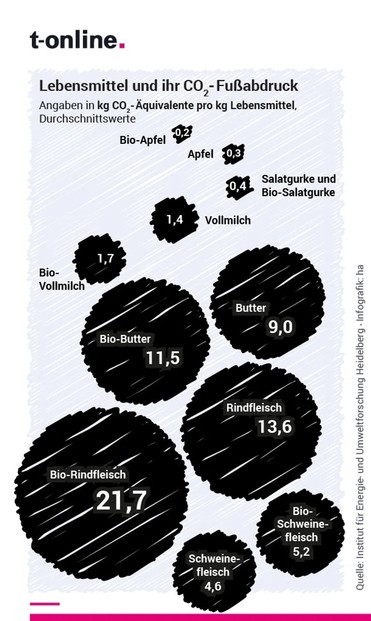
@florin interessante Darstellung. Der Teufel steckt natürlich im Detail. Aber die Tendenzen sind schon mal gut zu sehen. Gerade bei Bio scheiden sich natürlich die Geister. Sicher kann der Bio-Vegetarier sich auf bestimmte Lebensmittel reduzieren — eine Apfelkompott-Zentrierte Ernährung um Bio schönzurechnen. Aber zumindest hat man es nicht so übertrieben, dass es für das Tetrisspiel zu sehr ins Gewicht fällt.
 Frank Juston
@florin Sehe ich es nicht, oder fehlt der Einfamilienhaus mit WP & PV?
@Frank_Juston @florin Ne, fehlt mir auch.
 Katja
Katja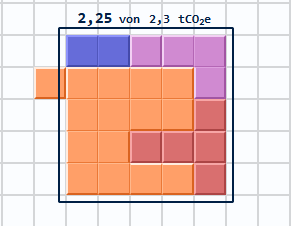
 nachhaltigLeben
 Prof. Tatiana Ilyina
@florin This is a great #visualization. The recent #IPCC report by WGIII identifies 60 actions (see figure) to change individual consumption and mobility choices with largest potential to reduce our carbon footprint.
I wrote a thread on twitter on this early this year:
https://twitter.com/ilitat/status/1512757142540931074?s=20&t=o8WHpw2bdgrIala9gPEijg

Dr. Tatiana Ilyina 🌍🌊 O=C=O 💙💛 on Twitter
“About 2/3 of global GHG emissions are associated with household consumption. Shifting our individual consumption patterns to low-carbon alternatives is prerequisite for emission reductions. So, what can each of us do to broaden own participation in climate action? 1/n”
About 2/3 of global #GHG emissions are associated with #household #consumption.
Shifting our individual consumption patterns to low-#carbon alternatives is prerequisite for #emission reductions.
Each of us can do a lot to broaden own participation in #climate action!
 Climate Change Adaptation
India and United Nations launch environmental lifestyle program ‘Mission Life

 Matt BK
The post I am replying to has a great figure showing the potential impact (box-and-whisker plots) on #CO2 emissions of a variety of demand-side household activities.
There are three groups of activities: avoid (e.g., less driving, less paper use), improve (e.g., heat pump, recycle), and shift (e.g., to public transport, to organic foods). The plots include a region where CO2 emissions are reduced, and a region where CO2 emissions may actually increase due to the behavior (rebound effect).
 Gabriel Yoran
@florin Ein Drittel geht also einfach dafür drauf, Bürger*in zu sein. Dann noch im Altbau wohnen und in den Urlaub fliegen und es ist gelaufen. Im Neubau wohnen schon viel besser, reicht aber auch nicht. Verdammt.
@florin Das ist ein absolut hervorragender Tipp. Das interaktive Modul ist super.
 FrauZeitlos
@florin ich finde das mega interessant, aber es zeigt halt auch, dass das gar nicht mehr funktionieren kann. Wir sind einfach am Arsch, weil Leute meine dreimal im Jahr nach Malle düsen zu müssen plus Norwegenkreuzfahrt. Und ich sitze hier in der Mietwohnung, ein Auto für vier Leute, kein einziger Flug in 12 Jahren und soll mich wegen einmal Fleisch pro Woche schlecht fühlen.
@florin das ist mein Ergebnis. Für mich bleibt die Erkenntnis: ich sollte mich weiter dafür engagieren, dass die öffentlichen Emissionen geringer werden. Das ist zwar ein extrem dickes Brett. Hat aber recht hohes Potential.