 dag
dagToday's law and policy post on how the contest between platforms is an example of a contest often seen
https://davidallengreen.com/2022/11/hierarchies-vs-networks-in-the-age-of-musk-and-mastodon/
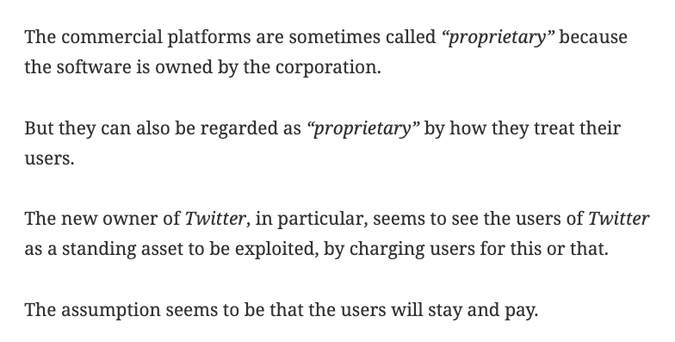
Today's law and policy post on how the contest between platforms is an example of a contest often seen
https://davidallengreen.com/2022/11/hierarchies-vs-networks-in-the-age-of-musk-and-mastodon/
@davidallengreen On a related note, I don't know how well it applies to other disciplines, but one of my mantras from a lot of experience working as a product development engineer is "More than 6 people in a meeting is an announcement, not a discussion".
That's based on meetings lasting 30 to 60 minutes. In that amount of time it seems up to 6 people can make meaningful contributions, but if you have any more than that there's a high probability at least one person won't say anything.

 Black Fen
 Jared 🇦🇺🏳️🌈⚧️👽
 hicksy2
 Kate W