
New preprint: https://psyarxiv.com/2z5h9

Do you ever have that feeling that paper assume implications from your work you didn't intend? Like, just because you study the brain, people think you must think social determinants are unimportant? We studied what non-experts take away from researchers' choice of explanatory framing.
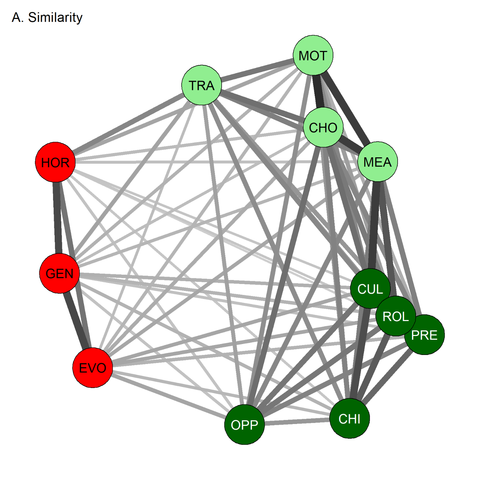
We found that people categorise different explanatory framings roughly into 'biological', 'psychological' and 'societal' groups. Unfortunately they tend to assume that explanations from the different groups are not compatible with one another (especially when one is 'biological' and the other not)
Moreover we found that people assume that 'the medicine must fit the cause'. That is, if the cause is framed as 'biological', you need to intervene with drugs, etc.
This means you need to beware how you communicate if you study one level but don't wish to imply that there aren't important causes (and remedies) at other levels
By choosing to study the brain basis of depression, for example, you might be taken as implying that social causes (and remedies) are not so relevant...so it's worth expending effort to heading this off at the pass
Plus, it might explain why 'framing wars' are so bitterly contested in academia (how dare you say crime is a choice/obesity is due to self-control/depression is a brain disease, etc., etc.), because academics understand that controlling the framing sets the cognitive agenda in important ways
@danielnettle this is a lovely and important piece of work, and I very much like the phrase 'cognitive agenda' (good alternative to 'mindset' and the like).